
Introduction
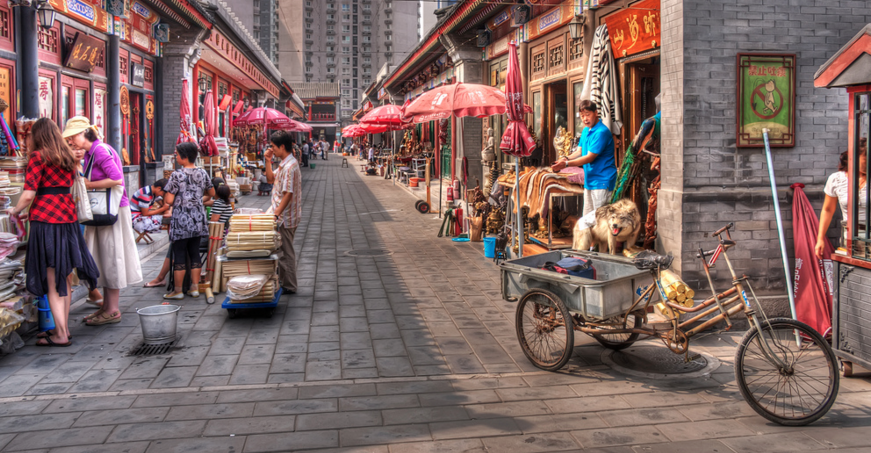
World storefront creation is the study world cultures.
Essential Questions:
- What cultural qualities will determine buying and selling decisions?
- What geographical conditions will influence items in your store?
You are a clerk at a store in another country. The owner has specially chosen you and a couple of his best employees to conduct research about the current culture of your store location. He would then like your group to open a new storefront at the world market in Chicago, Illinois. Your boss wants your storefront to be based off of the culture and items of your current storefront location.
As you research keep in mind the difference between your culture and American culture, as the world market is in Chicago, Illinois. Use current knowledge and comprehension to establish your storefront.
Why does American and world history, economics, civics/government, and geography have an effect on your storefront?
Task
Students will be placed in groups. As a team students will follow the instructions on the process page. After, individuals must answer the questions on the evaluation page by following the links provided to the appropriate websites and pages. Students will have the entire lesson to complete this 5 day quest.
Your 5 Day Web-Quest
Student groups will build their own unique storefronts. Students will then be given play money to purchase items from other storefronts. As groups research, keep in mind the differences between cultures. Use gained knowledge of American and world history, geography, civics/government, and economics when relating their store to the public. Consider how these differences might affect purchases in order to determine what items students want to construct, create, and bring in from home to sell at student storefronts.
Monday: Students will be placed in groups and watch the World Culture Video
Student groups will then choose a store location and a culture based on the cultures in the video.
Tuesday: Students will research the history behind their location’s government, resources, human needs, and culture. They will compare it to American culture
Wednesday: Students will construct, create, build, and bring in items from home to sell at their store based on their current store culture and location.
Thursday: Students will setup their storefronts. They will then buy, sell, and trade with other stores with the play money that the teacher hands out at the beginning of class.
Friday: Students discuss items that sold the most and why they purchased particular items based on their classroom cultures. They must also complete the questions on the evaluation page.
Process
STEP ONE
Groups will research their culture and location create an in class storefront and their nations flag.
STEP TWO
Groups will create items to sell as well as bring in items from home in for their storefront.
STEP THREE
Students will make their own prices for the items they are selling as well as use the money they collect to either save or purchase more items
STEP FOUR
Students will use communication and collaboration to trade and purchase items from other stores for the needs of their groups culture
STEP FIVE
Students will be asked to brainstorm and discuss why they sold the items they sold and why they purchased the items they bought. They will also discuss which items sold the most and why?
STEP SIX
Students individually answer the questions on the evaluation page. In class, we we reflect upon group decisions and assess the evaluation rubric.
Evaluation
|
Evaluation Rubric |
||||||||||||||||||||||||||||||||||||
|
- What continent is Egypt apart of?
- Egyptian economy has been historically agricultural; what is its staple crop?
- What is the capital of Egypt?
- What continent is China apart of?
- What is the largest river is China?
- What is the capital of China?
- What Continent is Russia apart of?
- What is the deepest lake in Russia?
- What is the capital of Russia?
- What continent is Mexico apart of?
- What river divides Texas and Mexico?
- What is the capital of Mexico?
- What continent is Italy apart of?
- What are the colors in Italy’s flag?
- What is the capital of Italy?
- What continent is the United States of America apart of?
- How many states are apart of the United States of America?
- What is the capital of the United States of America?
- What is the longest river in North America?
- What is the largest country in the World?
- What country has the largest population of Spanish speakers?
Conclusion
Now that you are familiar with other locations, governments, environments, and cultures from around the world you will have a better understanding of why others dress, eat, and believe in different things. Students, we have now learned that we can accept people for who they are and where they come from. Everyone is equal and we should treat everyone as we would like others to treat ourselves.
 Congrats on creating such fantastic store fronts!
Thanks a lot for your participation in this project!
Credits
References
Bradley, H. (2015). Encyclopedia Britannica: United States of America. Retrieved November 21, 2015 from Encylopdedia.com:
http://www.britannica.com/place/United-States
“China.” Worldmark Encyclopedia of Nations (2007). Retrieved November 21, 2015 from Encylopdedia.com:
http://www.encyclopedia.com/topic/China.aspx
“Egypt.” Worldmark Encyclopedia of Nations (2007). Retrieved November 21, 2015 from Encylopdedia.com:
http://www.encyclopedia.com/topic/Egypt.aspx
Medvedkov, Y. (2015). Encyclopedia Britannica: Russia. Retrieved November 21, 2015 from Encylopdedia.com:
http://www.britannica.com/place/Russia
Palerm, A. (2015). Encyclopedia Britannica: Mexico. Retrieved November 21, 2015 from Encylopdedia.com:
http://www.britannica.com/place/Mexico
Powell, J. (2015). Encyclopedia Britannica: Italy. Retrieved November 21, 2015 from Encylopdedia.com:
http://www.britannica.com/place/Italy
World Culture Video Created by Teacher Candidate: Marcus Diedrich
All links and images provided in this Web-Quest have been authorized through google by access to materials.
Permissions
Permission is granted for others to use and modify this Web-Quest for educational, non-commercial purposes as long as the original authorship is credited. The modified Web-Quest may be shared only under the same conditions. See the Creative Commons Attribution • Non-Commercial • Share-Alike license for details.
Teacher Page
[img_assist|nid=32401|title=UPload|desc=|link=none|align=center|width=765|height=380]
Welcome Teachers: Have fun assisting your students in their journey to to learn about cultures from around the world!
Description: This is a Web-Quest that will help your students learn about other cultures, history, geography, government, and the value of money.
Groups: Teacher will divide class into 5 groups based on World Culture Video: Mexico, Egypt, China, Italy, and Russia. The Educator will then create their own storefront representing the United States of America.
Grade Level: 5th Grade Level
Curriculum: American & World History/Civics/Government/Geography/Economics
Keywords: World Market Social Studies
Author: Marcus Diedrich
Evaluation Answers:
Egypt
Africa
Cotton
Cairo
China
Asia
Yangtze River
Beijing
Russia
Europe and Asia
Moscow
Baikal
Mexico
North America
Rio Grande River
Mexico City
Italy
Europe
Green, White, Red
Rome
United States of America
North America
50
Washington D.C.
Other Answers:
Mississippi River
Russia
Mexico