
Introduction
This Professional Development evening has been put into place given the unfortunate number of infectious disease outbreaks we had occur in our service last year and therefore been red flagged in our quality improvement plan (QIP). In accordance with the National Quality Framework (NQF) we have a duty of care to ensure we have children’s health and safety as a focal point and therefore require the review of our policy and procedures and knowledge that underpins the successful implementation of them in our daily practice. Further to that, the health and safety of us educators is just as important and should be considered here also.
The most recent statistics indicate that children attending childcare settings experience 138% more absenteeism’s than those who attend in-home care settings (Ferson, 1997). This is highly due to the fact that in children under 5 their immunity is still developing and in a childcare setting the likeliness to be in contact with infection is heighten (Canadian Paediatric Society, 2000). The likeliness is even greater when one’s immune system is compromised; after surgery, medical treatment or when pregnant (Cordell, Pickering, Henderson, & Murph, 2004).
“The spread of infections in child care centres is facilitated by crowding and microbial contamination of the child care environment, as well as the unhygienic behaviours and greater susceptibility of young children” (Ferson, 1997, para. 3).

Figure 1. Chain of infection. (National Health and Medical Research Council, 2012).
What are you doing to break the chain of infection?
Task
In your room groups your task is to reflect on your current knowledge of the following 3 common diseases and research any gaps:
Cytomegalovirus CMV
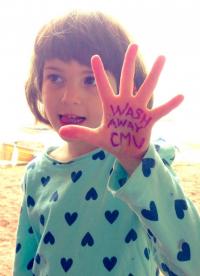
Figure 2. Wash away CMV. (CMV Action, 2016)
Chicken Pox
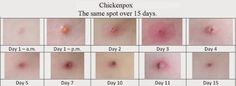
Figure 3. Chicken Pox: The same spot over 15 days. (VZV Stages, n.d.).
Fifth Disease (Slap Cheek)
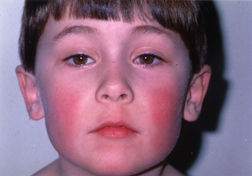
Figure 4. Fifth Disease (Erythema Infectiosum). (Patient Education Centre, 2016).
Once complete you are to devise a strategy to implement in your room to ensure safe practices are continually carried out.
Here are a few questions that may help guide your reflection and research.
1) What types of disease are they?
2) What are the symptoms? What does it look like?
3) What is the incubation period?
4) What is the exclusion period?
5) Are all educators in the room aware of the 3 ways in which infection can be transmitted?
6) How are each of these diseases transmitted?
7) Who are at higher risk of infection? Why?
8) As an educator what are your concerns?
9) What are your current practices to reduce the likeliness of cross-transmission?
10) What strategies do educators in your room implement to ensure that children maintain effective hygiene strategies?
11) Does the program offered in your room embed the modelling of safe practices? How are the children involved?
12) What are reporting obligations; is this information available to families?
The way you present the information regarding the 3 diseases is entirely up to you; consider a compare and contrast report or table format for ease of reading.
Your strategy must be innovative and involve all stakeholders.
National Quality Framework - Links with standards
Standard 2.1 - Each child’s health is promoted.
Element 2.1.3 - Effective hygiene practices are promoted and implemented.
Element 2.1.4 - Steps are taken to control the spread of infectious diseases and to manage injuries and illness, in accordance with recognised guidelines.
(Australian Children’s Education and Care Quality Authority [ACECQA], 2013)
Process
Step one: To establish gaps in your knowledge make a list of everything you know about each of these diseases with the educators in your room. By doing this you gain a better understanding of your own knowledge and knowledge as a whole which provides more stimuli for a holistic reflection.
Step two: Considering the reflection and research questions posed, conduct a webquest to seek out information and bridge the gap in your knowledge on these diseases and their implications for you as an educator.
Below is a list of credible links that will assist in your research. They are by no means exhaustive but provide you with a place to start.
http://www.imagineeducation.com.au/files/GapTraining/Staying_Healthy_5th_Edition.pdf
https://www.betterhealth.vic.gov.au/health/conditionsandtreatments/cytomegalovirus-cmv
http://www.health.nsw.gov.au/Infectious/factsheets/Pages/cmv-and-pregnancy.aspx
https://www.betterhealth.vic.gov.au/health/healthyliving/immunisation-and-pregnancy
http://ncac.acecqa.gov.au/educator-resources/factsheets/qias_factsheet_18.pdf
http://www.health.gov.au/internet/main/publishing.nsf/Content/cda-pubs-cdi-1997-cdi2122-cdi2122a.htm
http://ncac.acecqa.gov.au/educator-resources/factsheets/qias_factsheet_17.pdf
https://www.commerce.wa.gov.au/sites/default/files/atoms/files/guide-diseases_in_child_care.pdf
Step three: Devise a strategy that you can use in your room in some way, shape or form that will assist you in sharing the awareness of the knowledge you have sourced on the three diseases and the proactive planning for their prevention.
Step four: Hand your reflection, research and strategy plans to another group for the peer-evaluation process.
Step five: Put your plans into action.
Evaluation
The evaluation process will be a peer review; once complete you are to hand your work to the member of another room within our service. Quality education and care is enhanced by collaborating with likeminded others, therefore by sharing our information and strategies we can fill in the gaps and provide constructive feedback and suggestions that will only enhance our practice.
The following is a list of questions to guide the evaluation process.
Was the reflection honest?
Where the diseases clearly described?
Was relevant information included based on the task questions? Did they differ from your response?
Where the strategies currently being practices in line with centre policy and procedures? Do you do anything different in your room?
How does their program incorporate modelling? Can you make further suggestions?
Is their strategy creative and involve all stakeholders? If not, what do you suggest?
Do you believe their strategy will be viable and make a difference and is it in accordance with centre guidelines? Why/Why not?
Conclusion
Staying Safe in childcare is a publication that you have all been made aware of and is readily available to you. It states that “all educators and other staff should be aware of the education and care service’s policy on health issues and their own duty of care to contribute to a safe work environment.” (National Health and Medical Research Council, 2012, p. 65).
These policies and procedures are in place to protect the health and safety of ourselves and the children in our care and untimely support better outcomes. Having a depth of understanding of a range of diseases will place us as educators in a better position to handle situations were infection is present and prevent an outbreak in our service.
Please take the time to view the feedback from your peers and discuss further if necessary to ensure the successful implementation of a strategy that will protect the health of ourselves and the children and families in our care.
Credits
Canadian Paediatric Society. (2000). Infections in child care centres. Paediatrics & Child Health 5(8), p. 495–496. Retrieved from http://www.ncbi.nlm.nih.gov/pmc/articles/PMC2819968/
Cordell, R., Pickering, L., Henderson, F. W., & Murph, J. (2004). Infectious Diseases in Childcare Settings. Emerging Infectious Diseases, 10(11), e9. http://doi.org/10.3201/eid1011.040623_04
CMV Action. (2016). Wash away CMV. Retrieved from http://cmvaction.org.uk/news/rufus-hound-washes-hands-cmv
Ferson, M. J. (1997). Infection control in child care settings. Communicable Diseases Intelligence 21(22), p. 332-347. Retrieved from http://www.health.gov.au/internet/main/publishing.nsf/Content/cda-cdi2122-pdf-cnt.htm/$FILE/cdi2122a.pdf
National Health and Medical Research Council. (2012). Chain of infection. Retrieved from http://www.imagineeducation.com.au/files/GapTraining/Staying_Healthy_5th_Edition.pdf
National Health and Medical Research Council. (2012). Staying Healthy Preventing infectious diseases in early childhood education and care services (5th ed.). Canberra, ACT: Commonwealth of Australia. Retrieved from http://www.imagineeducation.com.au/files/GapTraining/Staying_Healthy_5th_Edition.pdf
Patient Education Centre. (2016). Fifth Disease (Erythema Infectiosum). Retrieved from http://www.patienteducationcenter.org/articles/fifth-disease-erythema-infectiosum/
VZV Stages. (n.d.). Chickenpox: the same spot over 15 days. Retrieved from https://au.pinterest.com/pin/430586414350708367/