
Introduction
How many times did you hear about conspiracy theories about the landing on the Moon? Have you ever wondered what really happened? Some people think that the landing on the Moon is fake, and that the US government with the NASA recorded everything in a studio. Somebody else think that it is all true, and that this theory is ridiculous. Other people think that the 2 minutes of radio silence of Neil Armstrong were caused by aliens. What do you think? Now it is your turn to decide! 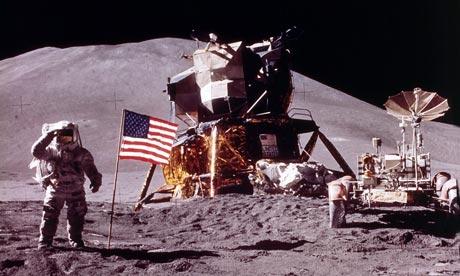
Task
Discovery Channel is doing a report to understand what really happened on July 20th, 1969. They need help and you and your team will help them to find out the truth. Your group will have to choose a theory, find proves, and try to attack the other theories with the goal to discredit them. The show will be live on TV in a week, so you would better hurry up!

Process
In order to complete your mission, your team will split up to research the 3 major theories presented. Each expert will tell the group about their research, then as a team you will decide which theory is true and focus on that theory. After that your team will make a presentation for the Discovery Channel director. The presentation should include:
1. A brief report of each theory, and which one the team chose.
2. Present your findings to the class with visual Aid, etc. The class will then decide if they agree with your team's theory, or if they disagree.
Your team will be graded by the Discovery Channel director (Mr. Profumo) using the rubric found on the Evaluation page.
Resources: here there are some useful links but your group is free to find other sources
http://www.bbc.co.uk/science/space/solarsystem/collections/moon_landing_conspiracy_theories
http://news.discovery.com/space/neil-armstrong-what-really-happened-on-the-moon.htm
http://exopolitics.org/first-man-on-moon-dies-along-with-secrets-of-what-he-saw/
Evaluation
|
|
Beginning (0-5) |
Developing (5-10) |
Accomplished (10-15) |
Exemplary (15-20) |
|
|
Persuasive Argument |
Class disagrees strongly. |
Class disagrees somewhat. |
Class agrees somewhat. |
Class strongly agrees. |
|
|
Group Work |
Did not work well together. Work not shared evenly. Did not complete task. |
Did not work very well together. Did not fully complete task. Work partially shared. |
Worked well together. Task mostly complete. Group members contributed equally. |
Worked very well together. Work divided evenly, all requirements completed. |
|
|
Visual Aid |
No effort put into visual aid. |
Some effort put into visual aid, but not creative. |
Good effort on visual aid, fairly creative. |
Excellent effort on visual aid, very creative. |
|
|
Quality |
Unorganized, sloppy presentation. No visual aid. Little to no research done. |
Unorganized presentation, loosly put together. Visual aid messy, not enough research. |
Presentation organized and interesting. Visual aid adequate. Appropriate research. |
Well-organized, excellent presentation. Creative visual aid. Topic fully researched. |
|
Conclusion
Congratulations! Thanks to your efforts, Discovery Channel found out the truth. Without you, we would still be searching for answers from around the world!
Good work!
Credits
The images were found in the following websites:
theguardian.com
hulu.com