
Introduction
By Jennefer Jeffers
Students will understand how vertical gardens are created. Students will identify positives and negatives for three different garden types. Students will choose one type of vertical garden and justify why this is the best type to build at our school.
Introduction
We have been asked to assist The Food Initiative in growing vegetables to help feed those in need through Manna Cafe. We need to create a viable garden on the school grounds that does not interfere with play areas. We need to consider factors affecting erosion and conservation of resources as we build our garden. We would also like our garden to be able to be replicated in other areas, especially large cities that have a higher number of people that need assistance with food and less green space in which to grow that food. Mrs. Sanford and Mrs. Maclin have also instructed that our garden be organized and enjoyable to look at.
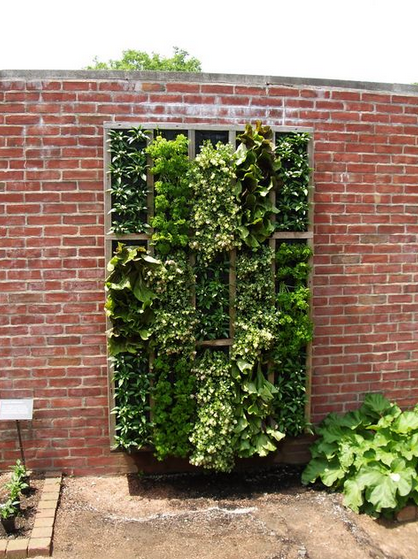
photo courtesy of evokatrading.blogspot.com
Task
Task
Your group will be designing a vertical garden prototype to present to Mrs. Sanford, Mrs. Maclin, and The Food Initiative. First your group will research three different types of vertical gardens. Next, each member of the group will choose one type of vertical garden and justify why that is the best choice for our school. Then your group will complete a STEM Challenge in which you agree on a vertical garden design, plan out your design, and build your prototype. Your group will test and improve your design as time permits.
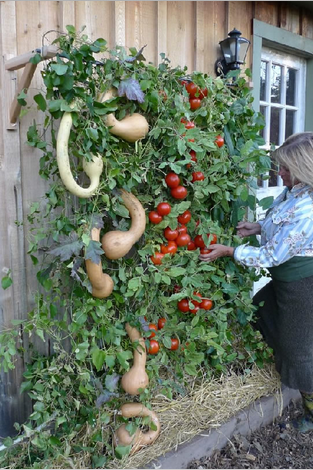
photo courtesy of www.patiogardentips.com
Process
Process
You will research three types of garden structures. You will need to record notes from your research in your journal as you work. You will use these research notes to justify your choice when designing your garden.
Wick System:
Use the following link to read and illustrate how a wick system works.
Soda Bottle:
Use the following link read and illustrate how you can use a soda bottle to create a garden. You will need to think about how to use these and not waste water through drainage. How could we hang them in such a way as to not allow water waste?
http://dirt.asla.org/2013/08/13/diy-vertical-gardening/
Hanging Hydroponic Bottle Garden
Use the following link to read and illustrate how you can connect soda bottles to create a self-watering vertical garden.
http://urbangreensurvival.blogspot.com/2010/07/hydroponic-bottle-garden.html?m=1
Next Steps:
You will write a persuasive journal entry. You will be persuading your team to choose your type of vertical garden. Which garden will work the best? The wick system, the hanging soda bottle, or the self-watering hanging soda bottles? Justify your choice using facts and data collected from the readings.
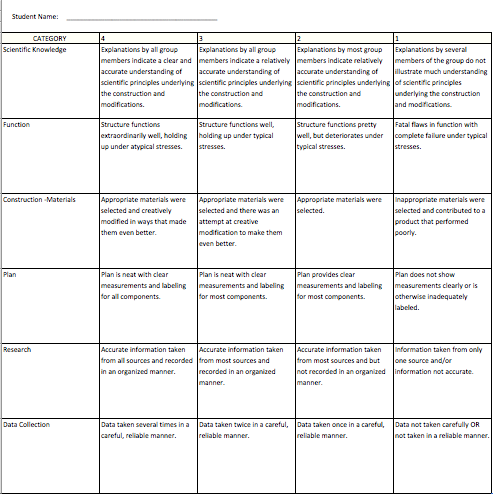
Your team will then complete the STEM Challenge data sheets and upon approval of plan you will create your prototype.
Evaluation

Conclusion
Conclusion
You should now better understand how vertical gardens work and how to work with your team to design a vertical garden. You will be working together to build a prototype that will be presented to the class.
Teams with the highest score on the rubric and with a viable prototype will compete to be the fourth grade team representing Carmel at the Austin Peay Stem Night in April. We will have one team per homeroom to compete to attend the Austin Peay Stem Night. Only one team per grade level will attend, but the other teams will have an opportunity to present their projects at our STEM day in April.
Good luck!!
Credits
Photos courtesy of:
evokatrading.blogspot.com
Rubric created using Rubistar
Permissions
We all benefit by being generous with our work. Permission is granted for others to use and modify this WebQuest for educational, non-commercial purposes as long as the original authorship is credited. The modified WebQuest may be shared only under the same conditions.