
Introduction
Two thirds of our planet is covered with water. Consequently, our oceans and seas represent a big variety of our flora and fauna. We use our oceans as nutrition sources, workplaces, leisure facilities and a lot more. That is why it is worth having a look at this big fascinating world!
In this Unit you are going to read and write forum posts about the state of our oceans.
You will:
- Read about what happens to plastic in the Ocean
- Watch film clips about fascinating sea creatures
- Think about your opinion on environmental protection
The main goals for this unit are:
1. You can explain in simple words what the Great Pacific Garbage Patch is
2. You can name five sea creatures and describe their characteristics/ways of living
3. You know how to write a blog in a forum
4. You can build questions with who, which and what in the present and past simple
Keeping this in your mind...
You now dive deep into the ocean!
Discuss in groups of 2-3:
1. What sea creatures do you know?
2. What does environmental protection mean for your daily life?
3. In what way might plastic waste be a danger for our oceans?
4. What does "overfishing" mean?
Write your thoughts down in your notebook (everyone!)
Important information:
blue letters mean: individual work
green letters mean: group work 2-3 people
if there are both colors, it means that the exercise includes both individual work and group work.
SOLUTIONS OF THE TASK ARE PROVIDED BY ME, YOU HAVE TO COME TO ME TO GET THEM.
if you have any questions, don't hesitate to ask me.
Task
Task 1: The world's biggest garbage dump
A Skim the text to gather important information
B Write down new vocabulary you find useful/interesting
C check out more sources about the biggest garbage dump
D Summarize the basic facts briefly
E Have a closer look at phrasal verbs
F check out your knowledge about these verbs
G & G
further exercises on phrasal verbs
language awareness: think about phrasal verbs
group discussion about the world's biggest garbage dump
Task 2: Fascinating creatures
A & A
Read the texts about sea creatures
answer questions to the texts
comparison of the answers
B Watch videos about these sea creatures
C & C Drawing sea creatures and watching film clips
D A quiz about sea creatures
E & E Choose the sea creature you like most
F & F Subject and object questions
G & G Read and create your own blog on a forum
Process
Task 1: The world's biggest garbage dump
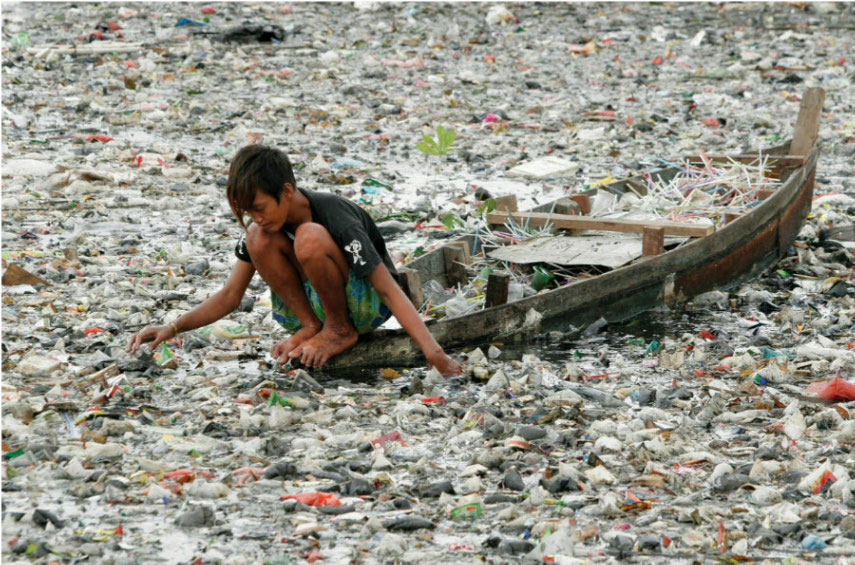
We use our oceans not only for fishing and transporting goods but also for the disposal of waste. In 1977 a huge area full of plastic waste was discovered in the middle of the Pacific Ocean. It is called "The Great Pacific Garbage Patch".
A Skim the text on page 30/31 of your students book about the Garbage Patch to find out
1. where this Garbage Patch is.
2. what it looks like.
3. why it is a problem for the environment.
optional: if you want you can get a glossary from your teacher (paper version). The glossary explains the most important key words and helps you to understand the text better!
B Read the text again and choose up to five words you don't understand. Write them in your notebook and look them up on http://www.macmillandictionary.com/
C For more information follow these links:
- http://education.nationalgeographic.com/encyclopedia/great-pacific-garbage-patch/
- https://www.youtube.com/watch?v=Nh6lkv1udb0
- https://www.youtube.com/watch?v=1qT-rOXB6NI
D Summarize in a word document what you've learned so far using the following questions as a help:
What is the Great Pacific Garbage Patch?
Where does the plastic come from?
How does the plastic get into the Garbage Patch?
What happens to the plastic in the Great Pacific Garbage Patch?
What effect do plastics have on marine life?
How can we get rid of the waste in the water?
Your opinion counts as well: your summary should also include what the most important points you have learnt about are!
name your file: GarbagePatch_name and send me your summary
E Have a closer look at these sentences and discuss in your group what the highlighted verbs mean.
- Plastic which is not recycled properly is often picked up by the wind and rain and carried into the rivers and finally into the sea.
- Ocean currents and wind transport the plastic until it finally ends up in the North Pacific Ocean.
- Due to sunlight, salt water and wave action the plastic in the ocean is broken up into smaller and smaller fragments.
- Therefore getting rid of the plastic is almost impossible.
Now check the meanings (http://www.macmillandictionary.com/) and write them in your notebooks! Verbs like this are called phrasal verbs as they consist of two or three words.
F Study page 110 in your workbook on your own first.
Check out how much you already know about phrasal verbs:
http://learningapps.org/display?v=pgsoz2fs201
http://learningapps.org/display?v=przds1oi101
Write all the phrasal verbs you didn't know down in your notebook!
G & G
- You’ll find further exercises about phrasal verbs in your workbook on the pages 41-43, tasks B-D
- Thinking about…
Are there any phrasal verbs in German or other languages? (your mother tongue or French e.g.) Remember that a phrasal verb consists of a verb + preposition or adverb.
Idea: Compare “look up” and “nachschauen” and “regarder qc. dans le dictionnaire”
Stays the meaning the same if you separate the verb from the preposition?
Is it the same in both or other languages? Where are the differences!
Discuss in your group and write your thoughts down in your notebook!
- speaking in your group: Try to have a conversation in your group using new learnt vocabulary and phrasal verbs: Idea: Discuss about the world's biggest garbage dump! What are your opinions? Are we living in a throw-away culture? How important is the protection of the environment?
Task 2: Fascinating creatures
A & A
- Read on your own the texts in your students book on page 32/33. Translate the words you think are important (Macmillan Dictionary) and write them in your notebook.
- Create a table in your notebook as I did and fill in the gaps:
| the sea creature that feeds on plants only | |
| the sea creature that spends a lot of time on land | |
| the smallest sea creature | |
| the sea creature that feels comfortable in deep water | |
| the sea creature that is the world's largest fish | |
| the sea creature that looks like a disc |
- Compare your table with a partner!
B Watch videos about these sea creatures
[video:https://www.youtube.com/watch?v=GfSME46Damo align:left]
[video:https://www.youtube.com/watch?v=NLLjCjdVQzg align:left]
[video:https://www.youtube.com/watch?v=sdIJtPC0TJ8 align:left]
The nautilus: https://www.youtube.com/watch?v=HIRCI0G19Uw
The whale shark:https://www.youtube.com/watch?v=mn5a3XJhJd4
The pygmy seahorse: https://www.youtube.com/watch?v=gD0AJdcDRYg
Enjoy!
C & C Drawing sea creatures and watching film clips
- In groups of two, get the audioscripts of two sea creatures from me. Each person gets the description of one sea creature. While one person reads the description, the other pupil draws the animal in his/her workbook on page 43 (task 3A). Then you change roles. Write the name of your animal below the drawing.
- When you've finished, get the CD "film clips" from your teacher and watch the six film clips about sea creatures. Get the two worksheets "What lives in the sea" and "sea creatures" from me as well and complete them. You can get the solution after having done the quiz about sea creatures.
D A quiz about sea creatures
http://learningapps.org/display?v=p1wt54zs301
E & E Choose the sea creature you like most
- Choose your favourite sea creature and write on page 44 in your workbook (task A) which one you like most and why. You can use the pages 32/33 in your student's book as a help. Explain to your partner which one you've chosen and why (task C)
F& F Subject and object questions
- Do the exercices on page 44/45 (tasks A-D) in your workbook. Instead of a class discussion in task b, use a group discussion.
- Check if you've understood subjects and objects questions:
http://learningapps.org/1057449
optional: Get the worksheets "Tuna fish eat sardines, dolphins eat tuna fish" and "Who wants to know about sea life?" from me
Important: On page 110 in your workbook you'll find a simple explanation of subjects and objects questions, you should read it!
optional: find more material about animals: http://www.klett-online.ch/openworld/data/pagepos_0.php?PHPSESSID=b36244bef123168371c16129564504ab
choose the tab "Science" and click "authentic material"
G & G Read and create your own blog on a forum
You are going to write a blog about environment and sea protection. Before you do this, you should know the vocabulary of this unit! Take yourself time to repeat and learn the words before doing the next task.
- First, turn to page 46 in you workbook and do the exercises 6 A-D
optional: to practise your vocabulary, use your interactive CD Rom!
Test your knowledge: http://learningapps.org/display?v=p2a092a6201
- Now turn to page 34 in your student's book and and do the exercise 3 in order to prepare for the forum post you are going to write
- Turn to page 47 in your workbook and do the exercises A-D
optional: Get the worksheets "Are our oceans a garbage dump?" (conditional with if and unless!)
Get active:
- Turn to page 35 in your student's book and do task 4 (leave out the box on the bottom of the page, I have created a real forum!)
This is the forum:
http://thebeautyoftheocean.freeforums.net
1. Login (on the top on the right!) => use your E-Mail (if you don't have an account, create one: https://accounts.google.com/b/0/addmailservice and invent a Nickname. Tell me your Nickname.
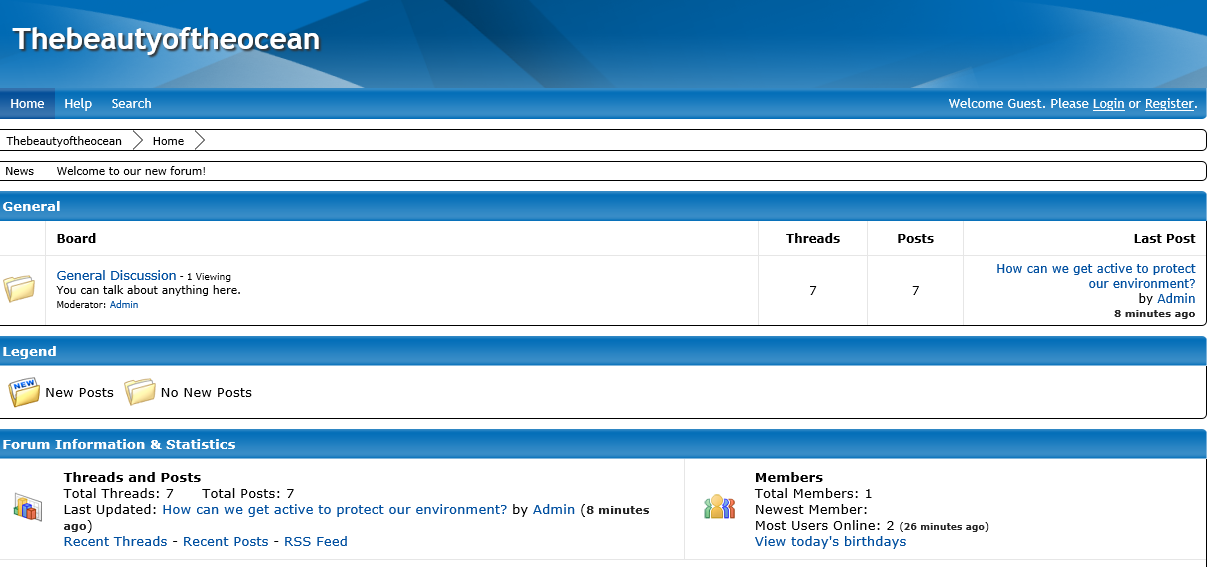
2. Turn to "General Discussion" and read the threads/posts. In groups of 2-3, discuss some of the questions you think are interesting. Use as much specific vocabulary as possible. You can use the words of this unit as a help!
3. Each learner writes at least two posts, which include your opinion and possible options to solve the problem.
Use this language support to express your opinion!
| I think... | The way I see it... | |
|
You have a point there, but… |
|
| In my opinion... | I don’t believe that… | |
| If you ask me... | I agree/ don't agree with you... | |
| I don’t think… |
|
|
|
I’m sorry, I don’t agree with you. |
I see what you mean, but... |
Evaluation
Congratulations, you've just completed this webquest!
Please fill in the evaluation "Checklist Language Portfolio Unit 19" won page 125 in your workbook!