
Introduction
Year 12 English
Now that we have now finished reading Macbeth, it is time to dissect it into the themes, symbols and motifs that were implemented throughout the story. Understanding what themes were used and how symbols and motifs played a vital role within the story will need to be analysed.
By the end of this WebQuest, you will be able to identify and explain what themes have been embedded within the play as well as what symbols and motifs have been utilised through language and plot.
You will be able to develop your already basic knowledge and understanding of Macbeth through these elements, what they look like and what the importance of them during the play were in a more complex manner.
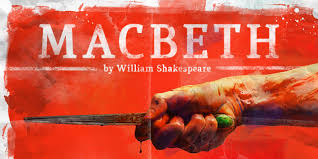
Task
GATHERING EVIDENCE
You must find THREE aspects for each category.
- Identify and define themes within Macbeth
- Identify and define symbols within Macbeth
- Identify and define motifs within Macbeth
Ensure that you write a sufficient amount of notes or dot points (whichever form is easiest for you to write a response from) in order to write an accurate and detailed response.
Also remember to find textual evidence within your Macbeth textbook as well to support your research/findings.
The links on the next page will allow you to explore and elaborate deeper when choosing which aspects to further develop in regards to your higher-order thinking in relation to Macbeth.
Process
Here are some quick definitions for those who need a refresher…
Theme: the subject of a talk, piece of writing, exhibition, etc.; a topic.
Symbol: a thing that represents or stands for something else, especially a material object representing something abstract.
Motif: a dominant or recurring idea
These are the following links you will need to access in order to develop further knowledge and understanding relating to themes, symbols and motifs:
http://www.sparknotes.com/shakespeare/macbeth/
http://www.shmoop.com/macbeth/
http://www.nosweatshakespeare.com
http://www.litcharts.com/lit/macbeth/
http://www.bbc.co.uk/bitesize/higher/english/macbeth/
http://www.bbc.co.uk/schools/gcsebitesize/english_literature/dramamacbeth/macbethplotact.shtml
https://www.youtube.com/playlist?list=PLCF030E5A2C5B1EA5
Having issues with the language of Macbeth?
http://nfs.sparknotes.com/macbeth/
You may also use your Macbeth textbook in order to assist in developing any themes, symbols and motifs through plot and language.
Evaluation
You will be evaluated on your writing task that is given in the next section. From the notes and evidence that you have accumulated, you should be able to cover these areas through your writing style and technique.
| A | B | C | D | |
| Understanding and responding to contexts |
Students work will exploitate themes through discerning orgainisation on subject matter to support opinions and perspectives through the manipluation of the writer's role and relationship with the reader. | Students work will effectively control themes through effective orgainisation on subject matter to support opinions and perspectives through the established writer's role and relationship with the reader. | Students work will statisfactorily use thems through organisation on subject matter to support opinions and perspectives through the established writer's role and relationship with the reader. | Students work will use some ascpects through selction and organisation on subject matter to support opinions and perspectives through some of the established writer's role and relationship with the reader. |
|
Understanding |
Students will use a discerning combination of accurate language, grammar and cohensive devices to create meaning | Students will use a controlled range of accurate language, grammar and cohensive devices to create meaning | Students will use a range mostly of accurate language, grammar and cohensive devices to create meaning | Students will use an inconsistent combination of accurate language, grammar and cohensive devices to create meaning |
|
Creating and |
Students will discerningly analyse themes and concepts underpinned within the play | Students will effectively analyse themes and concepts underpinned within the play | Students will analyse the way themes and concepts underpinned within the play | Students will identify themes and concepts underpinned within the play |
Conclusion
WRITING TASK
Now that you have finished researching and accumulating evidence, it is now time to challenge your knowledge and understanding of these elements within Macbeth.
You will need to produce an A4 page written response in relation to ONE of the key themes you have researched and use the symbols and motifs that you have also been researching, as well as language and plot, as evidence to back up what you are analysing.
This written response will need to be handed in at the end of the lesson.
Question:
How has your chosen theme been effectively constructed within the play Macbeth?
Use symbols, motifs, language and plot to assist you in your findings.
Credits
REFERENCE LIST
Australian Curriculum. (2013). ACARA Information and Communication Technology Capability Learning Continuum. Retrieved from http://www.acara.edu.au/_resources/General_capabilities_-_ICT_-_learnin…;
BBC. (2014). English Literature. Retreived from http://www.bbc.co.uk/schools/gcsebitesize/english_literature/dramamacbe…
BBC. (2014). English Macbeth. Retreived from http://www.bbc.co.uk/bitesize/higher/english/macbeth/
Lamb, S. (1964). Macbeth. Cliff Notes Incorporated. Lincoln: Nebraska.
LitCharts. (2016). Macbeth. Retreived from www.litcharts.com/lit/macbeth/
No Sweat Shakespeare. (2016). Macbeth Play. Retreived from http://www.nosweatshakespeare.com/
Shmoop. (2016). Macbeth Introduction. Retrieved from http://www.shmoop.com/macbeth/
Sixty Second Recap. (2010). Macbeth. Retrieved from https://www.youtube.com/watch?v=A_oM65J9EWY&list=PLCF030E5A2C5B1EA5&ind…
Sparknotes. (2016). Macbeth. Retrieved from http://www.sparknotes.com/shakespeare/macbeth/
Sparknotes. (2016). No Fear Shakespeare. Retrieved from http://nfs.sparknotes.com/macbeth/
Teacher Page
RATIONALE
I believe WebQuests can be incorporated into every classroom setting to assist students in creating an authentic and collaborative learning style within a safe environment. The ACARA’s ICT general capabilities allow an elaboration of multiple strategies to assist teachers in incorporating these attributes into most lessons. This is because ICT, especially WebQuests, allows students to develop their learning through planning information searches, locating and generating data and selecting appropriate information to evaluate (Australian Curriculum 2013). The use of a WebQuest also allows students to generate and develop any ideas or processes allowing them to challenge themselves when needing to find a solution or answer a question (Australian Curriculum 2013). As teachers, we must create this pathway for the students whilst also developing their higher order thinking. Even though we can monitor and direct the students the way we would like to them to go, it is ultimately up to them to dig deeper into the resources provided to them. It is important, especially within a Year 12 class, that we give the student that ability to monitor and process their own learning. As teachers, we need to be able to guide the students but not do all the work from them and I believe a WebQuest is a perfect solution to that type of teacher monitoring and student learning; as giving the students the freedom to develop their higher order thinking allows them to become more engaged, motivated and self-sufficient towards their own ICT development and learning.