
Introduction
Now that we are nearing the end of our unit on social issues & justice, let's do a WebQuest to discuss some themes from our book "There are no Children Here" by Alex Kotlowitz. Up until this point, we have learned about how social issues arise, how they are perpetuated and, perhaps, how we can break their cycle. Our book explores many topics that we have discussed in-depth the past few weeks, so let's get started, social scientists!
"But, you know, there are no children here. They've seen too much to be children"
- LaJoe Rivers
Task
During this WebQuest, you will be working with partners, in small groups, and individually. You will be given a worksheet to complete with your partner, discussion questions for your groups, and a writing portion to be done independently. Each section aligns with topics from our unit and incorporates the themes of "There are no Children Here". The partner and small group activities are to be completed during class time.
If you finish the first two activities before the end of class, then you may start on the individual writing portion.
The writing activity is your final assessment for this unit. Due date TBD.
Process
For your first activity, find a partner on the opposite side of the room and sit together. Bring your book, paper and a pencil! Once you're paired, I will hand out the worksheet. You should start at the top of the pyramid and work your way down to the more complex issues & themes.
- Use your book, class notes and hand-outs to help you
- You may use a piece of notebook paper if you need more space
- Turn these into me once you're finished
- If you finish before other pairs, you may free read until activity 2
- Questions?
For your second activity, find your group members and sit together. (see the group lists on the white board). Once you're settled, watch this YouTube video and discuss the following questions. Feel free to take notes & jot down ideas! You may want to use them for the writing portion. Here and here are some useful websites to get you started connecting some social issues to our book and your discussions. I will be coming around to listen to your ideas & insights throughout the activity.
- What effect does poverty have on Lafayette and Pharoah? On their family? The community?
- Could they "make it to the top"? If yes, how? If no, why not?
- The video talks about the parent in relation to mobility. Do you agree or disagree with the statistics? Why?
- How does education effect mobility?
For the last part of this WebQuest, write at least a paragraph for each of the following questions using support from the book, class discussions and your notes. You can number each question in your responses - you do not have to follow the traditional 5 paragraph essay format. Questions?
- Discuss at least two themes present in the book using examples from the text.
- How does poverty relate to the themes?
- How does violence relate to the themes?
- How does racism and segregation relate to the themes?
- How do stereotypes prevent the character's social and economic mobility?
- How does the idea of 'deferral of dreams' relate to the characters in the book?
- Reflect on the unit as a whole. What did you like? What didn't you like? What can be improved for the future?
Due date TBD.
Evaluation
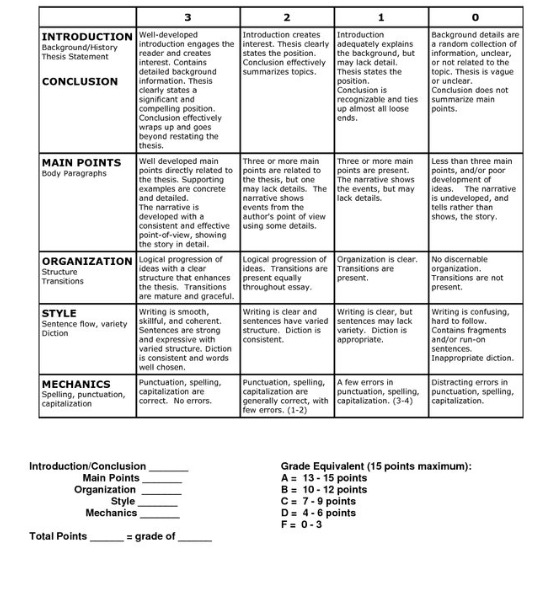
Below is the rubric for how your writing portion will be evaluated (I will give you a paper copy as well). Your worksheets will be graded for completion & returned to you at the end of class to assist with your writing. Your participation points for the day will be based on your performance and contributions to the small group discussions.
Conclusion
"In matters of truth and justice, there is no difference between large and small problems, for issues concerning the treatment of people are all the same"
- Albert Einstein
Any last thoughts? Comments? Questions?
Credits
http://www.apa.org/pi/ses/resources/publications/violence.aspx
http://www.poverties.org/blog/poverty-and-crime
https://www.youtube.com/watch?v=t2XFh_tD2RA
Kotlowitz, A. (1991). There are no Children Here: The Story of two Boys Growing up in the Other America. Doubleday Dell: New York.
Teacher Page
Pyramid worksheet example:
Story Pyramid
______________
Summary
___________________________
Characteristics of the author
__________________________________________
Context - time, place, beliefs, attitudes
_______________________________________________________
Issues & problems that the characters face
___________________________________________________________________
Themes & examples