
Task
There are many interesting animals native to South America.
Read through the information on the following pages about South American animals.
Summarise and create a paragraph to include in our information report.
Process
In South America there are tapirs, piranhas and anacondas and many other animals.
South America is also home to many endangered animals such as the jaguar, the giant otter or the Amazonian manatee.
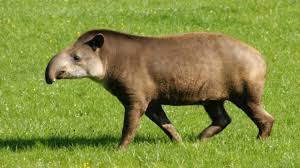 A Tapir is a large, herbivorous mammal, similar in shape to a pig, with a short, prehensile snout. Tapirs inhabit jungle and forest regions of South America, Central America, and Southeastern Asia.
Scientific name: TapirusHigher classification: TapiridaeHeight: 100 cm (At Shoulder)Mass: Malayan tapir: 250 kg Encyclopedia of LifeLength: Malayan tapir: 2.2 m Encyclopedia of LifeLifespan: 25 – 30 years (In the wild, In Zoo)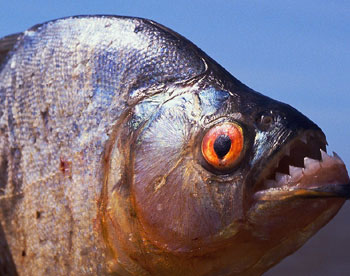 A piranha or piraña is a member of family Characidae in order Characiformes, an omnivorous freshwater fish that inhabits South American rivers. In Venezuela, they are called caribes. They are known for their sharp teeth and powerful jaws.There are approximately 20 species of piranha found living in the Amazon River, with only four or five of them posing any danger. Most piranha species are quite harmless. Adult piranha will eat just about anything - other fish, sick and weakened cattle, even parts of people. Sickly cattle that have stooped their heads down to drink from the river have been grabbed by the mouth and nose and pulled into the water, completely devoured minutes later.Piranhas are world-famous for their razor-sharp teeth. Native peoples of South America will catch the piranha and use their teeth to make tools and weapons.
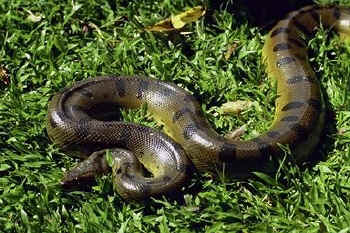
Anacondas make their home in the Amazon jungles of South America and are part of the Boa Constrictor family. Anacondas live near rivers, lakes and swamps and like to live alone. Water is their main escape method when confronted with danger. Rather than attacking they will choose to slide into the water unnoticed, if possible.
Anacondas eat amphibious animals, like frogs & toads, as well as fish, caiman, birds, ducks and turtles.
The average size of one of these snake-giants is 6.1 m (20 feet) long and 148.5 kg. (300 pounds)!
Anacondas give birth to live young, around 24-35 at a time.
Anacondas are very difficult for scientists to study or even find. They are really quiet and leave no trail. They spend a lot of their time in the dark waters of their habitat.