
Introduction
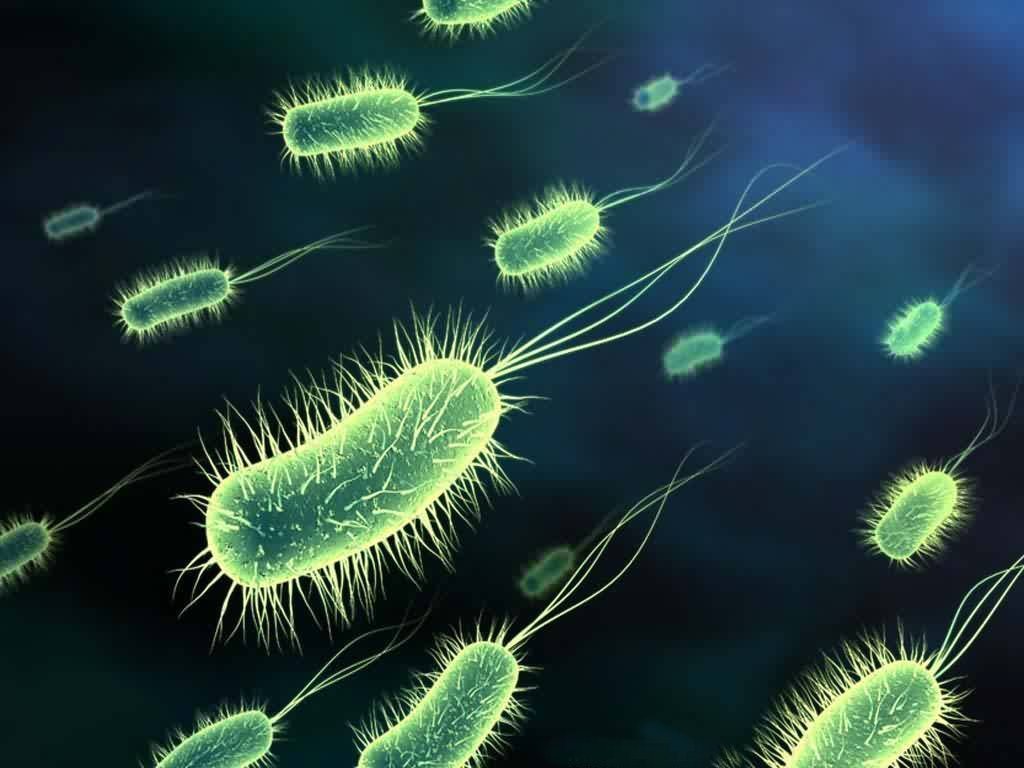
Do you believe that there are living organisms that cannot be seen by your naked eyes? There's this small living creatures that are living every where. They are "ubiquitous", they are in the air you breath, in the water you drink, and in the land where you are right now. Infact it is believe to inhabit earth long before you and other organisms appear. In this project we are going to bring you in the world of microorganisms. Find out how they live for a very long time despite of facing a harsh environment and what do they look like.

Task
Your group will going to explore the world of microorganism. You will be dealing different kinds of microorganisms. What are their distinct structures, characteristics, adaptation, their varied types of reproduction, and their mode of nutrition. In a form of group, do a power point presentation containing the information of different kinds of microorganism, examine a specific microorganism, especially their benefits. And you are going to prepare a certificate of appreciation for the microorganism you choose.
Process
Step 1: Form a group with 6 members.
Step 2; Use the website listed in the information resources and read about different kinds of microorganisms and their benefits in some purposes. You can also watch video and picture out the characteristics of both microorganisms.
Step 3: After reading the information make a powerpoint presentation in a creative but presentable manner follow the steps in making it.
Step 4: In making the Certificate of Appreciation, you can find pictures that you can attach to your project.
Step 5: Present your project in the class with all the knowledge you have gather along your research.
BENEFITS
http://www.livestrong.com/article/26093-list-good-bacteria/
http://healthyeating.sfgate.com/list-good-bacteria-7771.html
WEBSITE FOR TYPES OF MICROORGANISMS
http://faculty.weber.edu/coberg/class/2054/Micro2054%20Types%20of%20Microorganisms.htm
Evaluation
Here is the Rubrics for your finished outputs:
|
Criteria |
3 |
2 |
1 |
|
Content (Quality of Information) |
Presented the complete information clearly and accurately.
|
Presented limited information clear but inaccurate in some angle. |
Presented minimal information with less accuracy and clearness. |
|
Synchronization of Ideas
|
All spelling, grammar and mechanics are correct in the PowerPoint presentation. |
Some spelling, grammar and mechanics are correct in the PowerPoint presentation. |
There is a minimal use of appropriate spelling and grammar in the PowerPoint presentation. |
|
Animations and Style |
Catches the attention of the audience. Correct usage of font color, size and stlye. |
Correct usage of font color, size and style but with sparingly special effects. |
Some styles are inappropriate and backgrounds are busy. |
Conclusion
Congratulation! You’ve just explored the world of microorganisms!
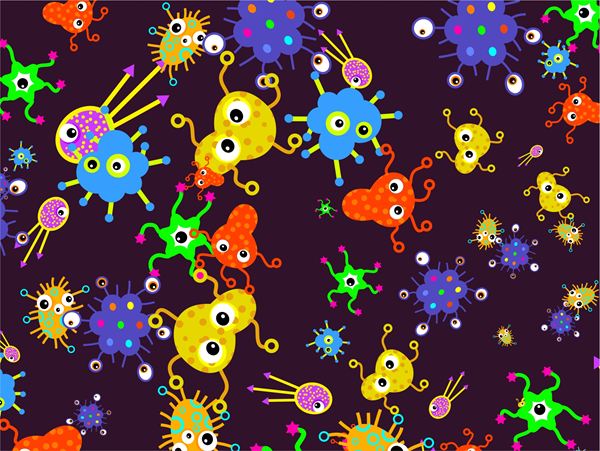
Archea, bacteria, protista, fungi, and viruses are the types of microorganisms that are ubiquitous on nature. They are microscopic organisms that exist as unicellular, or cell clusters. Some of them are beneficial in food industry, agricultural production, biotechnology and human livings; however other causes diseases and illnesses to other living organisms. Your finished PowerPoint presentation and Certificate of Appreciation to specific beneficial Microorganisms are the proof that you completed the tasks being assigned to you.
Credits
This webquest was created for requirement purposes.
Credits to:
http://www.livestrong.com/article/26093-list-good-bacteria/
http://healthyeating.sfgate.com/list-good-bacteria-7771.html
http://faculty.weber.edu/coberg/class/2054/Micro2054%20Types%20of%20Microorganisms.htm
http://www.microbeworld.org/types-of-microbes
https://www.createwebquest.com/node/23750/edit

http://www.worldtechtoday.com/wp-content/uploads/2015/02/microorganisms.jpg
http://mrscienceut.net/troll_green_lumbering_hg_clr.gif

http://media.tumblr.com/tumblr_m7dd6advhK1qa1zvj.png

Teacher Page
Instructions:
- Highlight the terms in the crossword puzzle that corresponds to the given descriptions below.
- Change the color of the correct answer into RED.
B | V | T | M | M | U | D | P | L | F | I | A | T | V | I | A | R | X | Z | Z |
I | A | O | E | I | S | O | O | V | U | D | H | H | S | Z | R | O | W | O | H |
T | E | C | E | S | C | F | W | N | N | E | H | K | A | X | C | C | L | P | K |
N | R | E | T | A | E | R | S | D | G | O | C | J | R | T | H | E | A | L | T |
Q | O | E | E | E | J | P | O | B | I | U | X | Y | O | J | E | U | H | F | A |
X | B | E | Y | G | R | D | S | O | U | H | T | O | I | Z | A | K | J | G | U |
N | I | D | U | L | X | I | T | N | R | P | O | O | A | X | X | A | T | V | S |
M | C | A | P | A | J | N | A | I | E | G | K | G | S | Z | U | R | U | S | S |
E | Q | E | G | I | X | E | J | O | X | J | A | O | S | Z | E | Y | K | C | E |
E | Y | H | L | L | R | O | I | O | O | O | O | N | Q | C | E | O | R | S | B |
F | O | H | K | O | Y | X | R | K | Ñ | S | O | F | I | T | Y | T | K | E | N |
G | P | F | B | P | R | O | T | I | S | T | A | O | D | S | T | E | I | G | J |
A | W | I | E | J | C | K | S | O | O | Q | O | I | S | E | M | S | P | S | A |
G | C | F | H | H | O | P | Q | N | R | A | L | D | A | S | O | D | O | J | D |
H | V | Y | L | I | I | M | C | H | A | O | U | O | V | U | H | F | P | E | J |
C | N | J | W | E | I | H | L | U | R | C | K | M | K | R | H | B | B | R | H |
U | M | S | G | P | R | O | K | A | R | Y | O | T | E | I | R | S | O | V | G |
O | D | Q | N | E | T | L | K | I | G | U | T | O | M | V | B | Ñ | R | Z | E |
P | Y | L | W | W | D | T | S | A | B | A | N | A | I | T | K | S | T | E | W |
I | L | Y | K | A | E | R | D | E | E | A | M | B | O | T | X | F | A | F | E |
- Living in the presence of oxygen---
- Living without oxygen---
- Has true nucleus---
- Primary producers (utilize light and CO2)---
- One-celled organisms don’t have a nucleus or any other membrane-bound organelles---
- Plant-like algae produce much of the oxygen we breathe---
- Also called microbe---
- Microorganisms such as yeasts and molds and mushrooms---
- Constitute a domain or kingdom of single-celled microorganisms---