
Introduction
The Revolutionary War - The Declaration of Independence
Developed by
Abigail Salings
159798@houndmail.macc.edu
Moberly Area Community College
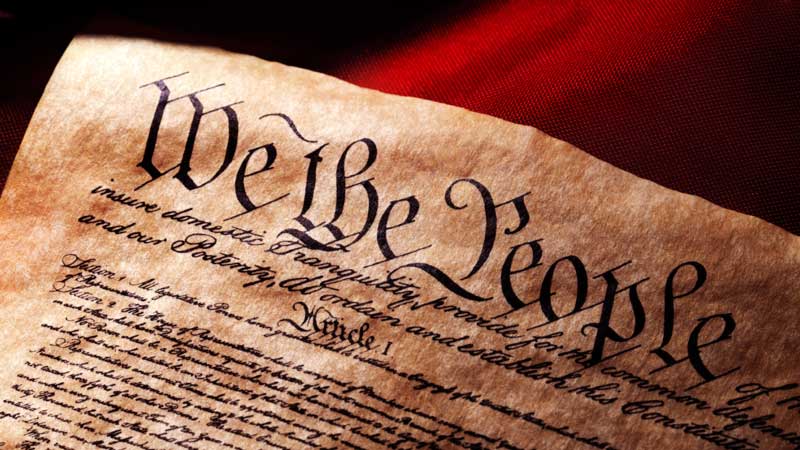
What exactly is in the Declaration of Independence? What is it for? Who made it, and why does it say what it says? This WebQuest is made to help you (students) explore the whos, whys, whats, and wheres of the Declaration, and see how the class views what the document says and whether or not they think those values apply today.
Task
Desicions for a Declaration: Read, Write, and Think
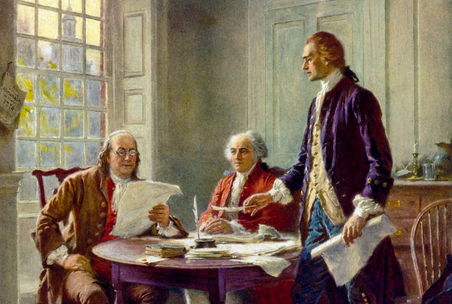
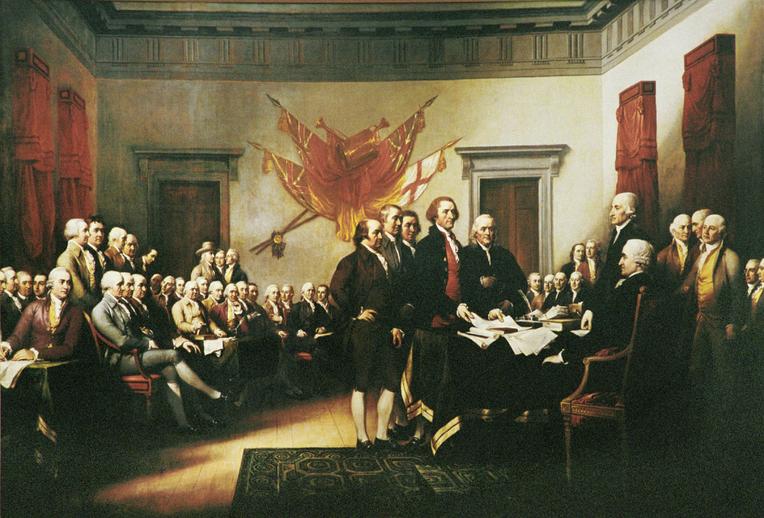
Imagine that you're helping Thomas Jefferson, Benjamin Franklin, John Adams, Roger Sherman, and Robert R. Livingston write the Declaration of Independence. Either on your own or in small groups of two to four, you'll be reviewing the major points of the Declaration of Independence as if you're going over them for the final draft of the Declaration.
Is there something you think should be changed?
If so, what would you change it to, and why?
The main goal is to understand why the Declaration is the way it is, and why these men wrote it to say these things specifically. It's important to take into account what these men believed, and their motives for separating from the British Empire.
Process
What to Do
For this assignment, you'll need:
- Declaration handout
- Your textbook
- Lecture notes
- pencil & paper
First, read through the handout that highlights the major points of the Declaration of Independence. Write out each highlight in your own words, then decide whether or not these are things you think should be in the Declaration.
What would you ask to be changed, if you think something should be changed at all?
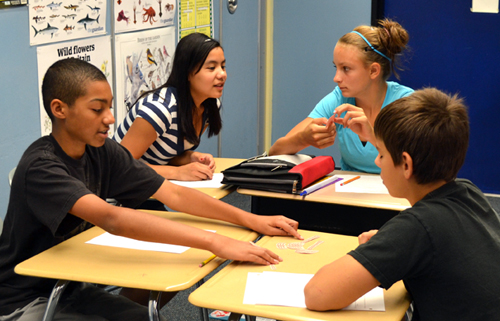
Pairing up to discuss opinions and thoughts is encouraged.
If so desired, one student can pretend to be Jefferson (or one of the others) and argue in favor of what was written, and the other can argue the opposition and encourage change. Feel free to use your textbook and notes to help you debate your side of the argument.
Once you decide and write out your reasons for any changes - or lack thereof - prepare to present your reasons to fellow classmates.
Evaluation
What to Aim For
Wondering how you should conduct yourself during this assignment?
Mostly just wondering how to get the best score possible?
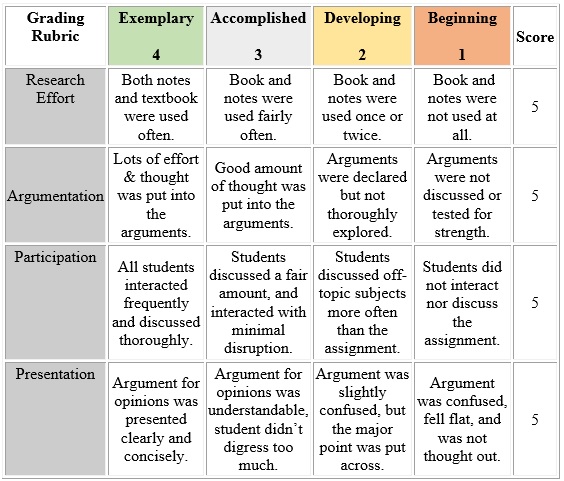
Here's what I'll be looking for during class.
If you simply try your best, you should do very well.
Conclusion
Our Own Declaration
To end today's class, we'll all sign a Declaration of Independence of our own to display in the classroom.
After we've all signed it and it's been put up, we'll cover the signing of the actual Declaration of Independence, and close out class for the day.
Credits
Credits
Websites:
http://www.history.com/topics/american-revolution/writing-of-declaratio…
http://www.history.com/topics/american-revolution/declaration-of-indepe…
http://www.history.com/this-day-in-history/congress-appoints-committee-…
http://www.history.com/topics/american-revolution/declaration-of-indepe…
Teacher Page
Teacher's Page
Lesson Plan:
Preread the pages and be aware of what the students will be reading and doing. Have the highlights worksheets printed and ready to distribute at the beginning of class, as well as the blank bottomed Declaration of Independence, and the rubrics.
Distribute the students to your available computers/tablet devices and encourage groups of at least two individuals.
Each student gets a worksheet at this time. Announce that the WebQuest is the day's activity, then read the pages aloud as they come up (following along on your own device or a projector is recommended).
Get the class started by having them translate the highlighted portions on the worksheets into their own words and get them discussing what they like and dislike about the fragments. Make sure to keep an eye out so that misunderstandings/mistranslations aren't had. Once they get discussing, start working on their rubrics. A vantage point to observe as many students as possible is a good idea, but don't forget to make a round or two. If some students are working alone, play a little Devil's advocate with them to help them explore their arguments. Reading off fully correct translations of the lines is also a good idea if the class is struggling to put things into their own words.
Once they're done, have the students do a brief "presentation" of what they would and/or wouldn't change and finish the rubric.
Collect worksheets, and then move on to a quick overview of the signing of the Declaration, and reveal the blank bottomed Declaration and have everyone sign it (judge whether or not you should ask for first and last names, and encourage cursive signatures).
That's it!
What learning must precede the WebQuest?
Using the Prezi that covers the events that lead up to the Revolutionary war beginning and the lecture covering a majority of the war leading up to the creation of the Declaration of Independence.
How long will the students take completing this WebQuest?
I figure an hour to an hour and a half.
Teacher Resources:
- The "Highlights of the Declaration" handouts
- The grading rubric
- The blank bottomed Declaration
Maybe a projector/smartboard if you want run this WebQuest up on a screen.
Handouts:
"Highlights of the Declaration" handout LINK
Blank Bottomed Declaration LINK