
Introduction
HELLO EVERYBODY!
In this WebQuest you will be asked to explore Newton and his Three Laws of Motion.
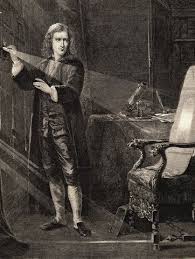
Sir Isaac Newton lived during the 1600s. Like all scientists, he made observations about the world around him. Some of his observations were about motion. His observations have been supported by more data over time; and we now call these Newton’s Laws of Motion.
This interactive webquest is designed to help you gain a better understanding of Newton’s Laws and the principles of physics.
Task

You are a journalist
and you have to write an article about Newton and his laws.
You want to let everyone know about the greatness of Newton's work.
In your exploration through his life and his work, you need to complete the series of activities outlined below:
1. Use the internet to research information about him
2. Use the internet to find materials to create laboratory experiences related to Newton’s laws of motion
3. Create movies related to each Newton's Law
3. Use everything you have found (also pictures) to write an article for an immaginary scientific e-magazine
"The Scientist E-magazine"
in which there will be both written parts and videos made by you.
4. Create a prezi presentation to tell your classmates what your e-article says
This will be a group work so you have to create your group (max 4 people).
Process
Part 1
Watch the videos below to have an idea about Newton's life:
https://www.youtube.com/watch?v=Cn_L1BvUGvg
https://www.youtube.com/watch?v=YBBLc9dLt1s
...and read the pages below....
http://cll.mcmaster.ca/multimedia_projects/sample/newton/
http://www.newtonproject.sussex.ac.uk/prism.php?id=1
https://www.newton.ac.uk/about/isaac-newton/life
http://www.biography.com/people/isaac-newton-9422656 (here there are also videos)
http://www.bbc.co.uk/timelines/zwwgcdm
Part2
Review Newton’s laws of motion, watching these videos
First Law:
https://www.youtube.com/watch?v=Q0Wz5P0JdeU
Second Law:
https://www.youtube.com/watch?v=WzvhuQ5RWJE
Third law:
https://www.youtube.com/watch?v=cP0Bb3WXJ_k
and read these pages:
http://csep10.phys.utk.edu/astr161/lect/history/newton3laws.html
http://teachertech.rice.edu/Participants/louviere/Newton/
Part 3

You and your partners surf the net and find some interesting links about Newton’s laws and lab experiments related to them.
Save the address (URL) of the web pages you found interesting and post them on a symbaloo page. This page will be useful when you present your work.
Part 4
After collecting information, for each law, you have to choose a laboratory experience.
Try to make it at home using everyday materials and, when you fell ok to be recorded, make a movie using tools you prefer.
In your movies you must follow the following procedure:
1. First, you will need to state each law as it is written in your textbook or other source in the net.
2. Your group must record yourselves accurately demonstrating each of Newton’s Laws. You must have one demonstration for each of the three laws.
3. After each demonstration there must be an explanation on camera, either while the demonstration is occurring, or after the demonstration, of how each illustrates the law. The explanations must be at least 5 sentences for each demonstration. All group members must in some way be in the video. You can recruit other people to assist in demonstrations.
Part 5
Are you ready???
Now it's time to write the article (max 500-700 words) for "The Scientist E-Magazine".
 In it, you have to include the following information:
- relevant facts about Newton’s life
- his works and writings
- a short description about his laws
- for each laws, a movies that describe an experiment related to the law
Part 6
We arrived almost at the end...
 Now, you have to prepare a Prezi presentation (max 20 min) in which you collect all materials, present your article and show your videos.
All group members must speak
Evaluation
MOVIE CREATION RUBRIC
|
CATEGORY |
4 |
3 |
2 |
1 |
SCORE |
|
Creativity/ Originality |
Video shows a large amount of original thought. Ideas are creative and inventive. |
Video shows some original thought. Work shows new ideas and insights. |
Video uses other people's ideas (giving them credit), but there is little evidence of original thinking. |
Uses other people's ideas, but does not give them credit. |
|
|
Requirements |
Experiment is shown, explanation of why it works, a brief but informative explanation of who Newton was. All requirements are met. |
Experiment is shown, explanation of why it works, a brief but informative explanation of who Newton was. One missing. |
Experiment is shown, explanation of why it works, a brief but informative explanation of who Newton was. Two requirements missing. |
Experiment is shown, explanation of why it works, a brief but informative explanation of who Newton was. Requirements not met. |
|
|
Scientific Knowledge |
Explanations of chosen law in video and on Wiki indicates a clear and accurate understanding of Newton's laws. |
Explanations of chosen law in video and on Wiki indicates a relatively accurate understanding of Newton's laws. |
Explanations of chosen law in video and on Wiki do not demonstrate much understanding of Newton's laws. |
Explanations of chosen law in video and on Wiki is not there. |
|
|
Experiment |
Experiment shows an accurate demonstration of your chosen law. |
Experiment shows a relatively accurate demonstration of your chosen law. |
Experiment does not demonstrate your chosen law. |
Experiment is not shown |
|
|
Attractiveness |
Makes excellent use of font, color, graphics, effects, etc. to enhance the presentation. |
Makes good use of font, color, graphics, effects, etc. to enhance to presentation. |
Makes use of font, color, graphics, effects, etc. but occasionally these detract from the presentation content. |
Use of font, color, graphics, effects etc. but these often distract from the presentation content. |
|
|
Sources |
Source information collected for all graphics, facts and quotes. All documented at the bottom of Wiki. |
Source information collected for all graphics, facts and quotes. Most documented at bottom of Wiki. |
Source information collected for graphics, facts and quotes, but not documented at bottom of Wiki. |
Very little or no source information was collected. |
|
ORAL PRESENTATION RUBRIC
| CATEGORY | 4 | 3 | 2 | 1 | SCORE |
| PREPAREDNESS | Student is completely prepared and has obviously rehearsed. | Student seems pretty prepared but might have needed a couple more rehearsals. | The student is somewhat prepared, but it is clear that rehearsal was lacking. | Student does not seem at all prepared to present | |
| PRESENCE | Very believable that student is giving presentation to their boss and board of directors. | Somewhat believable that student is giving presentation to their boss and board of directors | Inconsistent to whether or not student was giving presentation to their boss and board of directors. | Student did not act like they were giving this presentation to their boss and board of directors | |
| POSTURE/EYE CONTACT | Stands up straight, looks relaxed and confident. Establishes eye contact with everyone in the room during the presentation. | Stands up straight and establishes eye contact with everyone in the room during the presentation. | Sometimes stands up straight and establishes eye contact. | Slouches and/or does not look at people during the presentation | |
| VOLUME | Volume is loud enough to be heard by all audience members throughout the presentation. | Volume is loud enough to be heard by all audience members at least 90% of the time | Volume is loud enough to be heard by all audience members at least 80% of the time | Volume often too soft to be heard by all audience members | |
| LISTENS TO OTHER PRESENTATION | Listens intently. Does not make distracting noises or movements. | Listens intently but has one distracting noise or movement | Sometimes does not appear to be listening but is not distracting | Sometimes does not appear to be listening and has distracting noises or movements |
WRITTEN PRESENTATION RUBRIC
| TOPIC | 4 | 3 | 2 | 1 | SCORE |
|
Organization (Overall order, flow, and transitions) |
Information is presented in effective order. Excellent structure of paragraphs and transitions enhances readability and comprehension | Information is logically ordered with paragraphs and transitions | Information is scattered and needs further development. | Details and examples are not organized, are hard to follow and understand | |
| Quality of Information | Supporting details are specific to topic and provide the necessary information. | Some details don’t support the report topic | Details are somewhat sketchy. | Unable to find specific details | |
| Introduction | Introductory paragraph is clearly stated, has a sharp, distinct focus and enhances the impact of the report | Introductory paragraph is clearly stated with a focus | Introductory paragraph is vague | Introductory paragraph is not apparent. | |
| Conclusion | Concluding paragraph summarizes and draws a clear, effective conclusion and enhances the impact of the report. | Concluding paragraph follows and summarizes the report discussion and draws a conclusion. | Concluding paragraph is only remotely related to the report topic. | Concluding paragraph is not apparent. | |
| Grammar & Spelling | No spelling or grammatical errors. | Fewer than 3 grammatical or spelling errors. | Three to five grammatical or spelling errors | Numerous grammatical and/or spelling errors. | |
| Bibliography | All resources are cited and appear with correct formatting | All resources are cited, but formatting isn’t correct. | Some resources are cited but not all. Not formatted | Resources not cited in paper or proper format not used. |
Conclusion

CONGRATULATIONS!!!
You have used your creativity to make a movie.
You have used your knowledge to write a scientific article.
You have also used your artistic ability to share it with your classmates.
Who knows?
This may be the beginning of a new career.
I am proud of your hard work!
Let's display your work for our classmates to see.