
Introduction
Music

“Music expresses that which cannot be put into words and that which cannot remain silent”
― Victor Hugo
Music is an art form and cultural activity whose medium is sound and silence.
Task
- What is Music?
- What are the elements of Music?
- Etymology of Music.
- Composition
- Notation
- Improvisation
- Theory
Process
What is Music
An art of sound in time that expresses ideas and emotions insignificant forms through the elements of rhythm, melody, harmony,and color.
Music is an art form and cultural activity whose medium is sound and silence. The common elements of music are pitch (which governsmelody and harmony), rhythm (and its associated concepts tempo, meter, and articulation), dynamics (loudness and softness), and the sonic qualities of timbre and texture (which are sometimes termed the "color" of a musical sound). Different styles or types of music may emphasize, de-emphasize or omit some of these elements. Music is performed with a vast range of instruments and with vocal techniques ranging from singing to rapping, and there are solely instrumental pieces, solely vocal pieces (such as songs without instrumental accompaniment) and pieces that combine singing and instruments.
Etymology
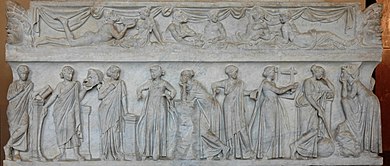
The word derives from Greek μουσική (mousike; "art of the Muses"). In Greek mythology, the nine muses were the goddesses who inspired literature, science, and the arts and who were the source of the knowledge embodied in the poetry, song-lyrics, and myths in the Greek culture. According to the Online Etymological Dictionary, the term "music" is derived from "mid-13c., musike, from Old French musique (12c.) and directly from Latin musica "the art of music," also including poetry (also [the] source of Spanish musica, Italian musica, Old High German mosica, German Musik, Dutch muziek, Danish musik)." This is derived from the "...Greek mousike (techne) "(art) of the Muses," from fem. of mousikos "pertaining to the Muses," from Mousa "Muse" (see muse (n.)). Modern spelling [dates] from [the] 1630s. In classical Greece, [the term "music" refers to] any art in which the Muses presided, but especially music and lyric poetry.
Composition

"Composition" is the act or practice of creating a song or other piece of music. In many cultures, including Western classical music, the act of composing also includes the creation of music notation, such as a sheet music "score", which is then performed by the composer or other singers or musicians. In popular music and traditional music, the act of composing, which is typically called songwriting, may involve the creation of a basic outline of the song, called the lead sheet, which sets out the melody, lyrics and chord progression. In Classical music, the composer typically orchestrates her own compositions, but in musical theatre and in pop music, songwriters may hire an arranger to do the orchestration. In some cases, a songwriter may not use notation at all, and instead compose the song in her mind and then play or record it from memory. In jazz and popular music, notable recordings by influential performers are given the weight that written scores play in classical music.
Notation

Notation is the written expression of music notes and rhythms on paper using symbols. When music is written down, the pitches and rhythm of the music is notated, along with instructions on how to perform the music (e.g., regarding the tempo). The study of how to read notation involves music theory, harmony, the study of performance practice, and in some cases an understanding of historical performance methods. Written notation varies with style and period of music. Notated music is produced as sheet music. To perform music from notation requires an understanding of both the rhythmic and pitch elements embodied in the symbols and the performance practice that is associated with a piece of music or a genre. In improvisation, the performer often plays from music where only the chord changes and form of the song are written, requiring a great understanding of the music's structure, harmony and the styles of a particular genre (e.g., jazz or country music).
Improvisation
Musical improvisation is the creation of spontaneous music, often within (or based on) a pre-existing harmonic framework or chord progression. Improvisation is the act of instantaneous composition by performers, where compositional techniques are employed with or without preparation. Improvisation is a major part of some types of music, such asblues, jazz, and jazz fusion, in which instrumental performers improvise solos, melody lines and accompaniment parts. In the Western art music tradition, improvisation was an important skill during the Baroque era and during the Classical era. In the Baroque era, performers improvised ornaments and basso continuo keyboard players improvised chord voicings based on figured bass notation. In the Classical era, solo performers and singers improvised virtuoso cadenzas during concerts. However, in the 20th and early 21st century, as "common practice" western art music performance became institutionalized in symphony orchestras, opera houses and ballets, improvisation has played a smaller role. At the same time, some modern composers have increasingly included improvisation in their creative work. In Indian classical music, improvisation is a core component and an essential criterion of performances.
Theory
Music theory encompasses the nature and mechanics of music. It often involves identifying patterns that govern composers' techniques and examining the language and notation of music. In a grand sense, music theory distills and analyzes the parameters or elements of music – rhythm, harmony (harmonic function), melody, structure, form, and texture. Broadly, music theory may include any statement, belief, or conception of or about music. People who study these properties are known as music theorists. Some have applied acoustics, human physiology, and psychology to the explanation of how and why music is perceived.
Elements of Music
Rudimentary elements of music
In the 1800s, the phrase "the elements of music" and the phrase "the rudiments of music" were used interchangeably. The elements described in these documents refer to aspects of music that are needed in order to become a musician, Recent writers such as Estrella seem to be using the phrase "elements of music" in a similar manner. A definition which most accurately reflects this usage is: "the rudimentary principles of an art, science, etc.: the elements of grammar." The UK's curriculum switch to the "inter-related dimensions of music" seems to be a move back to using the rudimentary elements of music.
Perceptual elements of music
Since the emergence of the study of psychoacoustics in the 1930s, most lists of elements of music have related more to how we hear music than how we learn to play it or study it. C.E. Seashore, in his book Psychology of Music, identified four "psychological attributes of sound". These were: "pitch, loudness, time, and timbre" (p. 3). He did not call them the "elements of music" but referred to them as "elemental components" (p. 2). Nonetheless these elemental components link precisely with four of the most common musical elements: "Pitch" and "timbre" match exactly, "loudness" links with dynamics and "time" links with the time-based elements of rhythm, duration and tempo. This usage of the phrase "the elements of music" links more closely with Webster's New 20th Century Dictionary definition of an element as: "a substance which cannot be divided into a simpler form by known methods" and educational institutions' lists of elements align with this list as well.
Writers of lists of "rudimentary elements of music" vary their lists depending on their personal priorities. However, in relation to the perceptual elements of music, it should be possible to identify a list of discrete elements which can be independently manipulated to achieve an intended musical effect. It seems at this stage that there is still research to be done in this area.
Analysis of musical styles
 Funk places most of its emphasis on rhythm and groove, with entire songs based around a vamp on a single chord. Pictured are the influential funk musiciansGeorge Clinton and Parliament Funkadelic in 2006.
Some styles of music place an emphasis on certain of these fundamentals, while others place less emphasis on certain elements. To give one example, while Bebop-era jazz makes use of very complex chords, including altered dominants and challenging chord progressions, with chords changing two or more times per bar and keys changing several times in a tune, funk places most of its emphasis on rhythm and groove, with entire songs based around a vamp on a single chord. To give another example, while Romantic era classical music from the mid- to late-1800s makes great use of dramatic changes of dynamics, from whispering pianissimo sections to thunderous fortissimo sections, some entire Baroquedance suites for harpsichord from the early 1700s may use a single dynamic.
Evaluation

Conclusion

Credits
Teacher Page
Thank You for visiting My WebQuest!
I hoped you learned a lot about Music!!!
:)