
Introduction
The Mad Matter

Photo courtesy of fondsecrans37.centerblog.net
Welcome: 5th grade matter webquest
Description: What are items that we use everyday made up of? Think about drinking a cup of tea. What if the tea changed shape...would it still fit in the cup? Would the volume stay the change? Today we will discover matter and how it is relates to volume, shapes, and how it is measured.
Focus Grade Level: 5th
Subject: Science
Keywords: Matter, Volume, Physical Properties
Author(s): Michael A. Darnell
Task
Photo courtesy of illuminatisymbols.inf
Oh no, the Mad Matter was having his tea and discovered that nothing is as it should be. The water for his tea does not look like water, it appearsto be solid and fits oddly in some of his teapots. He is also curious as to why sometimes more water fits in some teapots while other teapots do not hold the same amount of water.
Your task, if you chose to accept it, is to go to Wonderfield for 6 days and join the Mad Matter for tea to see if you can figure out what is going on.
Process
While in Wonderfield for the next 6 days, you will see and learn a lot of things. To receive credit for this assignment, I suggest you create a journal entry for each day you are in Wonderfield. See the evaluation section for an example.
Day One: Review of what Matter is. (Click on the image below)
photo courtesy of corium.blogspot.com
1. What are the particles that make up matter called?
Day Two: Click on the image below to discover more about how Matter exists

Photo Courtesy of en.wikipedia.org
2. In addition to condensates and plasma, what are the other 3 states of matter?
3. Explain what the physical state and chemical state of is.
4. Can the physical state change? Can the chemical state change?
Day Three: Click on the coffee cup below to learn about solids, liquids, and gases.
photo courtesy of www.123rf.com
5. Provide an example of a solid, liquid, and gas.
6. Can you think of anything that may exist as a solid, liquid, and gas to help figure out why the Mad Hatter can't get his tea made?
Day Four: Volume
Click on the following images to get information on what volume is and how we use it.

Photo courtesy of theteaemporium.com
Photo courtesy of www.retrospectgalleries.com
Photo courtesy of www.trendhunter.com
7. What does Volume tell us?
8. What is the formula for volume?
Day Five: Practice Volume
9. The Mad Matter has two teapots, calculate the volume of both.
Teapot 1
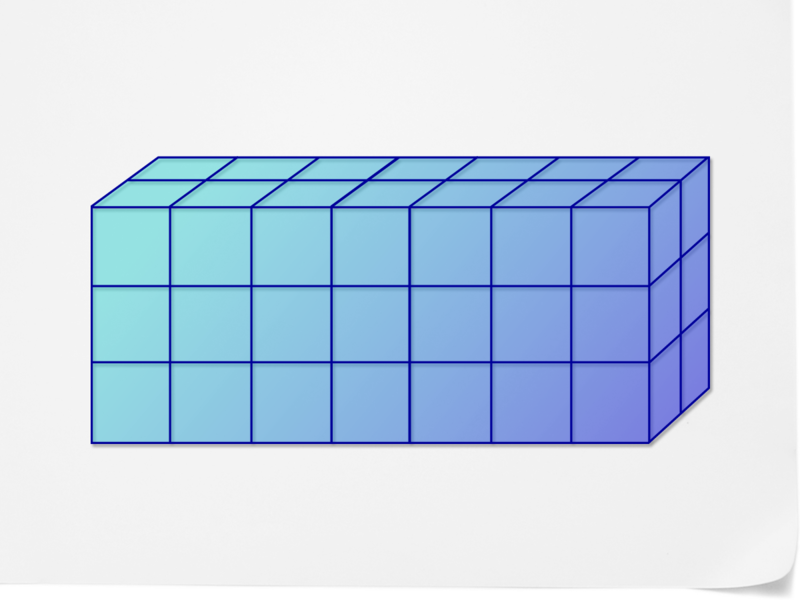
Photo coutesy of www.ck12.org
Teapot 2

Photo courtesy of pixgood.com
10. Which teapot holds more liquid?
11. If the Mad Matter is attempting to pour the amount of water for teapot 1 in teapot 2, will the amount of water be the same? (Hint does the volume of teapot 1 equal the volume to teapot 2)
Day Six: Meet with the Mad Matter and discuss your findings.
In your final journal entry you will write a well organized entry that expresses what you found out for the Mad Matter over the past few days to help him understand what is going on.
Evaluation
Scoring will be based on the rubric below:
|
Evaluation Rubric |
||
|
What is being assessed |
Possible Available |
Points Awarded |
|
Student displays an understanding of what matter is
|
20 |
|
|
Student displays an understanding of what volume is
|
20 |
|
|
Student completes assigned questions
|
20 |
|
|
Student completes the assignment in a journal format where there is a page assigned for each Day. (Ensure that the journal is well organized, labeled, and easy to follow)
|
15 |
|
|
Day 6 entry is well thought out, organized, and completed
|
15 |
|
|
The cover of the journal is labeled “The Mad Matter” and has a graphic representation of what you learned. |
10 |
|
Conclusion
Congratulations!!! In this Webquest you successfully reviewed what matter was and how it was made up. You also, were introduced to volume and how it can relate to you. Finally, you helped the Mad Matter on his journey to figure out what was going on with his tea. I look forward to our in depth study of Volume that begins on Monday!
Teacher Page
Standard:
5.P.2A.1 Analyze and interpret data from observations and measurements of the physical properties of matter (including volume, shape, movement, and spacing of particles) to explain why matter can be classified as a solid, liquid or gas.
5-4.1 Recall that matter is made up of particles too small to be seen.
5-4.2 Compare the physical properties of the states of matter (including volume, shape, and the movement and spacing of particles).