
Introduction
Signaling all middle school explorers!
A Webquest to help you understand
the basics of the creation of our universe.

First, what is a theory?
Scientific theories are “explanations for a wide range of phenomena.”[1] They are often retested and reevaluated, can be revised or added to, and are occasionally abandoned if new evidence completely disproves them. The main thing to know about a theory is that it currently has scientific evidence which supports it.
Now that you know what a theory is,
how does it relate to the creation of our universe?
Have you ever wondered about the skies, moon and plantets above?
Did you know it all began with a small atom in space?
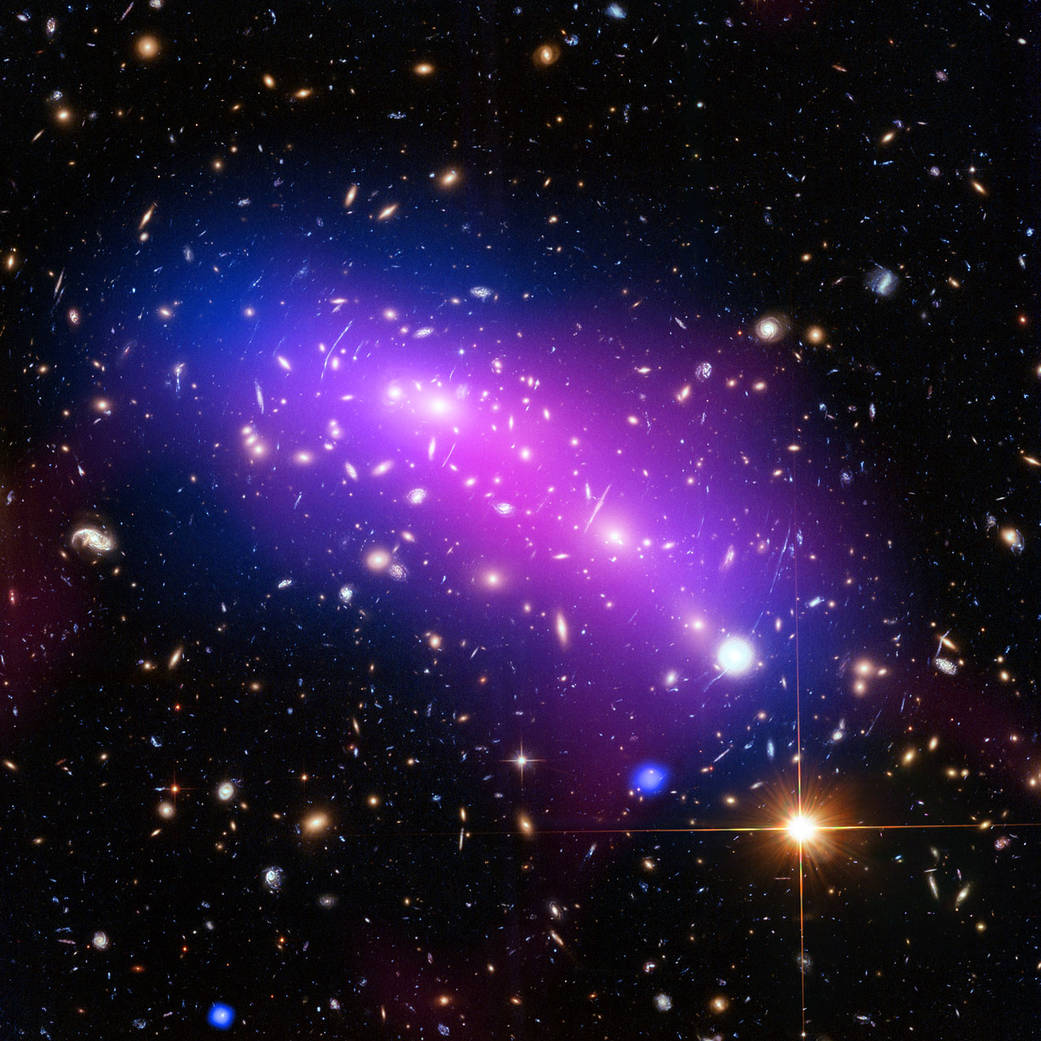
Photo Courtesy of NASA - Image from Hubble Telescope on 25 Mar 2016 [2]
To answer these questions, you need to learn about The Big Bang Theory! Yes, it is a TV show and the theme song even mentions some of the theory. But more importantly, The Big Bang Theory is also the name of the current leading theory on how the universe was formed. Scientists believe billions of years ago the entire vastness of the universe was compressed into a dense mass just a few millimeters in size (less than an inch across). [3] The rapid expansion of the mass began the formation of the universe (and eventually Earth).
Click on the "Task" button & join Explorer Neil to begin your exploration of The Big Bang Theory!

Photo Courtesy of NASA - Image from Hubble Telescope 23 Oct 2015 [4]
[1] (University of California Museum of Paleontology)
[2] (NASA, 2016)
[3] (National Geographic Society)
[4] (NASA, 2015)
Task
BANG BANG!!!! 
The Task At Hand
1. Who is Georges Lemaître?
2. How did the Big Bang Theory go to become a theory?
3. Are there other explanations/theories of how the Universe was created?
4. Does the Universe change as time goes on?
As you and Explorer Neil travel our WebQuest in search of answers for these questions and how we came to be, you will come away with the knowledge of why the Big Bang Theory is the leading theory of creation!
Process
The Process:

Georges Lemaître, Father of the Big Bang, According to the Big Bang theory, the expansion of the observable universe began with the explosion of a single particle at a definite point in time. This startling idea first appeared in scientific form in 1931, in a paper by Georges Lemaître, a Belgian cosmologist and Catholic priest.
The Big Bang Theory became a theroy in an effort to explain what happened at the very beginning of our universe. Discoveries in astronomy and physics have shown beyond a reasonable doubt that our universe did in fact have a beginning. According to the standard theory, our universe sprang into existence as "singularity" around 13.7 billion years ago.
Other explantions of how the universe was created have the theory that a single "God" , "Gods" or force created the Universe forms the basis of the philosophies of the largest religions currently in the world: o Christianity o Islam o Judaism and even Buddhism.Each of these major religions base their philosophies on the essential belief that God(s) existed before the Universe was created and that God was the architect and creator of the Universe
The Universe changes as time goes on. With technology that exist now and how we can send astronauts into space is a great way to learn more about space and the universe. The collection of galaxies that make up the universe is moving through space; therefore, the universe is expanding into even more space than it already encompassed.

Evaluation

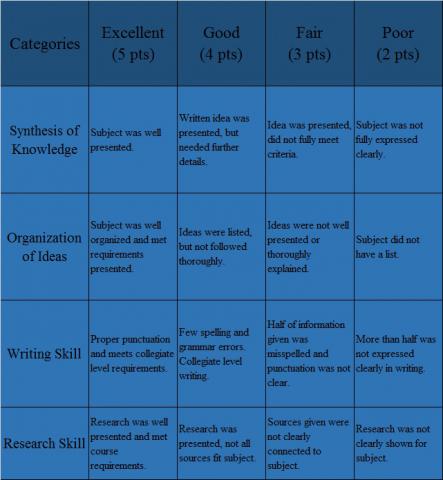
How would you rate this webquest? Was it clear and concise in what the group presented? Were there any mispellings in any part of it? Below is a rubric to rate how well this webquest was presented.
Conclusion
Finally, you have improved your knowledge about how our Universe was formed and the fact that the Big Bang Theory is not just a Tv show, but is also the most accepted scientific theory of our universe formation!
Before you depart, Explorer Neil thinks you should take a look at this quick video which is an excellent way to remember that everything started with the Big Bang Theory! Enjoy it!
[video:https://www.youtube.com/watch?v=CMSYv_Z4SI8 align:center]
Credits
CreditIntroduction: Melinda
Task: Enrique
Process: Cesar
Evaluation: Kristen
Conclusion: Liliana
Guide: Explorer Neil 
Works Cited
NASA, 2015. "A Hubble View of Starburst Galaxy Messier 94." 23 Oct 2015. 26 Mar 2016 <http://www.nasa.gov/image-feature/goddard/a-hubble-view-of-starburst-galaxy-messier-94>
NASA, 2016. "Hubble Looks Into a Cosmic Kaleidoscome." 25 Mar 2016. 26 Mar 2016. <http://www.nasa.gov/image-feature/goddard/2016/hubble-looks-into-a-cosmic-kaleidoscope>.
National Geographic. Origins of the Universe: An Expanding World. n.d. 26 Mar 2016. <http://science.nationalgeographic.com/science/space/universe/origins-universe-article/>.
University of California Museum of Paleontology. Science at Multiplel Levels. 3 Mar 2016. <http://undsci.berkeley.edu/article/howscienceworks_19>.
Cosmic Horizons: Astronomy Cutting Edge. "28 March. 2016 <http://www.amnh.org/education/resources/rfl/web/essaybooks/cosmic/p_lemaitre.html>
All about Science : The Big Bang Theroy Overview. "02 April. 2016 <http://www.big-bang-theory.com/>
The Universe and it's Origins; 11 April. 2016 <http://ucadia.com/uca/u03/030300.htm>
What is the Universe Expanding too; 15 April. 2016 <http://curious.astro.cornell.edu/about-us/104-the-universe/cosmology-and-the-big-bang/expansion-of-the-universe/623-what-is-the-universe-expanding-into-intermediate>