
Introduction

Global Poverty is a complicated problem that involves many factors. We live in a country that has a good economic status. It is hard to imagine that people do not live as well as most of us do. Poverty does exist for some in Canada, with 9.4% of the population below the poverty line (2013). However, there are many countries where daily life is a struggle for most people. In some countries up to 80% of the population live below the poverty line. Food, clean water and shelter are hard to come by and people will do almost anything to survive.
Nelson Mandella said "Overcoming poverty is not a task of charity, it is an act of justice." However, overcoming global poverty is no easy task. It did not start over night and it will not go away like that either. There are many reasons why people are poor, and helping those who live in poverty is equally complicated.
There are many factors that influence the existence of and continuation of poverty:
Just a few factors to consider:
1. Regional or international conflicts (war)
2. Drought and/or Natural Disasters (floods, hurricanes, earthquakes, etc.)
3. Social inequalities
4. Globalization
5. Hunger
6. History (including colonization and/or slavery)
7. Education

During this webquest you will explore these issues and be asked to complete a task which will demonstrate the knowledge you have gained. You will have a choice of 4 possible projects. They are titled: 1) Creating Economic Opportunities 2)Strategies for Ending Poverty 3) Interview Power Point 4) Advertising Campaign
Task

Your task is divided into 2 parts. The first task is acquire the background knowledge needed to complete the second part of the task. The second part of the task is described below.
PART 1
Background investigation:
You will complete activities, read articles, and view videos to increase your knowledge of global poverty as outlined in the process section.
PART 2
You will choose 1 of the following tasks to complete:
1. Creating Economic Opportunities

Reducing global poverty is a complex issue that requires long-term international cooperation. Research has shown that one promising strategy is increasing people's access to economic opportunities close to home.
Task
Imagine you are a Peace Corps Volunteer serving in a community where people have few options for generating income. The community has invited you to serve as their business advisor over the next two years.
You will examine poverty data from the world, and explore small business development as an approach to alleviating poverty. You will need to choose a country and region to focus on.
Develop a presentation (it could be a power point presentation or a poster and 2-3 page report or a poster and a 2-3 minute speech) to introduce your idea at a community meeting (your class). Be prepared to answer questions from community members. Be sure to discuss:
- What needs would the business help address?
- Who are the target customers?
- What materials would you need to get started? Are these locally available?
- How would the business use people's existing knowledge and skills?
- How will the income generated improve people's quality of life?
Also, you will be required to provide background information about poverty, including the factors and causes discussed in this webquest.
Before you decide on an economic plan, you will need to research and consider the climate of the region; the type of food eaten; housing, fuel for cooking; water source; whether or not there is ever people starving; family income; access to schooling; literacy rates; enviromental factors; and gender equity. (There will be some information on this webquest, but you may need to search further, just remember to write down what source you used and included it with your project).
2. Strategies for Ending Poverty

Imagine you have been asked by Prime Minister Justin Trudeau to give a presentation outlining the problem of global poverty. He has asked you to not only outline all the issues surrounding global poverty, but also provide strategies to help solve the problem.
TASK:
After looking at and reading all of the materials that go along with this activity, your task is to create an informational poster and a 2-3 page report on global poverty (double spaced) with your strategies to help end it. Your proposal should be informed, and use the information within this webquest. You should be able to explain how you know your strategies are good ones.
When reading and viewing the resources that go along with this WebQuest you should be thinking about the following:
- What is poverty?
- Who is affected by poverty?
- How does poverty affect children?
- What countries are affected by poverty?
- What are some statistics about poverty?
- What are some of the causes of poverty?
- What can we do to help end the global issue of poverty?

3. Power Point Presentation  Imagine you have been asked to interview for a position with the World Bank that involves travel to Africa to provide aid in a poor country.Task:The World Bank has requested that you prepare a power point presentation for the interview. You must be prepared to answer:
- What is poverty?
- Who do you consider as poor?
- What are other definitions of poverty? Compare with how you view poverty. What do you think is the best way to measure poverty?Give examples.
- What are reasons for people being poor?
- How does poverty affect people's lives?
- How does poverty affect children?
- What means are there to fight poverty?
- What is the World Bank and what are its guiding principles?
- Any other issue you think is relavant.
4. Creating an Ad Campaign

Ad Campaign to Create Awareness of Global Poverty
Task:
UN Secretary General Ban Ki-moon has commissioned you to create an advertising campaign to increase awareness of global poverty. Ban Ki-moon has a particular interest in reducing world hunger, which goes hand in hand with global poverty. He feels that more countries need to be involved in the UN's campaign to end world hunger, and as a result needs you to create an advertising campaign to increase awareness and encourage the international community to pitch in. Your advertising campaign will have at least 3 different strategies. You may choose from:
- a song (jingle)
- an informational video ( with script)
- a poster
- a series of print ads (minimum 3 ads)
- informational pamphlets
- a speech (includes a written version template)
- other
You must choose at least one strategy that includes written information about Global Poverty. This means that you must have one of :
- informational video ( with script)
- informational pamphlet (using an 11 by 17 paper folded into 3 parts. You will have 6 panels of information)

- speech (written copy must be submitted)
Your campaign needs to include information that answers the following questions:
- What is poverty?
- Who do you consider as poor?
- What are other definitions of poverty? Compare with how you view poverty.What do you think is the best way to measure poverty?Give examples.
- What are reasons for people being poor?
- How does poverty affect peoples lives?
- How does poverty affect children?
- What means are there to fight poverty?
Process

PART 1:Background information for all projects:
All activities in PART 1 should be recorded on loose leaf paper in your Social Studies duotang (or typed, printed and put in duotang) and handed in with your project. Each activity should be separated by headings and letter number. For example, the heading for part A might be: Part A: Poverty Video .
The green font indicates what should be going in your Social Studies Duotang, so if there is a question in green font, you know you need answer it.
Before watching the video write down in your Social Studies duotang what you think poverty means.
A. Watch this video: https://www.youtube.com/watch?v=zwIEZDMDBo4
AND complete these questions in complete sentences in your notebook.
- After watching the video, what do you think poverty is?
- Has your definition of poverty changed after seeing the video? If so, how?
- How many kids die each day because of poverty?
- How many kids are not in school in impoverished countries? Why might this be?
- What are some of the problems associated with poverty and the water supply?
- What were some of the images of poverty that you saw?
- What is a startling statistic that you learned?
- Based on the video and what you know, what do you think some causes of poverty are?
- What about the video surprised you?
- Why is it important that we care about the global issue of poverty?
B. Definitions of Poverty:
Read these definitions:
http://web.worldbank.org/WBSITE/EXTERNAL/TOPICS/EXTPOVERTY/EXTPA/0,,contentMDK:20202198~menuPK:435055~pagePK:148956~piPK:216618~theSitePK:430367,00.html
http://www.cwp-csp.ca/poverty/a-human-rights-violation/
- What do you think is the best way to describe poverty? How would you change your definition?
C. Percentage of population under Poverty Line
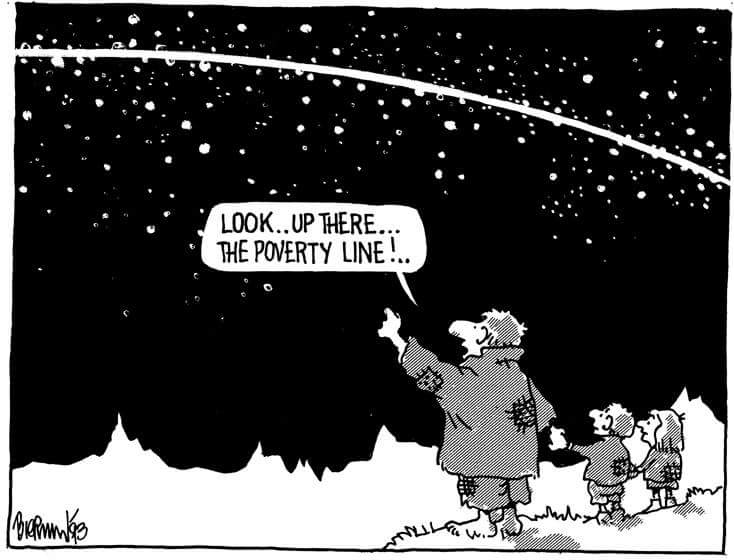
What is the poverty line?
According to Wikipedia:
The poverty threshold or poverty line is the minimum level of income deemed adequate in a particular country.
Write this definition in your own words in your notebook.
Look at this map:
https://en.wikipedia.org/wiki/File:Percentage_population_under_povertty_line.png

- Where are the poorest countries? (Check an atlas if you are unsure of country names). Where are the richest countries?
Check out this list:
https://www.cia.gov/library/publications/the-world-factbook/fields/2046.html
and this list:
http://www.nationmaster.com/country-info/stats/Economy/Population-below-poverty-line
And these statistics:
http://www.globalissues.org/article/26/poverty-facts-and-stats
- What is the country with the highest level of poverty?
- What is the country with the lowest level of poverty?
- Why do you think certain countries have more poverty than others? Explain.
Look at how life expectancy and income are related by clicking the link below.
Press the play button to see how each country's life expectancy and income changed over time. Notice how some countries life expectancy and income increased more over time than others.
- How are life expectancy and income related?
D. Causes of Poverty
Read this article:
http://www.eschooltoday.com/poverty-in-the-world/causes-of-poverty.html
What did the author of this article say were the main causes of poverty? Explain how each of the items mentioned cause poverty. Do you agree? Can you think of any other causes?
E. Globalization:

Click this link - http://www.bbc.co.uk/schools/gcsebitesize/geography/globalisation/globalisation_rev1.shtml
Read the entire article and answer the following questions.
1. Sum up globalization in eight (8) words or less.
2. List one argument that a proponent (supporter) of globalization might give.
3. List one argument that an opponent of globalization might give.
4. Study the above map. Why are there brand names placed on the map? What is the artist trying to say about globalization?
5. How does globalization relate to world poverty?
F. Famine/Natural Disasters/Drought and Poverty
What is drought?
http://www.livescience.com/21469-drought-definition.html
- Write the definition of drought in your own words.
- How do you think drought and extreme weather can cause poverty?
Read about how natural disasters keep people poor:
Read about how extreme weather can cause poverty:
http://www.bbc.com/news/science-environment-24538078
The Borgen Project( for more information about the Borgen Project click here: http://borgenproject.org/about-us/ ) talks about the existence of poverty and how it relates to natural disasters:
- In regions of the world that are already less wealthy, recurrent or occasional catastrophic natural disasters can make it extremely difficult for the people of those countries to ever get out of poverty.
- The effects of flooding in Bangladesh,(check out this video:https://www.youtube.com/watch?v=gRwAMjeTgYQ) the drought in the Horn of Africa (watch this video:https://www.youtube.com/watch?v=NhQZb9iNRiE) and the 2005 earthquake in Haiti (watch this video:https://www.youtube.com/watch?v=77bxSh3smFI) are all examples of the ways that vulnerability to natural disasters can prove to be devastating to large portions of affected countries.
- In each of these cases, already impoverished people became refugees within their own countries, losing whatever little they had, being forced out of their living spaces and becoming dependent on others for survival.
- According to the World Bank, two years after cyclone Nargis hit Myanmar in 2008, the debt loads of local fishermen had doubled.
- The Solomon Islands experienced an earthquake and tsunami in 2007 and the losses from that disaster equaled 95 percent of the national budget.
- Without foreign aid assistance, governments in these countries would have been unable to meet the needs of their people.
- How does extreme weather and natural disasters contribute to the existence of poverty?
- What are some examples of how natural disasters influenced the existence and severity of poverty? Explain what happened after each disaster.
G. Education and Poverty
Read the following article:
http://www.humanium.org/en/world/right-to-education/
- Write in your own words, the definition of marginalization (http://www.merriam-webster.com/dictionary/marginalize)
- About how many primary children are not going to school world-wide?
- What are some reasons for children not going to school?
http://borgenproject.org/education-poverty-critical-connections/
- The Borgen Project lists 10 points that connect poverty and education. Summarize these points in your own words.
- Why is education so important in stopping the cycle of poverty?
**Bonus: If you have access to Netflix, you may want to watch a documentary about how far some children will go to get to school. It is called: On the Way to School. It would give you an idea about how difficult it is for children in poorer countries to get to school. Here is the trailer:
https://www.youtube.com/watch?v=eIsQ0B43Q9Y
H. History;War; Conflicts and Poverty:
The Borgen Project talks about many causes of poverty. Here are their ideas on how history and war contribute:
- History:
- Many of the poorest nations in the world were former colonies (A colony exists when another country takes over an area as their own without considering the rights of the people that already live there).
- The poorest countries are countries from which slaves were taken
- The poorest counties are territories from which resources had been taken for the benefit of colonizing countries.
- The countries that took over the land of these poor countries created the conditions that prevent many people from accessing land, capital, education and other resources that allow people to support themselves adequately.
- In these nations, poverty is one legacy of a troubled history involving one country taking over another.
2. War & political instability:
- Whatever the causes of war and political upheaval, it is clear that safety, stability and security are essential for general well being and economic prosperity and growth.
- Without the basic need of safety, security and stability, natural resources cannot be used individually or collectively.
- No amount of education, talent or technological know-how will allow people to work and reap the benefits of working hard if the country is at war.
- Laws are needed to protect rights, property and investments, and without legal protections, farmers, would-be entrepreneurs and business owners cannot safely invest in a country’s economy if people are worried about violence against them and their families.
- The poorest countries in the world have all experienced civil war and serious political upheaval at some point in the 20th century, and many of them have weak governments that cannot or do not protect people against violence.
- How has colonization influenced the existence of poverty?
- In your own words, explain how war contributes to poverty. (How does war stop people from becoming wealthy?)
I. Hunger and Poverty:❌ Photo unavailable
World Hunger and Poverty are closely related. Read and view the following links:
World hunger statistics:
http://www.worldhunger.org/articles/Learn/world%20hunger%20facts%202002.htm
Living with Hunger video
https://www.youtube.com/watch?v=I1NqYvnJd7I
UN End Hunger Campaign:
http://www.un.org/en/zerohunger/challenge.shtml
Causes of Hunger:
https://www.wfp.org/hunger/causes
How are hunger and poverty related?
J. Social Inequities and Poverty
More from the Borgen Project:
- Poverty and inequality (when people are not treated the same way based on race, gender or just status with in a culture) are two different things, but inequality can feed widespread poverty by stopping groups with lower social status from being able to get the tools and resources to support themselves. In other words, some people have a hard time improving their situation because they don't get the same benefits as others.
- According to the United Nations Social Policy and Development Division, “inequalities in how much people make for work (income) and access to productive resources, basic social services, opportunities, markets, and information have been on the rise worldwide, often causing and exacerbating poverty.” In other words, there are more people making less money and accessing less services than ever before, and this is creating more poverty, and making the poor even more poor.
- The U.N. and many aid groups also point out that gender discrimination has been a significant factor in holding many women and children around the world in poverty.
- How are social inequalities a factor in poverty?
Females in school and income earned by country:
- What do you notice about how the number of females in school and poverty?
**************************************************************************************************
PART 2: Choose 1 of the 4 tasks to complete. Follow the procedures underneath your choice
1. Creating Economic Opportunities
Step 1.
Choose a country and region on which to focus.
Step 2
Research that area
- What is the climate like?
- What kind of food is eaten? Ordinarily, is there enough to eat?
- Is there ever starvation? How often? Why?
- What are the houses like? What types of things do people own?
- What kind of fuel is used for cooking? How is it obtained?
- How far do most people live from an all-weather road? How far do most people live from a source of clean water? How do these factors affect daily life?
- How is work organized? What are the tasks of men? Of women? Of children?
- What is a typical family income?
- Are the opportunities for men and women generally equal?
- Are people ordinarily healthy? If not, why not? What is the average family size?
- Are schools available for all children? Does every child receive a primary education? If not, why not? What percentage of adults is illiterate?
- Is the environment stable? Is the environment affected by global warming? Are the forests being systematically eliminated? Why?
Use one of these online diagrams to organize your notes:
https://my.hrw.com/nsmedia/intgos/html/PDFs/Cluster_Diagram.pdf
https://my.hrw.com/nsmedia/intgos/html/PDFs/Process_or_Cycle_Chart.pdf
Here are some websites you may wish to consult:
Information about specific countries:
India
http://www.bbc.com/news/world-asia-17450777
Mexico:
https://www.youtube.com/watch?v=FxqbwebKpX4
Specific country examples of drought:
Drought In Indonesia:
Drought in East Africa:
Drought In Ethiopia:
http://www.trust.org/item/20151118163852-eh1ns/?source=dpagetopic
*** You may wish to consult other sources, just be sure to write down where you go the information
Ideas as to how to help poorer areas create economic growth:
http://www.peacecorps.gov/wws/videos/dive-into-ecotourism/
http://www.peacecorps.gov/wws/videos/opportunities-women/
http://www.peacecorps.gov/wws/videos/raising-chickens/
http://www.worldvision.ca/OURWORK/what-world-vision-canada-does/Pages/Economic-Development.aspx
Step 3:
Come up with an business plan:
|
My business plan is: |
The needs this plan would address are:
|
|
The target customers are:
|
The materials I would need to get the business started are:
|
|
This business would use the following existing knowledge and skills:
|
The income generated would improve people’s quality of life in the following ways: |
Step 4: Plan your presentation:
Plan your presentation ( A written version of your presentation will be expected) If you are doing a power point, the writing will be imbedded in your presentation; if you are doing a speech and poster, you will need to hand in a copy of your speech, printed neatly or typed. Make sure you check the marking rubric before handing in.
Your presentation will have 6 main parts:
1. Introduction
2. Background information about Poverty
- What are its causes?
- Why it is important to create business opportunities to impoverished areas
3. Background information about the region you plan to help
4. Your Plan: Outline your plan and how you feel it will help the people of the region you chose.
5. Conclusion
6. Visual component of your presentation (pictures, graphs, illustrations, diagrams in poster or power point format)
Step 5: Consult with teacher before you proceed with a finished product. You may need help editing your written work, or you may need advice about the quality of your project.
Step 6: Check the rubrics in the Evaluation section to ensure you are doing your best work. Be sure to check each rubric that applies to your project. For example, if you are doing a power-point, check the power point rubric, or if you are doing a speech and poster, make sure you check both speech and poster rubrics.
Step 7: Hand in and/or present your project
2. Strategies for Ending Poverty
Step 1 View and read the following to help you come up with a plan:
Making a difference: How can we help?
Here are some ideas:
United Nations programmes for reducing poverty:
http://www.undp.org/content/undp/en/home/ourwork/povertyreduction/overview.html
Ideas on how kids can make a difference:
http://www.kidscanmakeadifference.org/
Ideas as to how to help poorer areas create economic growth:
http://www.peacecorps.gov/wws/videos/dive-into-ecotourism/
http://www.peacecorps.gov/wws/videos/opportunities-women/
http://www.peacecorps.gov/wws/videos/raising-chickens/
http://www.worldvision.ca/OURWORK/what-world-vision-canada-does/Pages/Economic-Development.aspx
UNITED NATIONS (Reuters, January 18, 2005). In many parts of the world, such as Africa, people live with poverty that is hard to imagine. What will it take to make better lives for these people? A new report says that the solution is pretty simple. All it takes is some money.
The United Nations (UN) asked a group of experts to write the report. Why? The UN has set up a plan to cut poverty in half by 2015. That's just one of the plan's goals. It also wants to stop the spread of AIDS and make sure that everyone can go to school. That way, people all over the world can live healthy, successful lives. The report maps out a way to make this plan happen.
The plan is to make long-lasting changes. For example, it says to give fertilizer to farmers. Why? This would improve the land and give the people in those nations more food—for years to come. As another example, the plan recommends giving out mosquito nets. Why? Mosquitoes spread malaria in places where the disease is common. The nets would stop mosquitoes from reaching people.
There's just one problem with this, though. There's not enough money to make this plan happen. The UN wants wealthy nations to give a certain amount of their money toward helping poor nations. Some nations have already done this. Others, though, do not give nearly enough.
Which nations still need to give more money? They include Japan and Germany.The United States also needs to give more money. The U.S. is the wealthiest nation in the world. So, the UN says it should be giving its fair share. Right now, the U.S. gives about $25 million a year to poor nations; it should give about $80 million.
The UN is hoping that it can get these nations to offer more.
Step 2: Brainstorm strategies to end poverty using this online form:https://bubbl.us/mindmap. Print out your mindmap and put it in your Social Studies duotang.
Step 3:Decide on one or two strategies to present to the Prime Minister.
Use this chart to defend your choices.:https://my.hrw.com/nsmedia/intgos/html/PDFs/Supporting_a_Position.pdf In the chart where it says "thesis statement" type in what strategies you are choosing to present. Then you must back up your choices. Fill in why you think these strategies are the best ones. Print out your chart and put it in your Social Studies duotang.
Step 4: Report:
Your report should have 4 main parts:
1. Introduction
2. Background information on Global Poverty
- factors and causes
- how big of a problem is it? ( include some statistics)
- why it needs to be addressed
3. Your strategies
- fully explain what your strategies for ending poverty are
- justify why your strategies are good ones
4. Conclusion
Make an outline of your report:
It should look something like this:
|
Introduction:
----------------------------------------------------------------------------------------------------------------------------------------------------------------------------------------------------------------------------------------------------------------------------------------------------------------------------------------------------------------------------------------------------------------------------------------------------------------------------------------------------------------------------------------------------------------------------------------------------------------------------------------------------------------------------------------------------------------------------------------------------------------------------------------------------------------------------------------------------------------------------------------------------------------------------------------------------------------------------------------------------------------------------------------------------------------------------------------------------------------------------------------------------------------------------------------------------------------------------------------------------------------------------------------------------------------------
|
|
Background information:
|
|
My strategies:
Why my strategies are good:
|
|
Conclusion: ___________________________________________________________________________________________________________________________________________________________________________________________________________________________________________________________________________________________________________________________________________________________________________________________________________________________________________________________________________________________________________________________________________________________________________________________________________________ |
Write your report. (2-3 pages) Check Rubric in Evaluation section. Be sure to proofread and edit your work. You may want to have a friend or your teacher edit your work with you.
Step 5: Make your information poster
Step 6: Consult with teacher before you proceed with a finished product. You may need help editing your written work, or you may need advice about the quality of your project.
Step 7: Check the rubrics in the Evaluation section to ensure you are doing your best work. You will need to look at both the report writing rubric and the poster rubric.
Step 8: Hand in and/or present your project.
3. Power Point Presentation
Step 1: Research the World Bank:
(You will need to find out what the World Bank does and what it's guiding principles are)
World Bank:
http://www.worldbank.org/en/topic/poverty/overview
Step 2: Research and answer the guiding questions. (Some of this information can be found within this webquest)
- What is poverty?
- Who do you consider as poor?
- What are other definitions of poverty? Compare with how you view poverty. What do you think is the best way to measure poverty? Give examples.
- What are reasons for people being poor?
- How does poverty affect people's lives?
- How does poverty affect children?
- What means are there to fight poverty?
- What is the World Bank and what are its guiding principles?
- Any other issue you think is relevant.
Child Labour article:
http://www.scholastic.com/browse/article.jsp?id=5422
Step 3: Plan slides for Power Point:
Things to keep in mind:
1) You should only have one main idea with a few supporting facts per slide
2) You will need to plan what graphics are necessary. The images and graphics you choose should be of good quality.
3) Your slides should follow a logical order. (For example, you should not be discussing one of the guiding principles of the World Bank on one slide, then how children are affected by poverty on the next slide, only to go back to the World Bank guiding principles on the third slide). Keep like things together-it should be easy to follow.
4) The font on all slides should be large enough to be read at a distance.
5) There should be good contrast between the font and the background on each slide. (For example, you should not have white writing on a grey background).
Step 4: Create Power Point
Step 5: Consult with teacher before you proceed with a finished product. You may need help editing your written work, or you may need advice about the quality of your project.
Step 6: Check the rubrics in the Evaluation section to ensure you are doing your best work. You will need to check not only the power point rubric, but also the writing rubric.
Step 7: Hand in and present your project.
4. Creating an Ad Campaign
Step 1. Research what makes a good advertising campaign:
http://blog.reachlocal.com/5-elements-of-a-good-display-advertising-campaign-and-why-they-work
Step 2: Answer the Guiding questions
- What is poverty?
- Who do you consider as poor?
- What are other definitions of poverty? Compare with how you view poverty. What do you think is the best way to measure poverty? Give examples.
- What are reasons for people being poor?
- How does poverty affect people's lives?
- How does poverty affect children?
- What means are there to fight poverty?
Step 3: Figure out how you are going to use the information from the Guiding Questions to make an ad campaign.
Step 4: Choose your Advertising strategies:
- a song (jingle)
- an informational video ( with script)
- a poster
- a series of print ads (minimum 3 ads)
- informational pamphlets
- a speech (includes a written version template)
- other
Remember you must choose at least one strategy that includes written information about Global Poverty. This means that you must have one of :
- informational video ( with script)
- informational pamphlet (using an 11 by 17 paper folded into 3 parts. You will have 6 panels of information)
- speech (written copy must be submitted)
Step 5: Create your campaign
Step 6: Consult with teacher before you proceed with a finished product. You may need help editing your written work, or you may need advice about the quality of your project.
Step 7: Check the rubrics in the Evaluation section to ensure you are doing your best work. You will need to not only look at the advertising rubric, but also the writing rubric. If you are doing a speech, you will need to look at the speech rubric.
Step 8: Hand in and present!
Evaluation
Evaluation
You will be evaluated based on the following rubrics:
Please also consult the BC Performance Standards rubrics for Writing ( Writing to Communicate Ideas and Information), to ensure your written work meets the standard.
https://www.bced.gov.bc.ca/perf_stands/writing_g6.pdf
Poster Rubric
(Economic Oportunities
Offering Strategies )
|
CATEGORY |
4 Exceeds Expectations |
3 Meets Expectations |
2 Approaching Expectations |
1 Not Yet Meeting Expectations |
|
Coverage of the Topic |
Details on the poster capture the important information about the topic and increase the audience’s understanding. |
Details on the poster include important information but the audience may need more information to understand fully. |
Details on the poster relate to the topic but are too general or incomplete. The audience needs more information to understand. |
Details on the poster have little or nothing to do with main topic. |
|
Use of Graphics |
All graphics are related to the topic and make it easier to understand. |
All graphics are related to the topic and most make it easier to understand. |
All graphics relate to the topic. |
Graphics do not relate to the topic. |
|
Organization |
Information is very organized with clear titles and subheadings. |
Information is organized with titles and subheadings. |
Information is organized, but titles and subheadings are missing or do not help the reader understand. |
The information appears to be disorganized. |
|
Layout and Design |
All information on the poster is in focus and can be easily viewed and identified from 6 ft. away. |
Most of the information on the poster is in focus and the content easily viewed and identified from 6 ft. away. |
Most of the information on the poster is in focus and the content is easily viewed and identified from 4 ft. away. |
Much of the information on the poster is unclear or too small. |
|
. |
|
. |
||
|
Mechanics |
No grammatical, spelling or punctuation errors. |
Almost no grammatical, spelling or punctuation errors |
A few grammatical, spelling, or punctuation errors. |
Many grammatical, spelling, or punctuation errors. |
|
|
|
|
Rubric from: http://www.readwritethink.org/files/resources/lesson_images/lesson1076/…
Speech Rubric
(Economic Opportunities
Ad Campaign)
|
4—Excceeds Expectations |
3—Meets Expectations |
Approaching Expectations |
1—Not Yet Meeting Expectations |
|
|
Delivery |
• Holds attention of entire audience with the use of direct eye contact, seldom looking at notes • Speaks with fluctuation in volume and inflection to maintain audience interest and emphasize key points |
• Consistent use of direct eye contact with audience, but still returns to notes • Speaks with satisfactory variation of volume and inflection |
• Displays minimal eye contact with audience, while reading mostly from the notes • Speaks in uneven volume with little or no inflection |
• Holds no eye contact with audience, as entire report is read from notes • Speaks in low volume and/ or monotonous tone, which causes audience to disengage |
|
Content/ Organiza-tion |
• Demonstrates full knowledge by answering all class questions with explanations and elaboration • Provides clear purpose and subject; pertinent examples, facts, and/or statistics; supports conclusions/ideas with evidence |
• Is at ease with expected answers to all questions, without elaboration • Has somewhat clear purpose and subject; some examples, facts, and/or statistics that support the subject; includes some data or evidence that supports conclusions |
• Is uncomfortable with information and is able to answer only rudimentary questions • Attempts to define purpose and subject; provides weak examples, facts, and/ or statistics, which do not adequately support the subject; includes very thin data or evidence |
• Does not have grasp of information and cannot answer questions about subject • Does not clearly define subject and purpose; provides weak or no support of subject; gives insufficient support for ideas or conclusions |
|
Enthusiasm/ Audience Awareness |
• Demonstrates strong enthusiasm about topic during entire presentation • Significantly increases audience understanding and knowledge of topic; convinces an audience to recognize the validity and importance of the subject |
• Shows some enthusiastic feelings about topic • Raises audience understanding and awareness of most points |
• Shows little or mixed feelings about the topic being presented • Raises audience understanding and knowledge of some points |
• Shows no interest in topic presented • Fails to increase audience understanding of knowledge of topic |
|
Comments |
Rubric from: http://www.readwritethink.org/files/resources/printouts/30700_rubric.pdf
Power point Rubric
(Economic Opportunites
World Bank Power Point)
|
|
Exceeding Expectations 4 |
Fully Meeting Expectations 3 |
Approaching Expectations 2 |
Not Yet Meeting Expectations 1 |
|
Content |
Student presents major points and fully supports them with convincing arguments, ideas and data. Insightful personal connection is obvious. |
Student presents major points and partially supports them with convincing arguments ideas and data. Personal connection is clear. |
Student presents major points but fails to support them with convincing arguments ideas and data. Some personal connections. |
Student over simplifies topic or fails to present major points. No personal connection. |
|
Organization |
Student presents information in logical, interesting sequence which audience can follow. |
Student presents information in logical sequence which audience can follow |
Audience has difficulty following presentation because student jumps around. |
Audience cannot understand presentation because there is no sequence of information. |
|
Quality of Slides |
Slides present one idea and a few supporting facts. Font on all slides is large enough to be read at a distance. There is good contrast between the font and background on all slides. All slides contain a powerful high quality image which helps audience understand the content. Layout is visually pleasing.
|
Most slides present one idea and a few supporting facts. Font on most slides is large enough to be read at a distance. There is good contrast between the font and background on most slides. Most slides include a high quality image which helps audience understand the content. Layout uses most space appropriately. |
Most slides present one idea but may have too many words. Font on most slides is too small to be read at a distance. The lack of contrast between the font and background makes the text difficult to read. Most images are too large or small or of poor quality. Layout shows some structure. |
Too many ideas per slide. Font on all slides is too small to be read at a distance. The lack of contrast between the font and background makes the text impossible to read.
Images are distracting decorations that create a busy feeling and detract from the content. Layout is cluttered and confusing. |
Advertising Campaign Rubric
|
|
Exceeding Expectations 4 |
Fully Meeting Expectations 3 |
Approaching Expectations 2 |
Not Yet Meeting Expectations 1 |
|
Content |
Student has shown an exceptional understanding of the Global Hunger Crisis and has shown it's link to Extreme Poverty |
Student has shown a sound understanding of the connection between the Global Hunger Crisis and its relation to Extreme Poverty. |
Student has understood some of the information provided. Student has demonstrated a satisfactory understanding of the Global Hunger Crisis and it's relation to Extreme Poverty.
|
Student does not understand the issue of the Global Hunger Crisis or Global Poverty |
|
Organization/Neatness |
Written aspects of the ad are exceptionally presented in colour with no grammatical errors, with care and attention to detail. Presentation aspects are easy to understand, and enjoyable to watch |
Written aspects of the ad campaign are neatly presented, in colour and have no mistakes. Presentation aspects are easy to follow and understand. |
Written aspects are somewhat neat, but may have some mistakes, Presentation aspects take effort to follow. |
Presentation is difficult to follow; written aspects have many mistakes and look like they need more time to make it acceptable. |
|
How the student transforms information into an ad campaign |
Student has let their creativity shine and has demonstrated an exceptional evaluation of information provided to create their ad campaign. Their campaign included accurate information. |
Student has designed a creative ad campaign which draws on sufficient knowledge and understanding of the Global Hunger Crisis and Poverty |
Student has designed a creative ad campaign yet demonstrated minimal information and knowledge of the Global Hunger Crisis and Poverty |
Student has shown no interest in the task and their campaign lacks creativity information in their ad campaign. |
Report Writing Rubric
(Economic Opportunities
Offering Strategies)
|
|
Exceeding Expectations 4 |
Fully Meeting Expectations 3 |
Approaching Expectations 2 |
Not Yet Meeting Expectations 1 |
|
|
Content |
Student has shown an exceptional understanding of the Global Poverty Information is well chosen, thorough, in own words; may use more than one source. Specific details or examples |
Student has shown a sound understanding of the connection between the Global Poverty. Writing is generally focused. Writing is generally accurate, complete, in own words. Some relevant details and examples |
Student has understood some of Global Poverty. Focus may wander Writing is generally accurate, but may omit key points Includes details and examples; some may be irrelevant or inaccurate |
Student does not understand the issue of Global Poverty No focus. Some information may be inaccurate or copied. There are few details; may be irrelevant or repetitive. |
|
|
STYLE • clarity, variety, and impact of language |
• language is clear and varied; some precise, expressive, or figurative language • flows smoothly, with a variety of sentence lengths and patterns |
•language is clear; some variety and description • variety of sentence lengths; may vary sentence beginnings, try different conjunctions |
•language is simple and often vague • sentence length may be varied; relies on a few basic patterns |
• simple, repetitive language; may misuse terms • sentences are often short and repetitive |
|
|
FORM • text features opening • organization and sequence • conclusion |
Introduction effectively establishes purpose and engages the audience well-organized; flows smoothly Paragraphs have main ideas developed with supporting detail Conclusion sums up the information; may attempt to have impact |
Introduction clearly presents purpose sequence is logical; paragraphs or sections are linked Paragraphs have main ideas and some supporting detail Conclusion is logical |
Introduction states purpose; may be general Sequence is logical; connections may be unclear or awkward Most paragraphs have a main idea Abrupt or weak conclusion |
Introduction does not identify purpose Disjointed; paragraphing is ineffective or omitted omits conclusion |
|
|
CONVENTIONS spelling punctuation complete sentences grammar |
• sense of control; few errors; these are usually the result of taking risks to use complex language and structures |
•few errors; these do not interfere with meaning |
• some noticeable errors; these may cause the reader to hesitate or reread parts to confirm meaning |
• frequent errors interfere with meaning |
Teacher Page
Answer Key to Background information Green Text Questions:
PART A
1. Answers will vary (examples: living on less than $10 per day, little or no food, no resources, live in slums, etc.)
2 Answers will vary, but students should be fully explaining their thoughts.
3. According to the UN, 22,000 children die per day due to poverty related causes.
4.75 million children are not in school in impoverished countries
5. Problems associated with poor water supply: no adequate access to water, no sanitation systems, which means drinking water and toilet water are often the same- which results in 1.8 million children die/year due to diarrhea.
6. Answers will vary, (slums, starving children, etc.)
7 Startling statistics: answers will vary (examples: 80% of humanity lives on $10 a day; top 20% earns 3/4 of the worlds income; if the world had $100, 3.5 billion people would have to spit $5; 75 million children are not in school; 1/2 of the children in the world live in poverty; 0.14% of the population has 80% of the wealth)
8. Causes of poverty: (answers will vary)
9. Surprises in the video: varied answers.
10. Answers will vary
Part B
Definitions of Poverty
(Answers may vary) Example: the best way to define proverty depends on why you are defining it. If you are trying to figure out how to help a poor area, it may be best to look at what resources are available (or missing), to determine what is needed. The differences in different countries poverty is greatly dependent on what the conditions in that country are. In wealthier countries, goods tend to cost more than in poorer countries. If you are trying to determine the scope of the problem world-wide, you may need a more universal measurement, such as how many people are under the poverty line.
Part C: Percentage of population under Poverty Line
- The Poverty Line is the minimum level of income that a person must have in order to survive in a particular country.
- The poorest countries tend to be in Africa and South Asia (example of countries: Nigeria, Congo, Zimbambwe, Sierra Leone, Hondurus, Haiti, Mynamar, Cambodia etc. etc.)
- The country with highest level of poverty is: Liberia: 80%
- The country with the lowest level of poverty is: Taiwan: 1.5%
- Certain countries have more poverty than others due to many reasons, so answers for this question will vary. Answers could include: education level, productvity of land, some areas are prone to natural disasters or drought, long history of poverty, marginalization (some cultures/ genders not treated the same... eg.. girls not allowed to go to school, or some cultures not able to access the same resources), lack of skills, illiteracy rates, war, etc.
Part D: Causes of Poverty
The main causes of poverty according to eschool today:
1. Income inequality, 2. Conflicts/Unrest (War), 3. Location/Adverse Ecology, 4. Natural Disasters, 5. Ill Health/Disabilities 6. Inherited Poverty, 7. Lack of Education and Training/Skills 8. Gender Discrimination
Part E: Globalization
1. Globalization is: Increased international trade and cultural exchange ( 8 words or less)
2. In support of globalization: creates a more free movement of capital goods and services, which can lead to improvements in transportation, improvements in communication; it allows for sharing of ideas, experiences and lifestyles; it can bring wealth and foreign currency to local economies; increases awareness of events in faraway places; increases global awareness.
3. Against globalization: wealth brought in to foreign countries doesn't always benefit local economies- can drive local companies out of business; businesses may take advantage of local laws that may be more lenient than their own on things like environmental protection or working conditions; there may be a loss of cultural diversity, where one dominant culture outperforms others ( eg. Hollywood movies outperform those in India and China, leaving those industries weakened); Using cheap labour from developing countries reduces the same jobs in developed countries (eg. textiles).
4. The brand names are placed on the map to show how a product or brand name made in one country can be sold in countries all over the world, even in countries where that particular product is unaffordable. Only a few countries products dominate, leaving other countries under-represented and unable to compete.
5. Globalization keeps the poorer countries poor ( they can't compete), while keeping the richer countries rich. The poorer countries cannot put the same amount of money into products and innovation, leaving them unable to sell products in the global marketplace.
Part F Famine/Natural Disasters?Drought and Poverty:
Drought: lack of adequate access to water; dry conditions caused by many factors. 4 categories: Meteorological (specific to each region), Agricultural (water needs of crops are not being met), Hydrological (low water in streams, rivers,etc.)Socio-economic (demand for water exceeds supply).
Drought as a factor in poverty: Lack of water causes crops to die, then people don't have access to food or economic benefits of selling food they grow; lack of access to food, leads to hunger, which leads to starvation, which leads to sickness, which leads to an inability to work, which causes more poverty
Natural disasters influence the existence and continuation of poverty: Already impoverished people lose whatever little they had and become displaced. They may have no home, and no belongings, They may have no way to get food, Personal belongings, perhaps tools used for a trade may be gone, businesses may be destroyed; may be forced to take on extreme debt to continue their business. Then they are forced to pay back the loans instead of taking care of themselves and their families.
Examples of how natural disasters influenced the existence and severity of poverty:
1. Bangladesh ( flooding)
2. Horn of Africa ( drought)
3. Mynamar ( Cyclone Nargis)
4. Haiti ( earthquake)
G: Education and Poverty
Definition of marginalization: to put or keep someone in a powerless or unimportant position within a society or group
There are about 72 million primary children not going to school world-wide
There are about 759 million adults who are illiterate world wide
Reasons for children not going to school: drop out due to health problems due to malnutrition; drop out to work and provide support for family; no access to school due to countries that can't afford to pay for schools ( there are no schools to go to); there are no trained teachers; high failure rate due to no trained teachers and meager teaching supplies; social inequalities ( eg. girls are not encouraged to go to school... 80% of girls don't go to school in Yemen... Sub Sahara Africa 12 million girls don't go to school)
Poverty and lack of education are connected in the following ways:
1. It is estimated that 171 million could be lifted out of poverty if they had basic reading skills
2. Individual's income is increased on average by 10% for every year of school completed
3. For every US 1$ spent on education, there is about $10-15 increase in economic growth
4. Investing in women's education decreases poverty-When and educated woman's income increases, she will reinvest 90% of her earnings in her family and community
5. No country has obtained rapid economic growth without a literacy rate of at least 40%
6. Unemployment is tied to lack of education
7. Countries that experience 20-30% surges in literacy rates through increased education also see increased economic growth
8. For each year of increased schooling, there is continued economic growth.
9. Poor countries can't afford to pay for public schools, which means families have to pay for their children's school, but many can't, which means all the benefits of education can never be realized.
10. A poor child is 5 times less likely to complete primary school than the richest children, which ensures that the poor don't reap the economic benefits of an education, which makes it very difficult for them to ever get out of poverty.
Education is important in stopping the cycle of poverty because: Economic growth is not likely to happen without a literacy rate of at least 40%. Countries that experience 20-30% increase in literacy rates due to increase in education had an increase in economic growth as well. The poorest countries tend to have the lowest literacy rates.
H: History; War; Conflicts and Poverty
Colonization has influenced the existence of poverty: the poorest nations in the world were former colonies. The colonizing country took over the country for their own benefit, marginalizing the inhabitants of the country, and taking much of its resources leaving the inhabitants with very little, starting the cycle of poverty.
War contributes to poverty:When a country is at war the people of that country's main concern is safety stability and security, not development or economic growth. During war, natural resources cannot be used individually or collectively. No amount of education, talent or technological know-how will allow people to work and reap the benefits of working hard if their main concern is safety. When a country is at war, it is often without laws, which are needed to protect rights, property and investments. The poorest countries in the world have all experienced civil war and serious political upheaval at some point in the 20th/21st Century.
I : Hunger and poverty:
Hunger and poverty are related:
Hunger is also a cause of poverty, and thus of hunger. By causing poor health, small body size, low levels of energy, and reductions in mental functioning, hunger can lead to even greater poverty by reducing people's ability to work and learn, thus leading to even greater hunger.
J: Social Inequalites and Poverty:
Social inequalities are a factor in poverty by:
- Stopping groups with lower social status from being able to get the tools and resources to support themselves.
- There are more people making less money and accessing less services than ever before, and this is creating more poverty, and making the poor even more poor.
The number of females in school relates to poverty: the more schooling that women have the greater the income per person in a country; in countries where women have very little schooling-the income per person is low.