
Introduction
Task
WELCOME!!
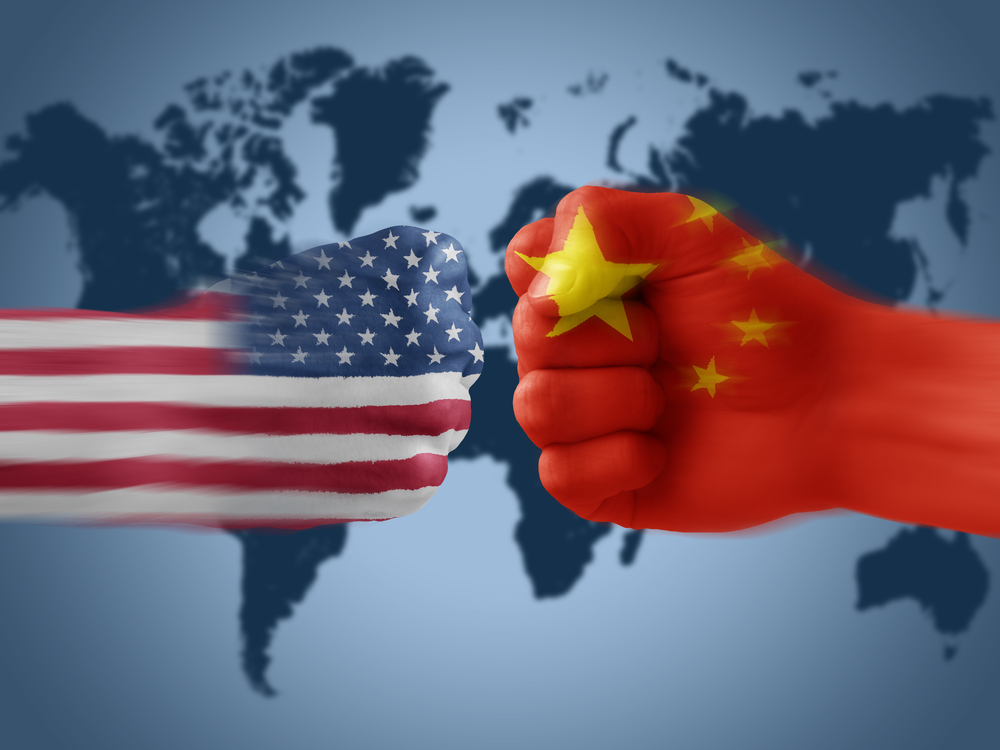
You have just finished your HSC and you moved to the United States coz you're lovin' life!
In your new job which you just started, you've been hearing that employees are being transfered to do work in China! You become kind of nervous and not sure about moving to China. So you have decided to investigate about the Chinese economy in comparison to the U.S.
This journey of tasks will allow you to compare both the U.S and China's economy.
Goodluck!
Process
Question 1:
a) Explain what is meant by the global economy and describe the main features of globalisation.
b) Distinguish between an emerging economy and an advanced economy by using examples.
Question 2:
- http://www.worldbank.org/en/country/china/overview
- http://www.focus-economics.com/countries/united-states
- https://www.ciaonet.org/attachments/14858/uploads
a) With a population of 1.3 billion, China is the second largest economy. Yet why does China still remain a developing country?
b) How does China aim to achieve a “moderately prosperous society” by 2020?
c) How has the world bank supported China to improve technical and vocational education to meet the demand for high skilled workers?
d) Explain what challenges is the United States facing at a domestic level and yet still manages to stay the most largest and important economy in the world.
e) How did the United States and China deal with the Global Financial crisis? What strategies did both countries use to boost up its economy?
f) Explain the effects of the Global Financial Crisis on the US- China economic relationship.
Question 3:
- https://www.uschina.org/reports/us-exports/national
- http://origin.www.uscc.gov/sites/default/files/Research/Apr%202016%20Bulletin.pdf
.
.
.
.
.
.
.
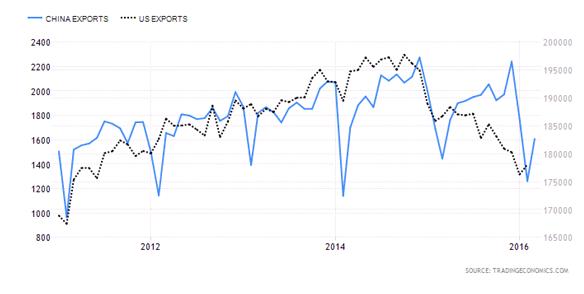
a) Interpret the above graph and compare the exports of China and United States.
b) How does US’s export help in China’s economy?
c) How does China’s export help in the US economy?
d) How does China aim to expand its domestic and international trade?
Question 4:
http://www.dailyfinance.com/2011/01/27/what-chinas-rising-inflation-means-to-you/
.
.
.
.
.
.
.
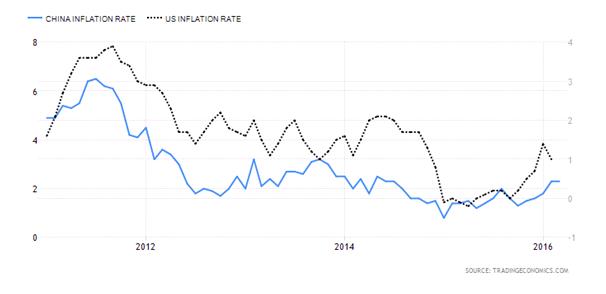
a) Interpret the above graph and compare the inflation rate between China and United States.
b) What impact does China’s inflation has on the US economy?
Question 5:
http://www.china.org.cn/english/features/Q&A/161834.htm
.
.
.
.
.
.
.
.
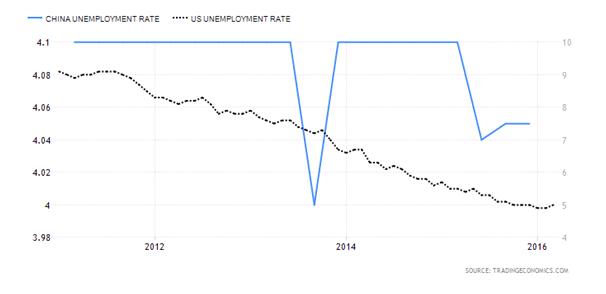
a) Interpret the graph and compare the unemployment rate between China and United States.
b) Why is unemployment rate in China relatively higher than United States?
c) Explain what happened to China’s unemployment rate in 2013.
d) Discuss the strategies China is employing to keep unemployment rate steady and at a tolerable level.
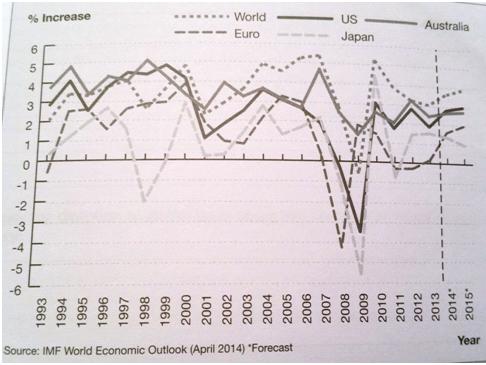
Question 6: The International Business Cycle. Have a look at the below graph of economic growth performance of major economies and answer the following questions.
 .
.
.
.
.
.
.
.
.
.
.
a) Identify two recent trends in the international business cycle.
b) Outline two factors that weaken the international business cycle.
c) Describe the recent trends in one regional business cycle around the world.
d) Discuss the factors that cause differences in growth trends across different regional business cycles.
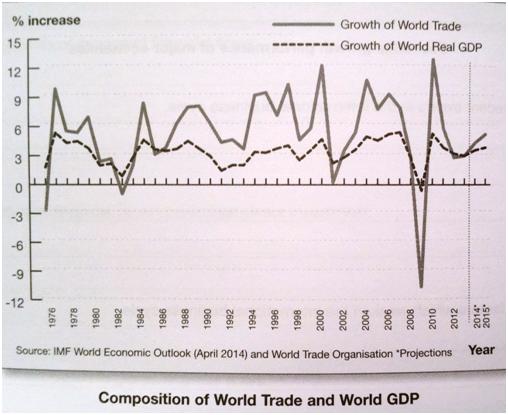
Question 7: World Trade and World GDP
.
.
.
.
.
.
.
..
.
.
.
a) Outline two factors of globalisation which affect the international business cycle.
b) Explain the relationship between global trade flows and gross world product.
c) Discuss how the direction of global trade flows has changed in recent decades due to the process of globalisation.
Question 8:
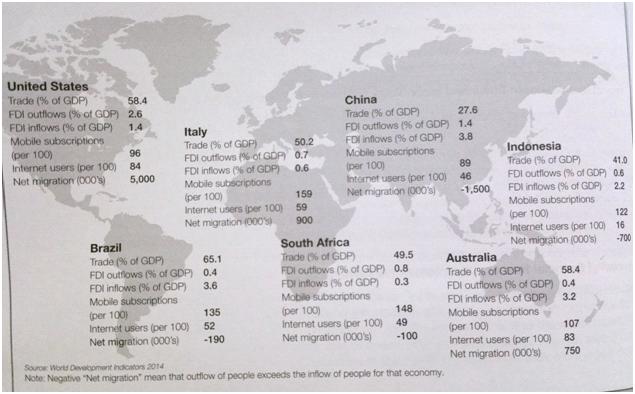
By referring to the below map, write a 500 word report comparing the different rates of trade, investment, technology adoption and migration across the United States and China.
.
.
.
.
.
.
.
.
.
.
.
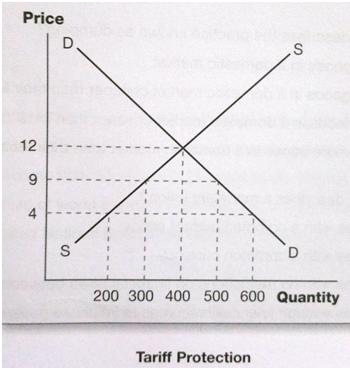
Question 9: Tariff. The below diagram portrays the impact of a tariff in a hypothetical economy.
- http://www.australianbusiness.com.au/international-trade/export-markets/china/china---a-gold-mine-for-consumer-goods-exporters-
- http://www.nwitimes.com/business/steel/u-s-imposes-percent-tariffs-on-chinese-steel/article_45883c20-39e6-516f-9402-eb8bb8005f87.html
.
.
.
.
.
.
.
.
.
a) What is the size of the tariff?
b) What is the quantity of imports before the imposition of the tariff?
c) What is the value of government revenue from the tariff?
d) What has China done to its import tariffs?
e) Why is the US imposing tariff on China’s steel?
Question 10:
.
.
.
.
.
.
.
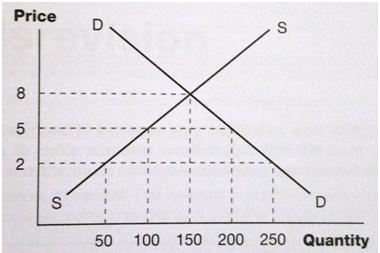
a) Distinguish between a tariff and a quota.
b) Calculate the government revenue from the tariff shown in the figure above.
c) Outline three ways in which a government might protect local industries other than through imposing a tariff.
Question 11: Free trade
- www.nafta-sec-alena.org
- www.dfat.gov.au/trade
- http://www.bloombergview.com/articles/2016-01-26/free-trade-with-china-wasn-t-such-a-great-idea
a) Explain what free trade is.
b) Outline two advantages and two disadvantages of free trade.
c) Discuss why free trade between China and United States is not a good idea.
Question 12:
.
.
.
..
.
.
.
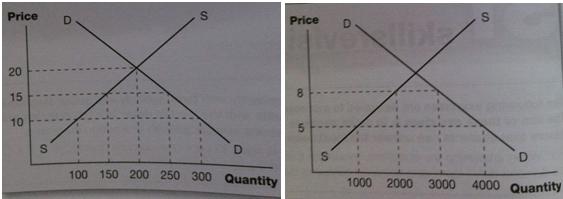
a) Calculate the following (with free trade)
|
World price |
|
World price |
|
|
Quantity supplied at world price |
|
Quantity supplied at world price |
|
|
Quantity demanded at world price |
|
Quantity demanded at world price |
|
|
Quantity of imports before tariff |
|
Quantity of imports before tariff |
|
|
Domestic supplier revenue before tariff |
|
Domestic supplier revenue before tariff |
|
b) Calculate the following (after the tariff)
|
Size of the tariff |
|
Size of the tariff |
|
|
Price after the tariff |
|
Price after the tariff |
|
|
Quantity supplied after the tariff |
|
Quantity supplied after the tariff |
|
|
Quantity demanded after tariff |
|
Quantity demanded after tariff |
|
|
Quantity of imports after the tariff |
|
Quantity of imports after the tariff |
|
|
Price received by domestic firms after the tariff |
|
Price received by domestic firms after the tariff |
|
|
Price received by foreign producers |
|
Price received by foreign producers |
|
|
Domestic supplier revenue after the tariff |
|
Domestic supplier revenue after the tariff |
|
Question 13: Market with free trade
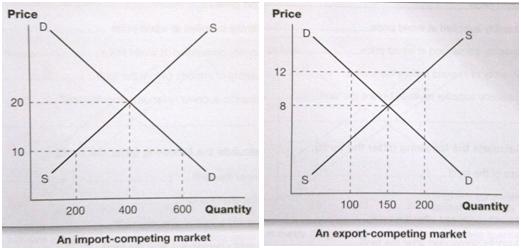
When answering the below questions, remember that revenue is equal to price x quantity: R = P x Q
The demand curve represents domestic consumer demand and the supply curve represents domestic supply.
.
.
.
.
.
.
Calculate the following:
|
Price without free trade |
|
Price without free trade |
|
|
World price (price with free trade) |
|
World price (price with free trade) |
|
|
Quantity supplied without free trade |
|
Quantity supplied without free trade |
|
|
Quantity supplied with free trade |
|
Quantity supplied with free trade |
|
|
Quantity demanded with free trade |
|
Quantity demanded with free trade |
|
|
Quantity of imports with free trade |
|
Quantity of imports with free trade |
|
|
Supplier revenue without free trade |
|
Supplier revenue without free trade |
|
|
Supplier revenue with free trade |
|
Supplier revenue with free trade |
|
Question 14.
.
.
..
.
.
.
.
.
.
.
.
.
.
.
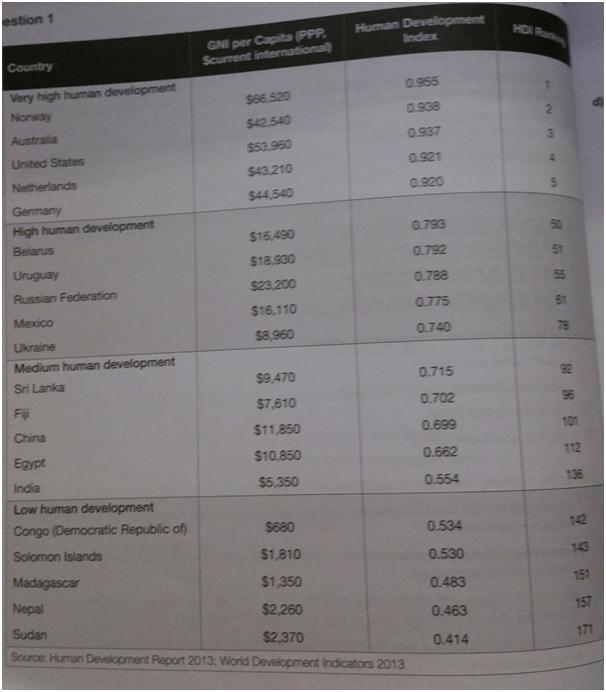
a) Describe one indicator of economic development.
b) Distinguish between economic growth and economic development.
c) Explain one recent initiative to promote economic development in the global economy.
d) For China and United States, analyse the strategies used by its government in response to globalisation.
Evaluation
|
Criteria |
Mark |
|
Fail 0 - 14 |
|
Pass 15 - 19.4 |
|
Credit 19.5 – 22.4 |
|
Distinction 22.5 – 25.4 |
|
High Distinction 25.5 - 30 |
Conclusion
Congratulations!
You have finished the task!