
Introduction
By Amanda Trandis
Year 6

(Chapman Hill Elementary Wanek-PE, n.d.)
YOU CAN'T SEE THEM.
BUT THEY ARE EVERYWHERE!
What is everywhere I hear you ask? GERMS! They are spreading diseases in our classroom and we need to stop them! So what can we do????
What are germs? What are communicable diseases?
Let’s find out!
Task
We’re back at school, the colder weather is here, and so are the germs!
Your task is to find out and research about a communicable disease.
In groups of 3 you will choose a communicable disease and present your research findings as a poster that can be displayed in the school to provide information for parents, teachers and other students in our school community.
The idea is to spread information, not germs, about the importance of preventing students and teachers from getting sick. We want everyone to be healthy so that they can come to school to learn and have fun, rather than remaining sick at home.
Process
Firstly, you will need to choose communicable disease. As a class, we will discuss and share ideas about what we already know, or may know about communicable diseases.
Here are some websites that may help you find some information:
http://www.healthdirect.gov.au/kids-health
http://www.rch.org.au/kidsinfo/
Some ideas: Whooping cough (Pertussis)
Influenza
Chicken Pox
School Sores
Fifth Disease (Slap Cheek)
Hand foot and mouth disease
Pediculosis (head lice)
Hepatitis A
Hepatitis B
Pneumococcal disease
Using an online tool such as bubbl.us, you can create a mind map that shows what you know about communicable diseases and germs.
Secondly, in your group, research and gather information to include in your poster. The links below will help you.
Some questions to keep in mind:
- What are the symptoms?
- What are the treatments to help you get better?
- How is the disease spread? How is it transferred?
- How can we prevent the transfer of the disease?
Hint: Some diseases require you to stay home from school. Check out this link to give you more details about diseases and exlusion:
http://www.health.qld.gov.au/ph/documents/cdb/timeout_poster.pdf
Create a poster! Make it eye-catching and ensure that you use appropriate language for your audience (remember the principal, teachers and parents as well as students will be reading it).
REQUIRED ELEMENTS
What to include in your poster:
- Name of the disease
- Some pictures and/or diagrams
- Some helpful resources
- Preventative advice
- Treatments (if any)
- Symptoms of the disease and what parts of the body may be affected
- Details about how the disease is transferred.
- Any other information that you think is important to add.
Remember to include some handy hints to prevent the spread of germs. Watch these YouTube videos for fun and inspiration!
[video:https://youtu.be/ghLkwSlWSXw align:center]
[video:https://youtu.be/jDwrTJ9qqPM align:center]
You will present your poster, in your group, to the class for peer assessment and feedback. *
Next, give your poster to your teacher for assessment. *
*You will be assessed on your poster as a group. Go the Evaluation page for more information.
OK germ busters… start with these links:
- COMMUNICABLE DISEASES IN SCHOOLS
http://www.mydr.com.au/topics/infectious-diseases-for-kids-and-teens
http://conditions.health.qld.gov.au/HealthConditions/2/Infections-Parasites/41/Viral-Infections
http://hes.ucfsd.org/gclaypo/commdise/commdise.html#communicable diseases
- Immunisation
http://immunise.health.gov.au/internet/immunise/publishing.nsf/Content/Home
- Hand washing
http://kidshealth.org/kid/talk/qa/wash_hands.html?tracking=K_RelatedArticle#cat20796
http://www.rch.org.au/kidsinfo/fact_sheets/Hand_Hygiene_why_is_it_so_important/
- Hands Foot and Mouth Disease
http://www.rch.org.au/kidsinfo/fact_sheets/Hand_foot_and_mouth_disease_coxsackie_virus/
- Influenza
http://kidshealth.org/parent/infections/lung/flu.html
http://www.rch.org.au/kidsinfo/fact_sheets/Influenza_the_flu/
http://pbskids.org/zoom/fromyou/survey/flu_facts.html
- Chicken Pox
http://www.rch.org.au/kidsinfo/fact_sheets/Chickenpox_Varicella/
http://kidshealth.org/kid/ill_injure/sick/chicken_pox.html
http://www.cdc.gov/chickenpox/about/BAM-villain-for-kids-fs.html
- School Sores
http://www.health.wa.gov.au/docreg/Education/Diseases/Communicable/Bacteria/HP8877_school_sores.pdf
http://kidshealth.org/kid/health_problems/skin/impetigo.html
http://www.rch.org.au/kidsinfo/fact_sheets/Impetigo_school_sores/
- Head Lice (Pediculosis)
http://kidshealth.org/parent/infections/common/head_lice.html
- Fifth Disease (Slap cheek)
http://kidshealth.org/parent/infections/bacterial_viral/fifth.html
- Whooping Cough
Evaluation
This is how your poster will be evaluated. Make sure before you submit it to the teacher you check the rubric and all of the required elements outlined in the Process section.
YOU CAN'T SEE THEM. BUT THEY ARE EVERYWHERE!
Teacher Name: Ms. Trandis Year 6
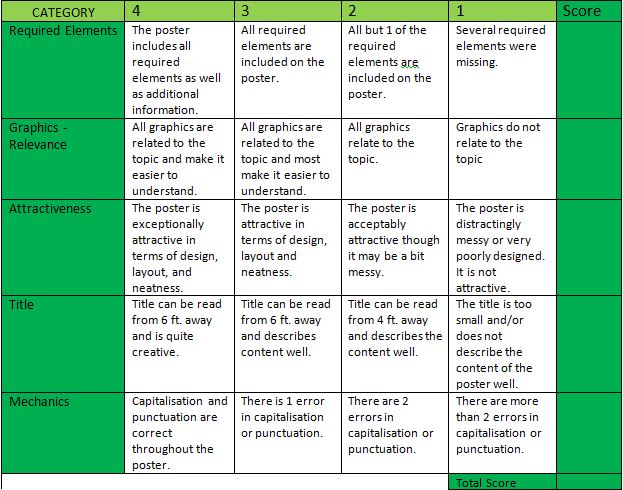
Conclusion
Communicable diseases can be very catchy, but there are preventative measures people can take to ensure that we don’t spread our germs to others. A classroom of healthy children and a healthy teacher is a fun environment!
Congratulations! You have completed the WebQuest and have hopefully learned a lot about communicable diseases along the way.
Finally, you will write a reflection about what you learned, found interesting or challenging in your inquiry workbooks. This is to be completed individually.
We will have a group discussion to share your reflections. Maybe you will learn something else from what your peers share in the discussion???
FEEDBACK
Did you enjoy the use of a WebQuest as a way to deliver the inquiry activity?
Would you like to see it used again? Why? Why not?
Credits
Australian Curriculum, Assessment and Reporting Authority. (2014). Health and Physical Education. Author. Retrieved from http://www.australiancurriculum.edu.au/health-and-physical-education/curriculum/f-10?layout=1#level5-6
Chapman Hill Elementary Wanek-PE. (n.d.). 3rd Grade Germs Unit [Image]. Retrieved from http://chapmanhillpe.weebly.com/germs.html
Teacher Page
This WebQuest has been designed to outline the issues surrounding the communicable diseases and how we, as teachers, can encourage students to complete an inquiry project about ways to eradicate and prevent the transfer of germs in our classrooms. This WebQuest is for Year 6 students; however it can be altered for any year level. This inquiry will meet the curriculum descriptions of:
- Investigate community resources and strategies to seek help about health, safety and wellbeing (ACPPS053)
- Investigate the role of preventive health in promoting and maintaining health, safety and wellbeing for individuals and their communities(ACPPS058)
(Curriculum (Australian Curriculum, Assessment and Reporting Authority, 2014).
Using an online tool such as bubbl.us, students can create a mind map that shows their knowledge about communicable diseases and germs. This is a fun and engaging resource for students and it also allows the children to develop their ICT skills (and maybe some of our own). Here is one I prepared earlier…
[img_assist|nid=25053|title=Communicable diseases mind map|desc=|link=none|align=left|width=640|height=275]