
Introduction
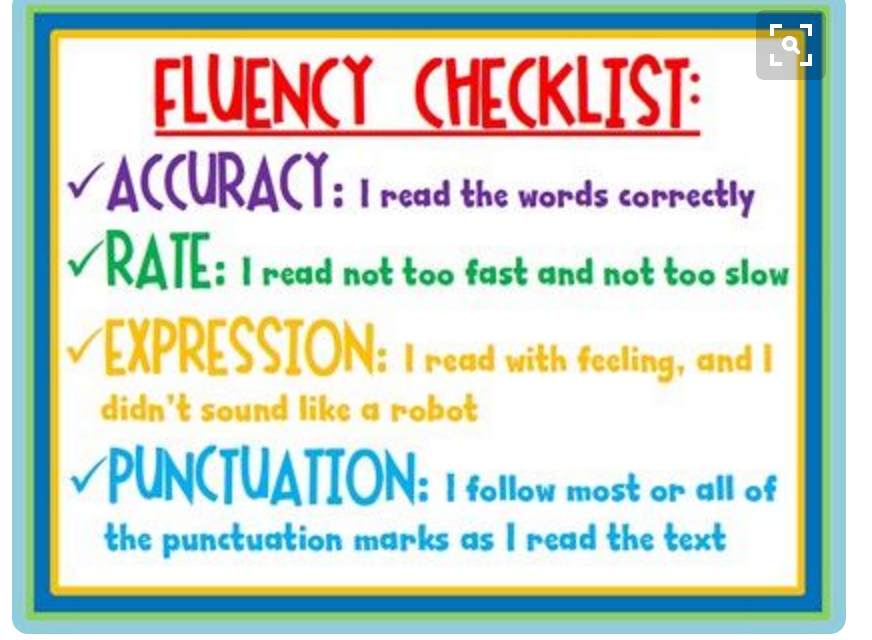
Readers, today, you will engage in practicing a passage to improve your fluency! Remember, readers, fluency means reading accurately (reading the words correctly), with appropriate speed, and fluctuation (not sounding like a robot), and being careful to pay close attention to the punctuation that the writer uses for expression.
Task
Readers, you have spent the last several weeks reading poems and learning important terms and engaging in reading activities.
Please retrieve the following tools as you prepare for the task:
- Binders
- Highlighters
- Pencils
- Positive Attitude
- Partner
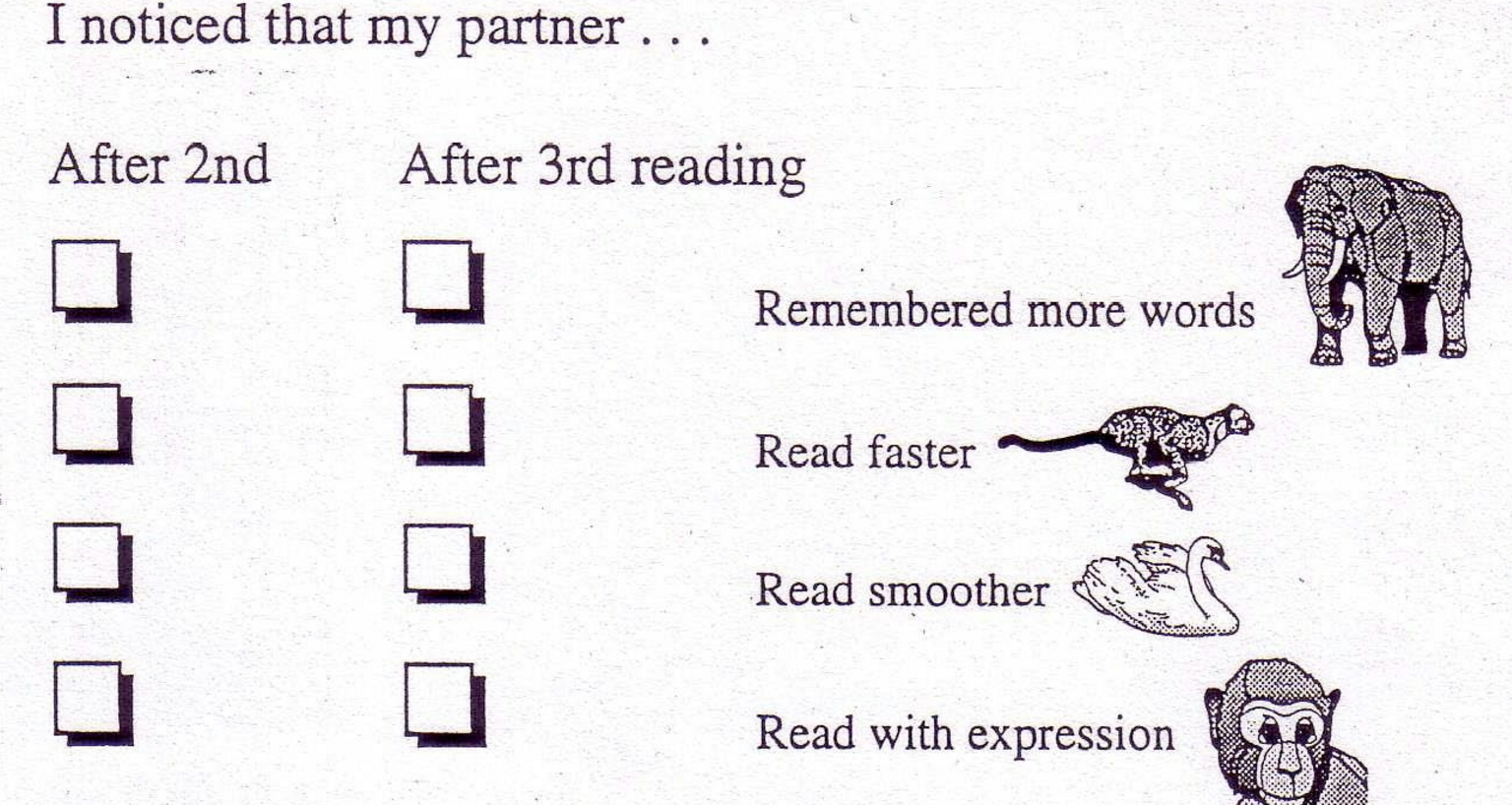
You will read a poem several times on your own and with a partner. After each reading look at your checklist to see if you met the requirements. Have fun:)
Process
Today, readers, you will use poetry to practice and improve your reading fluency.
1. The first task will be for you to read your poem outloud to your partner (cold read).

2. Next, mark the endings of the lines of the poem using a slash (/). This will help you to focus on the endings.
3. Read the poem outloud with your partner and make an effort to stop at the end marks. This will enable you to sound more natural as you read instead of running right into the next sentence.
4. Now, highlight every piece of punctuation in the poem. (You may highlight on your paper copy (hard copy) or you may use the highlighting feature on your laptop).
5. Next, we will work on the fluctuation of your voice. Most of the time when reading students sound the same whether the sentence ends with a period or a question mark. These two types of punctuation sound different in oral conversation and they should sound different when you are reading. Choose two sentences from the poem that have a question mark at the end and/or an exclamation mark.
6. Read the poem outloud, again, to your partner. If you see an exclamation mark (!), make your voice sound excited. If you see a question mark (?) then make your voice sound like you are asking a question.
7. Lastly, readers, you need to be aware of the mood that the writer is intending. Look through the poem for important words that describe a feeling. Read through the poem one last time and read with the intended mood.
Evaluation
Conclusion
This concludes today's lesson. With the time that remains continue to practice to improve fluency.
Please answer the following questionnaire about reading fluency.
1. Did your fluency improve by completing these exercises? Y N
2. Was it helpful working with a partner? Y N
3. Did you remain on task and exhibit a positive attitude? Y N
4. What will you use from now on when reading? ______
Credits
Rasinski, T. (2000). Speed does matter in reading. The Reading Teacher, 54, 146–151.