Introduction
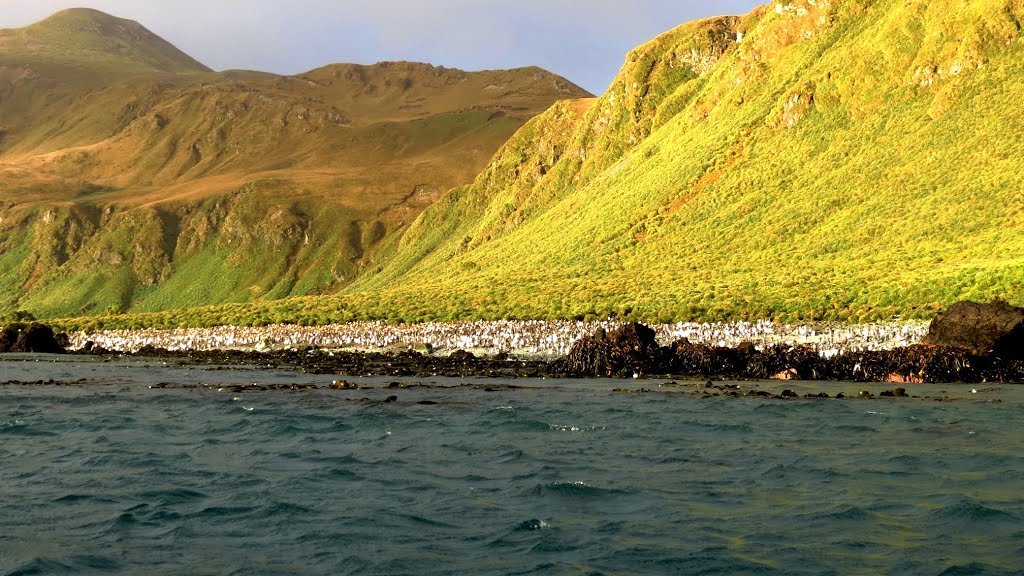
"Macquarie Island lies in the Southern Ocean, between Antartica and New Zealand. A speck of green in the vast, windswept sea, it is a haven for many creatures that live above and below the waves" (Lester & Tulloch, 2011, p. 2).
Learning, and developing knowledge about Macquarie Island is important not just because we need to understand a topic before we write about it, but because we are the caretakers of our world and we need to understand the choices we make will decide its future. What follows will provide you with the many chapters as part of the story of Macquaire Island. So will you, my fellow explorer, join me on this historical inquiry?
I wonder what awaits us on this little island, which is one of the wonder spots of the world!
Task
.jpg)
As part of expanding your knowledge on 'One Small Island', before you write, you will take on the role of an explorer, engaging in a historical inquiry of Macquarie Island. You will:
- View maps of Macquarie Island
- Examine a timeline of the history of Macquarie Island
- Observe visual extracts from 'One Small Island'
- Read recounts and journal entries from the past
- View videos about Macquaire Island
- Navigate to various web pages for further information
- Read a personal recount by the author Alison Lester on her visit to Macquarie Island
This will allow you, as an explorer, to gain all the information you need to continue on your adventure where the goal is:
To engage with various textual sources (written text, images, videos and websites) to interpret and understand ideas and information about Macquarie Island.
Do you have your exploring hats on? Click 'Process' when you are ready to explore!
Process
Where is Macquarie Island?
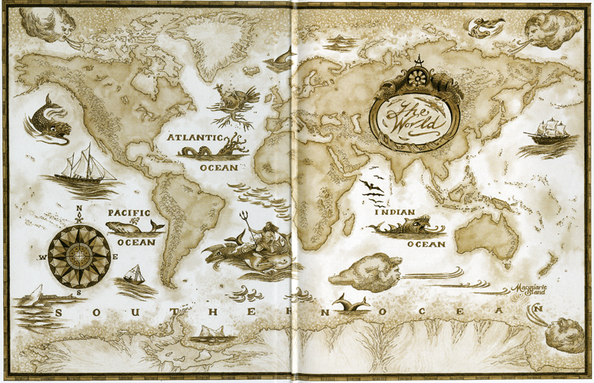
It is situated about 1500 km south-south-east of Tasmania, about half way between Tasmania and Antarctica at around 55 degrees south. The main island is approximately 34 km long and 5.5 km wide at its broadest point. The only access to the island is by sea and there are no harbours or landing facillities. Ship-traffic in the area is minimal and mainly consists of resupply vessels for the station.
Click the image below to find out more!
.jpg)
What Does Macquarie Island Look Like?
https://www.flickr.com/photos/40325561@N04/sets/72157622697587999/
[video:https://www.youtube.com/watch?v=Sg3nHWnPMj8 align:center]
What Animals Are Found On Macquarie Island?
History of Macquarie Island
[video:https://www.youtube.com/watch?v=QOxoZB6PxpU align:left]
.jpg)
.jpg)
.jpg)
.jpg)
.jpg)
.jpg)
World Heritage Listing
Macquarie Island was placed on the World Heritage List on 3 December 1997. It is significant as one of the world's most outstanding geological features – it is the only place on earth formed entirely of oceanic crust. Every rock on Macquarie Island was formed on or deep below the seabed. This is an island of outstanding natural beauty and diversity, and is an important breeding place for many of the Southern Ocean's birds and animals.
Alison Lester's ('One Small Island' Author) View of Macquarie Island
In 2005 I travelled to Antarctica as an Australian Antarctic Arts Fellow. I went on the Aurora Australis on a six week resupply voyage to Australia’s stations at Mawson, Casey and Macquarie Island.
I loved the ocean and the ice but when we reached Macquarie Island I was shocked to see the terrible state it was in. I’d seen beautiful photographs from the sixties and seventies and was expecting megaherbs and giant tussocks but they had been chewed to the ground by rabbits. The green sponge ( the island’s nickname ) was brown. Without vegetation to hold it, the fragile soil was badly eroded and many bird species were suffering without sheltering plants.
I learned that rabbits had been introduced to the island in the 1800s as a food source for sealing gangs and that the sealers had hunted the island’s fur seals to the brink of extinction. In ten years they killed around 200,000 fur seals!
Macquarie Island Today
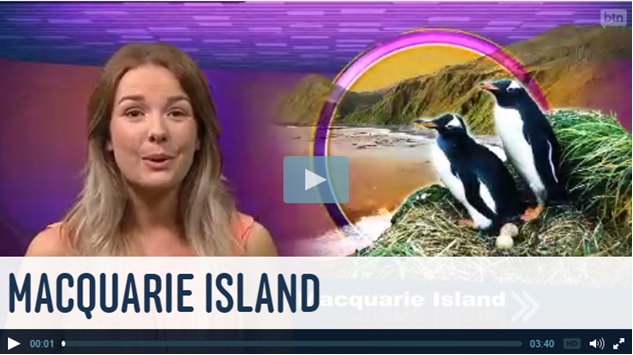
Click the below image to be taken to the web page to see what the island is like today.
Conclusion
What an interesting adventure, I hope you my fellow explorer learnt as much as I did! To end our adventure let's summarise everything we have learnt on this eye opening exploration.
Using "Popplet" brainstorm the things you know and have learnt about Macquarie Island.