
Introduction
Julius Caesar, a respected general threatens the republic of Rome. The people rally behind him to annoint the new emperor and the republic that is supposed to weather all storms begins to fall.
Will you stand with Caesar, or rebel with Brutus?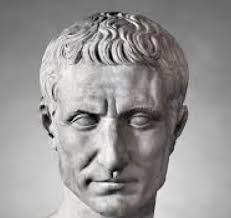
Task
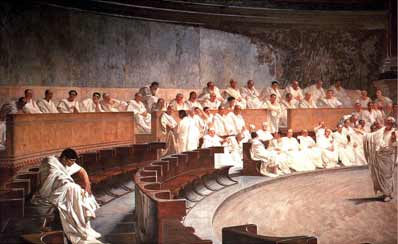
After reading Julius Caesar your jobs are to research Roman culture and the function of the government to understand why Rome was so devoted to the idea of a republic, and why Caesar was killed for becomming the head of an empire.
Working in groups of three, you will research Roman culture and what makes Rome traditionally, Rome.
A powerpoint presentation with informational slides and a well informed arguement on what side of the betrayal you would be on is required for full marks. any notes taken during the process are to be recorded, and all group memebers are expected to work on the assignment.
Process
Identify your position in your arguement:
If you agree with Brutus and his cohorts make sure to explain your position, if your position changes be sure to identify what changed your decision.
Explain you reasoning for your arguement:
Within your arguements identify moral, ethical, and lawful reasons that you and your group feel in favor for Caesar's take over or Brutus' coup.
Below are some provided resources, however, any additonal resources may be used so long as they are approved.
Start with these resources:
http://www.historyguide.org/ancient/12tables.html
http://www.roman-empire.net/children/history.html
https://www.khanacademy.org/humanities/ancient-art-civilizations/roman/…
Evaluation
RUBRIC 4 3 2 1
|
|||||||||||||||||||||||||||||
Conclusion
Finishing this web quest should have led you to discover your own opinions on over throwing a government, the idea of tyrrany, and wheter or not you comprehended the characters in Julius Caesar. Based on the readings and new information, what modern day instances seem to realate with the coup of Caesar.
Credits
This webquest was an orignal work of Matthew Adams, Teacher candidate of Anderson University, SC
resources are based upon prior research done by Matthew and the Sources He provided.
Teacher Page
When teaching stories like Julius Caesar teachers are obligated to make the information relevant. By asking students to identify what they believed was right and wrong in the story then their personal ideals become relevant, as does the story. This History written by Shakespeare will remain relevant as long as moral and ethical questions of government come into question.