
Introduction
The Circulatory System
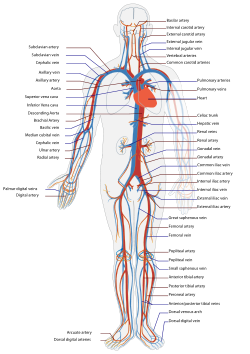
The circulatory system, also called the cardiovascular system or the vascular system, is an organ system that permits blood to circulate and transport nutrients (such as amino acids and electrolytes), oxygen, carbon dioxide, hormones, and blood cells to and from the cells in the body to provide nourishment and help in fighting diseases, stabilize temperature and pH, and maintainhomeostasis. The study of the blood flow is called hemodynamics. The study of the properties of the blood flow is called hemorheology.
The circulatory system is often seen to comprise two separate systems: the cardiovascular system, which distributes blood, and thelymphatic system, which circulates lymph.[1] The passage of lymph for example takes much longer than that of blood.[2] Blood is a fluid consisting of plasma, red blood cells, white blood cells, and platelets that is circulated by the heart through the vertebrate vascular system, carrying oxygen and nutrients to and waste materials away from all body tissues. Lymph is essentially recycled excess blood plasma after it has been filtered from the interstitial fluid (between cells) and returned to the lymphatic system. The cardiovascular (from Latin words meaning "heart" and "vessel") system comprises the blood, heart, and blood vessels.The lymph,lymph nodes, and lymph vessels form the lymphatic system, which returns filtered blood plasma from the interstitial fluid (between cells) as lymph.
While humans, as well as other vertebrates, have a closed cardiovascular system (meaning that the blood never leaves the network of arteries, veins and capillaries), some invertebrate groups have an open cardiovascular system. The lymphatic system, on the other hand, is an open system providing an accessory route for excess interstitial fluid to be returned to the blood.The more primitive, diploblastic animal phyla lack circulatory systems.
Task
Cardiovascular system
The cardiovascular systems of humans are closed, meaning that the blood never leaves the network of blood vessels. In contrast, oxygen and nutrients diffuse across the blood vessel layers and enter interstitial fluid, which carries oxygen and nutrients to the target cells, and carbon dioxide and wastes in the opposite direction. The other component of the circulatory system, the lymphatic system, is open.
Arteries
Oxygenated blood enters the systemic circulation when leaving the left ventricle, through the aortic semilunar valve. The first part of the systemic circulation is the aorta, a massive and thick-walled artery. The aorta arches and branches into major arteries to the upper body before passing through the diaphragm, where it branches further into arteries which supply the lower parts of the body.
Capillaries
Arteries branch into small passages called arterioles and then into the capillaries.The capillaries merge to bring blood into the venous system.
Veins
After their passage through body tissues, capillaries merge once again into venules, which continue to merge into veins. The venous system finally coalesces into two major veins: the superior vena cava (roughly speaking draining the areas above the heart) and the inferior vena cava (roughly speaking from areas below the heart). These two great vessels empty into the right atrium of the heart.
Coronary vessels
The heart itself is supplied with oxygen and nutrients through a small "loop" of the systemic circulation.
Portal veins
The general rule is that arteries from the heart branch out into capillaries, which collect into veins leading back to the heart. Portal veins are a slight exception to this. In humans the only significant example is the hepatic portal vein which combines from capillaries around the gut where the blood absorbs the various products of digestion; rather than leading directly back to the heart, the hepatic portal vein branches into a second capillary system in the liver.
Heart
The heart pumps oxygenated blood to the body and deoxygenated blood to the lungs. In the human heart there is one atrium and one ventricle for each circulation, and with both a systemic and a pulmonary circulation there are four chambers in total: left atrium,left ventricle, right atrium and right ventricle. The right atrium is the upper chamber of the right side of the heart. The blood that is returned to the right atrium is deoxygenated (poor in oxygen) and passed into the right ventricle to be pumped through the pulmonary artery to the lungs for re-oxygenation and removal of carbon dioxide. The left atrium receives newly oxygenated blood from the lungs as well as the pulmonary vein which is passed into the strong left ventricle to be pumped through the aorta to the different organs of the body.
Lungs
The circulatory system of the lungs is the portion of the cardiovascular system in which oxygen-depleted blood is pumped away from the heart, via the pulmonary artery, to the lungs and returned, oxygenated, to the heart via thepulmonary vein.
Systemic circulation
The systemic circulation is the circulation of the blood to all parts of the body except the lungs. Systemic circulation is the portion of the cardiovascular system which transports oxygenated blood away from the heart through the aorta from the left ventricle where the blood has been previously deposited from pulmonary circulation, to the rest of the body, and returns oxygen-depleted blood back to the heart.
Brain
The brain has a dual blood supply that comes from arteries at its front and back. These are called the "anterior" and "posterior" circulation respectively. The anterior circulation arises from the internal carotid arteries and supplies the front of the brain. The posterior circulation arises from the vertebral arteries, and supplies the back of the brain andbrainstem. The circulation from the front and the back join together (anastomise) at the Circle of Willis.
Kidneys
The renal circulation receives around 20% of the cardiac output. It branches from the abdominal aorta and returns blood to the ascending vena cava. It is the blood supply to thekidneys, and contains many specialized blood vessels.
Lymphatic system
The lymphatic system is part of the circulatory system. It is a network of lymphatic vessels and lymph capillaries, lymph nodes and organs, and lymphatic tissues and circulatinglymph. One of its major functions is to carry the lymph, draining and returning interstitial fluid back towards the heart for return to the cardiovascular system, by emptying into thelymphatic ducts. Its other main function is in the immune system.
Process
Four Ways to Keep Your Circulatory System Healthy
 Keeping your circulatory system healthy will decrease your risk of heart attack.
Heart disease is the leading cause of death in the United States, with 50 percent of those deaths men and 50 percent women, according to the Centers for Disease Control and Prevention website. Although there are risk factors that cannot be changed, such as family history, making lifestyle changes can significantly lower your risk of damage to your heart and circulatory system.
Engage in Physical Activity
Exercise of 30 minutes or more, most days of the week is advised to improve the health of your heart and circulatory system. Physical activity can help manage your weight and reduce your risk of developing other conditions that make your circulatory system work harder, like high blood pressure, diabetes and high cholesterol. Exercise is even effective when broken down into shorter sessions.
Quit Smoking and Tobacco Use
Smoking and using tobacco products significantly increases your risk for heart disease. Damage to your heart and circulatory system by the chemical compounds in tobacco can cause atherosclerosis, which may lead to heart attack. Once you quit smoking, your risk of heart disease significantly decreases over the next year, according to the MayoClinic website. Regardless of how long you have smoked or used other tobacco products, you will notice the benefits of quitting as soon as you do.
Eat High Quality Foods
Your food intake can significantly improve the health of your circulatory system and heart. Diets containing five to 10 servings of fruits and vegetables, whole grains and low-fat dairy products are most beneficial to the circulatory system. Avoiding processed foods, foods that are high in saturated and trans fats, and excessive alcohol consumption can also improve your circulatory system health.
Maintain a Healthy Weight
Managing a healthy weight plays a major role in the health of your circulatory system. Being overweight can increase risk of high blood pressure, diabetes and high cholesterol, all of which put you at increased risk for heart attack and other circulation problems. By just losing 10 percent of your body weight, you can significantly increase the odds of not developing these chronic diseases.
Evaluation
Directions: Select the best answer for each of the following questions.
- The circulatory system is responsible for. . .
the transport of dissolved materials throughout the body.
the transport of oxygen from the lungs and nutrients from the digestive tract to every cell in the body.
the transport of the waste products of cell metabolism to the lungs and kidneys where they can be expelled from the body.
the transport of hormones and certain cells of the immune system.
all of the above.
- The lymphatic system serves. . .
to collect and recycle fluid that has leaked out of the capillaries.
to phagocytize, or ingest, bacteria, old red blood cells, etc.
to phagocytize, or ingest, impurities such as toxins and cellular waste.
as an important part of the immune system.
all of the above.
- The blood cells responsible for the transport of oxygen and carbon dioxide are the. . .
platelets
lymphocytes
white blood cells
red blood cells
all of the above
- Fighting infection and foreign invaders is one of the primary functions of the . . .
erythrocytes (red blood cells)
leukocytes (white blood cells)
thrombocytes (platelets)
none of the above
- Pernicious anemia results when the person's stomach fails to produce intrinsic factor, which is necessary for the normal absorption of vitamin . . .
B-1
B-6
B-12
C
Conclusion
The Circulatory System is very important. Without it we would not be able to live. So we must "take care of our circulatory system so that it takes care of us. In order to take care of our circulatory system we need to exercise regularly and eat healthy.

Credits
https://en.wikipedia.org/wiki/Circulatory_system
https://www.innerbody.com/image/cardov.html
http://www.webmd.com/heart/picture-of-the-arteries
https://en.wikipedia.org/wiki/Capillary
https://en.wikipedia.org/wiki/Vein
https://en.wikipedia.org/wiki/Coronary_circulation
http://www.healthline.com/human-body-maps/portal-vein
https://en.wikipedia.org/wiki/Heart
https://en.wikipedia.org/wiki/Lung
http://www.ncbi.nlm.nih.gov/pubmedhealth/PMHT0023062/
https://en.wikipedia.org/wiki/Brain
https://en.wikipedia.org/wiki/Kidney
https://en.wikipedia.org/wiki/Lymphatic_system
http://www.livestrong.com/article/361738-four-ways-to-keep-your-circula… Updated: Jan 28, 2014 | By Dr. Leslie Stoklosa,Photo Credit Dynamic Graphics/Creatas/Getty Images
Teacher Page
