
Introduction
Q:What did the beaver say to the tree?
A: Its been nice gnawing ya!
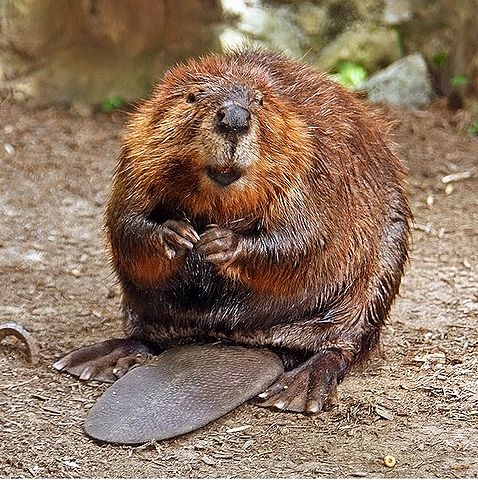
Ever wonder why beavers have such big tails? Throughout this WebQuest you will learn about the beaver tail as well as the rest of its body parts and why they are important. Continue on to the task button to lean about what you need to do in order to become a beaver expert!
Task
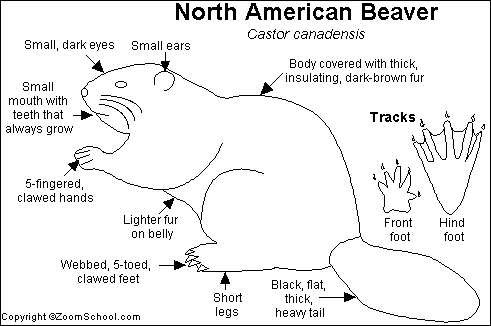
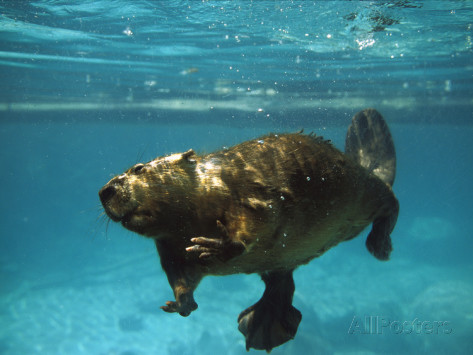
Your job is to learn why the beavers tail, front and back legs, claws, flippers, teeth, nose and ears make it such a special animal. Once you have learned all about it you will be making two things: a labeled picture of a beaver and narrative story form the perspective of a beaver. The story needs to include information that you learned in this WebQuest.
Process
After reading the introduction, discuss with your team what you already know about beavers. Think about what you know about each of their body parts. Next, each person will have a primary research role and needs to pick two body parts that they want to become an expert on and can teach their group all about those body parts. Have a look at the following web sites to help you learn more about the beaver body parts you have selected. After all the research is completed come back as a team to share what you have learned. When you have completed this task you can start drawing your labeled picture and writing your beaver narrative.
http://www.pbs.org/wnet/nature/leave-it-to-beavers-leave-it-to-beavers/…
http://www.canadiangeographic.ca/kids/animal-facts/beaver.asp
http://www.bayjournal.com/article/beaver_bodies
http://animals.howstuffworks.com/mammals/beaver-info1.htm
Evaluation
|
|
Poor |
Adequate |
Good |
Excellent |
Score |
|
Team-work |
another. Members did not work together and did not communicate well. |
Team members worked separately most of the time and had a hard time sharing their learning, |
All team members contributed equally and communicated with each other most of the time. |
Team members worked hard to communicate with each other and help each other throughout the whole process and helped each other edit their work. All members contributed equally and gave constructive feedback. |
|
|
Drawing |
Only one draft was made. No labels. |
Two drafts were made but still very sloppy. Labels we made but no explanations of the body parts. |
Clean art work with labels and explanations. |
Multiple drafts made with clean art work and labels. Explanations are very clear and explain the body parts fully. |
|
|
Narrative |
One draft of a narrative was written and there are many grammar mistakes and it does not make sense. |
Two drafts were written about there are still many grammar mistakes. The story makes sense. |
Final copy was written with very few errors. The story includes all the body parts and is enjoyable to read. |
Final copy was written with very few errors. The story includes all the body parts and is enjoyable to read. It was edited by group members and is very well organized. |
|
Conclusion
I hope you enjoyed learning all about the beaver and their adaptations! Your papers will be used to teach the first graders about beavers and how animals body parts help them survive! Nice work you egger beavers!
Standards:
Life Science 1: Analyze and interpret data about nonliving components of a habitat (2.1.b)
Life Science 1: Assess and provide feedback on other scientific explanations regarding why an organism can survive in its habitat based on its features (2.1.c)
Writing:
3.1.b. Write narratives in which they recount a well-elaborated event or short sequence of events, include details to describe actions, thoughts, and feelings, use temporal words to signal event order, and provide a sense of closure.
3.1.e. Write with precise nouns, active verbs, and descriptive adjectives.
Credits
Thanks to the following information sources!
PBS
Canadian Geographic
Bay Journal
How Stuff Works
Teacher Page
My name is Michelle McReynolds and I am a second grade teacher in the heart of the Rocky Mountains in Colorado. Our classes have been learning all about the beaver and how its adaptations help it survive. This Web Quest was created to help them stay engaged and to hold them accountable. It will be use in the spring along side out beaver unit.