
Introduction
In this webQuest, the topic of assessment in behaviourist theory will be explored in greater detail. We will attempt to answer three main questions:
What does assessment look like using behaviourist theory?
How is assessment useful for e-learning?
What are the limitations of assessment using only behaviourist theory?
Here is a short video to refresh your memory on assessment: assessment in education
In the task section, you will find more information on how assessment is used in behaviourism. Then in the process section, you can complete a crossword puzzle with related key terms. In the evaluation section, you can assess your own learning by seeing where you fit on the rubric. Once you have completed this WebQuest, you can go back to our Weebly page and continue to learn about Behaviourism in Eduation.

image source: http://assessment.uconn.edu/primer/
Task
WHAT IS ASSESSMENT IN BEHAVIOURISM?
In education, the term assessment refers to the wide variety of methods or tools that educators use to evaluate, measure, and document the academic readiness, learning progress, skill acquisition, or educational needs of students (Hidden, 2014).
Behaviourist theory asserts that the teacher analyzes and observes the student’s behaviour to capture evidence of learning. The goal for the teacher is to elicit the desired response from the learner who is presented with the target stimulus. The teacher must identify the desired response, then use appropriate cues and reinforcement, and arrange practice situations and environmental conditions to ensure that learning is observed.
There are different types of assessment, but the behaviourism model suggests that formative assessment (which occurs throughout the learning process) is ideal. Timely and detailed feedback throughout and as near in time as possible to performance is most effective in providing motivation, shaping behaviour and developing mental constructs (Shepard 2000).
According to Skinner (1968) and Markke (1969), programmed instruction is key to success in learning. Skinner introduced the teaching machine as an example of programmed instruction.
According to Skinner (1968), Behaviourist assessment should
1) take the form of question (stimulus)-answer (response) frames that expose the student to the subject in gradual steps.
2) Require that the learner makes a response for every frame and receive immediate feedback
3) Try to arrange the difficulty of the questions so that the response is always correct (ie positive reinforcement)
4) Ensure that good performance in the lesson is paired with secondary reinforcers such as verbal praise, prizes, success.
HOW IS BEHAVIOURIST ASSESSMENT USEFUL IN ONLINE LEARNING?
Skinner’s teaching machine was the predecessor of modern instructional student software designed to reinforce student behavior. For example, computer gaming software has drill and practice tutorials where learning behavior is progressively rewarded as each level of the game is mastered, and objectives/standards have become established indicators of achievement. Here is an example of a driving game designed using behaviourist principles (rewards, praise, points, consequences) to help teenage drivers.
Digital assessment systems can help teachers employ behaviourist models with ease as online assessment offers many features that traditional paper-based assessment cannot. For example, students can take online assessments during their own time and get immediate feedback on performance results. Teachers can use different analytics to personalize their instruction because more information is available about the academic performance of the students. (edglossary)
Instructional software and computer-assisted instruction also use many Behaviourist strategies. Shield (2000) discussed the use of drill and practice tutorials, with individual instructions and feedback, where a “student is rewarded through an encouraging comment before moving on to the next learning objective”. A strong example is the use of “the computer games that are so highly addictive to teenagers,” as their “learning behaviour is being progressively rewarded as each level of the game is mastered” (Shield, 2000).
WHAT ARE THE LIMITATIONS OF USING BEHAVIOURIST PRINCIPLES IN ONLINE LEARNING?
The biggest criticism of behaviourism is that it does not account for mental processes, and this is also present in assessment. It is difficult to assess higher-level skills or greater depth of processing using drill-and-practice type assessment. Likewise, in games, behaviourist principles do not address harder problems of immersion, cooperation and competition (Reeve, 2012).
Process
Here is a small crossword for you to see how many key words you remember: The answers are on the next page in the Evaluation section. Good luck!
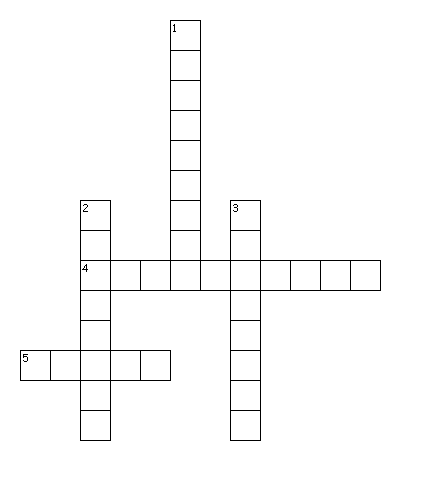
Across
4. used to evaluate learning
5. "____ and practice"
Down
1. also called "assessment for learning"
2. "____ machine" devised by Skinner
3. this type of reinforcement includes praise
Evaluation
Rubrics are a useful assessment tool frequently used by Behaviourist instructors to assess student performance. They not only allow students to see their current level, but shows them what is required for improvement. This can give them motivation to work harder to achieve their goals. Here is a simple rubric for you to assess your own learning in this WebQuest.
| Criteria | Level 1 | Level 2 | Level 3 | Level 4 |
| Knowledge | Did not complete Webquest | Quickly browsed information | Completed webQuest | Completed WebQuest and thought about how to implement elements in teaching |
| Motivation | No motivation to read information | Limited motivation to complete webQuest | Satisfactory motivation to complete webQuest | High motivation to complete webQuest and continue with rest of presentation |
Answers from Crossword:
1. formative
2. teaching
3. positive
4. assessment
5. drill
Conclusion
Thanks for completing this webQuest! Hope you found the information useful. Please go back to our Weebly page and discover how Behaviourism can be applied in online learning.
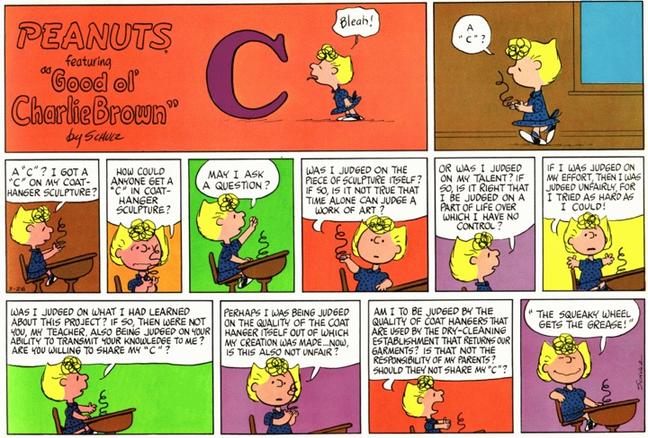
image source:https://educationaljargonschs.wikispaces.com/Assessment
Credits
Crossword resource: http://puzzlemaker.discoveryeducation.com/CrissCrossSetupForm.asp
Hidden curriculum (2014, August 26). In S. Abbott (Ed.), The glossary of education reform. Retrieved from http://edglossary.org/hidden-curriculum
Reeve, Carlton (2012). "Behaviourism and Games". http://playwithlearning.com/2012/01/06/behaviourism-and-games/
Shepard, L. A. (2000). The role of assessment in a learning culture. Educational Researcher, 29(7), 4–14. Retrieved August 24, 2007, from http://www.jstor.org/view/0013189x/ap040287/04a00020/0
Shield, G. (2000). A critical appraisal of learning technology using information and communication technologies. Journal of Technology Studies.
Skinner, B.F. (1968). The Technology of Teaching. New York: Appleton-Century-Crofts.