
Introduction
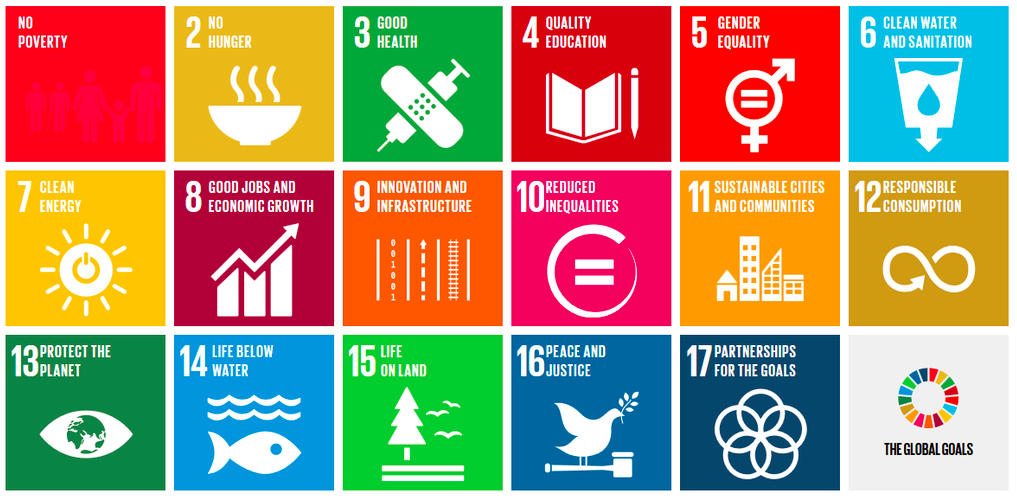
Through this WebQuest, students will investigate how food production and consumption affect both the planet and human health. They will examine the role of food systems in achieving Sustainable Development Goal 12 (responsible consumption and production) and understand why sustainable practices are essential for reducing environmental impact, conserving resources and supporting healthier lifestyles. Finally, they will be encouraged to reflect on how they can personally contribute to a more sustainable future.
Task
By the end of this WebQuest students will:
- Clarify the connection between responsible food systems and Sustainable Development Goal 12 (SDG 12).
- Examine sustainable practices in agriculture, food waste reduction, energy efficiency and livestock management that can help mitigate climate change and enhance ecosystem resilience.
- Identify key challenges and develop innovative solutions to minimize food waste within different roles of the food supply chain.
- Collaborate in transnational groups to address food waste issues in various stages of food production, distribution and consumption and present your findings.
- Reflect on personal actions and changes that can contribute to more sustainable food practices.
- Identify strategies for reducing health risks associated with food production and consumption.
Process
Step 1: Exploring the connection between responsible Food Systems and SDG 12
Food systems are at the heart of Sustainable Development Goal 12 (SDG 12), which aims to advance sustainable consumption and production patterns. This goal emphasizes the importance of transforming how we produce and consume food to reduce environmental impact, conserve resources and promote health. By integrating sustainable practices into food systems, we address critical issues such as efficient resource use, waste reduction and climate resilience, all while supporting healthier diets and ensuring equitable food access.
Check out the presentation on genial.ly titled "Responsible Food Production and Consumption: Tackling Climate Change and Reducing Health Risks" and then take the quiz that follows:
Useful links:
- https://www.un.org/en/food-systems-summit/sdgs
- https://www.foodsecurity.ac.uk/blog/the-food-system-is-a-vital-part-of-the-climate-solution/
- https://zerofoodwastecoalition.org/action/educate-and-activate-consumers/
- https://www.slowfood.com/blog-and-news/how-does-the-food-system-impact-earth-overshoot-day/#:~:text=If%20we%20reduced%20global%20meat,the%20date%20by%201.8%20days.
- https://www.sciencedirect.com/science/article/pii/S0956713523004401
Step 2: Team formation for "The Fresh Produce Challenge"
You will be divided in five transnational groups to work on the following scenario:
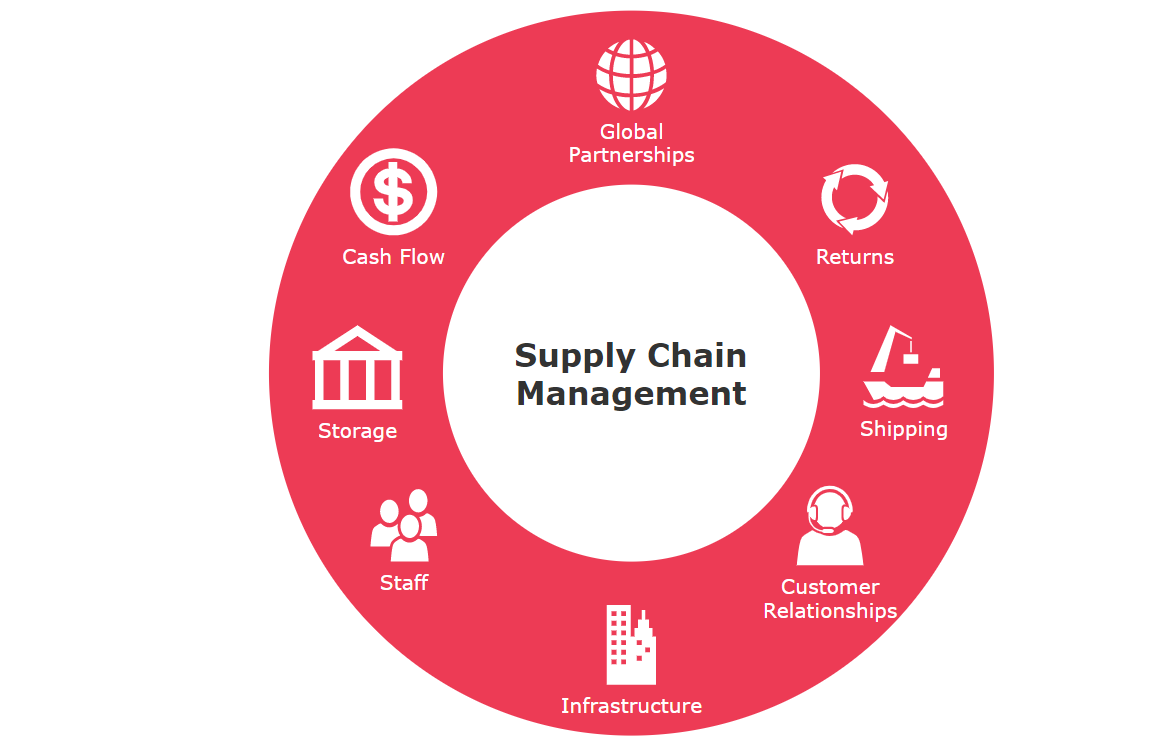
''You are part of a supply chain tasked with delivering fresh produce from a farm to consumers. Each group represents a critical part of this supply chain. Unfortunately, unexpected issues arise at each stage, leading to increased food waste. Your goal is to identify these issues and develop innovative solutions to minimize waste.''
Group 1: Farmers
Group 2: Transporters
Group 3: Processors
Group 4: Retailers
Group 5: Consumers
Step 3: Roles assignment
Based on the role assigned to your group, you will identify problems and create innovative solutions to reduce food waste according to the scenario. Sign up to the following Google Doc for the role you prefer to play in this scenario and to see more instructions.
https://docs.google.com/document/d/189wRNTcZE4zZmUU0nrUC3FofCy5r3VrBjKaR8dYIE_Y/edit?usp=sharing
Step 4: Propose innovative solutions
Based on the role assigned to your group, you will identify problems and propose innovative solutions through to reduce food waste according to the scenario assigned to your group and comment in the following Padlet. At the end agree on a common answer. https://padlet.com/meddiet4health/the-fresh-produce-challenge-ewg12irq32ccolqj
Step 5: Reflect
Comment on the forum of the related page in the Twinspace or in the classroom on the following: ''What actions or changes might you personally take to contribute to more sustainable food practices in your own life?''
Evaluation
- Webquest evaluation:https://docs.google.com/forms/d/e/1FAIpQLSerPlTJ8LlUZuqV6cnNl0KuN1Z85LC09sBGqBlCnCWRFFIO-w/viewform?usp=sf_link
- Students evaluation: data collected from the quiz in genial.ly, the answers in the padlet on the Fresh Produce Challenge and the discussion in the forum, and also the following rubric:
|
Criteria |
1 - Beginning |
2 - Developing |
3 - Proficient |
4 - Advanced |
5 - Exemplary |
|
Understanding of SDG 12 and Food Systems |
Shows minimal or inaccurate understanding of SDG 12 and its connection to food systems. |
Demonstrates partial understanding with some inaccuracies or gaps in explaining the connection. |
Shows clear understanding of SDG 12 and how food systems relate to sustainable consumption and production. |
Demonstrates detailed understanding with examples of how food systems impact SDG 12 goals. |
Provides thorough and insightful explanation linking SDG 12 to food systems and sustainability practices. |
|
Identification of Problems in Assigned Role |
Identifies few or irrelevant problems related to food waste in the assigned supply chain role. |
Identifies some relevant problems but lacks detail or clarity in explanation. |
Accurately identifies key problems related to food waste in the assigned supply chain role. |
Identifies multiple significant problems with clear explanations showing depth of understanding. |
Provides comprehensive and insightful identification of all relevant problems with strong supporting details. |
|
Innovation and Creativity in Solutions |
Offers minimal or unrealistic solutions to reduce food waste; lacks creativity. |
Proposes some solutions but they may be basic or only somewhat relevant. |
Proposes practical and relevant solutions to reduce food waste with some originality. |
Solutions are innovative, feasible, and well explained, showing creative problem-solving skills. |
Solutions are highly innovative, detailed, and demonstrate strong potential for real-world impact in reducing food waste. |
|
Collaboration and Participation in Group Work |
Participates minimally or disruptively; does not contribute to group discussions or tasks. |
Participates inconsistently; contributes occasionally but lacks engagement with group process. |
Participates actively and cooperates with group members to complete tasks. |
Takes a leadership role or consistently supports group efforts with constructive contributions. |
Exemplifies exceptional teamwork, facilitates consensus, and motivates group toward shared goals effectively. |
|
Reflection on Personal Action for Sustainability |
Provides vague or no reflection on personal actions related to sustainable food practices. |
Reflection shows basic awareness but lacks depth or specific commitments to change. |
Reflects thoughtfully on personal actions and suggests some ways to contribute to sustainability. |
Provides clear, specific, and realistic personal actions to support sustainable food practices. |
Offers insightful, well-articulated reflection with a strong commitment to actionable, sustainable lifestyle changes. |
Conclusion
Throughout this WebQuest, students will have explored the vital role of responsible food systems in achieving Sustainable Development Goal 12. They will have identified key challenges, proposed innovative solutions to reduce food waste across the supply chai and demonstrated teamwork and creativity in addressing these issues.
Credits
- https://www.monday.com/blog/wp-content/uploads/2021/03/supply-chain-diagram.png
- https://tracextech.com/wp-content/uploads/2023/06/crop-rotation.jpeg
- https://d32m1btok6bzqh.cloudfront.net/wp-content/uploads/2020/01/Agro2.jpg
- https://i.ndtvimg.com/i/2017-02/soil_620x350_81487334083.jpg
- https://iwa-network.org/the-sustainable-development-goals-an-opportunity-too-good-to-be-missed/
- https://iwa-network.org/wp-content/uploads/2016/09/Screen-Shot-2016-09-14-at-16.36.45.png
- https://www.un.org/en/food-systems-summit/sdgs
- https://www.enel.com/company/stories/articles/2023/03/ecological-resilience
- https://www.foodsecurity.ac.uk/blog/the-food-system-is-a-vital-part-of-the-climate-solution/
- https://www.ucsusa.org/resources/what-sustainable-agriculture
- https://news.un.org/en/story/2022/11/1130532
- https://www.fao.org/newsroom/story/Three-sustainable-energy-solutions-for-food-production-and-places-where-they-are-used/en
- https://healthforanimals.org/resources/newsletter/articles/three-ways-livestock-farming-is-becoming-more-sustainable/
- https://ofrf.org/organicforclimate/
- https://www.fao.org/conservation-agriculture/in-practice/species-diversification/en/
- https://tracextech.com/sustainable-food-supply-chains/
- https://zerofoodwastecoalition.org/action/educate-and-activate-consumers/
- https://www.slowfood.com/blog-and-news/how-does-the-food-system-impact-earth-overshoot-day/#:~:text=If%20we%20reduced%20global%20meat,the%20date%20by%201.8%20days.
- https://sustainablefoodtrust.org/our-work/sustainable-livestock/
- https://openknowledge.fao.org/server/api/core/bitstreams/02c4f309-7b6c-4e5b-9a3b-1b30c542470f/content
- https://www.fda.gov/consumers/womens-health-topics/food-safety-home
- https://www.sfa.gov.sg/food-retail/safe-food-practices-guidelines/safe-food-practices-guidelines
- https://www.sciencedirect.com/science/article/pii/S0956713523004401
Teacher Page
This WebQuest was edited by a teacher of 2o Esperino EPAL Acharnon (Greece) as part of the activities of the "Mediterranean Diet for Overall Health" (MedDiet4Health) Erasmus+ project (Project number: 2023-2-EL01-KA210-VET-000183592).
It equips students aspiring to careers in food systems with essential competencies. They build sustainability awareness by connecting SDG 12 to practice, develop technical skills in food safety, quality, waste reduction and nutrition, and enhance problem-solving through real-world scenarios. Students also strengthen collaboration across cultures, gain digital skills using online tools and acquire health-oriented competencies by addressing food-related risks in production, storage and consumption.
This WebQuest reflects only the author’s views. The European Commission’s support for the production of this WebQuest does not constitute an endorsement of the contents which reflects the views only of the authors, and the Commission cannot be held responsible for any use which may be made of the information contained therein.