
Introduction
TYPES OF LUBRICANT AND COOLANT
Automotive Engineers design and develop oil lubricants to use in the vehicle. Lubricant and coolant are the major needs of our moving parts in the vehicle. In this lesson will discuss the types and application of lubricant and coolant in automobile.
Exercise
Let's Test Your Memory!
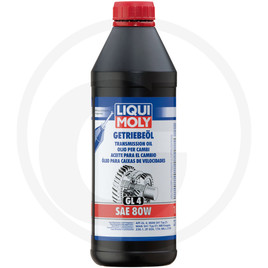
Identify the following pictures below
 |
 |
 |
||
| E_G_NE _IL | TR_NS_M_S_I_ON _IL | D_FF_R_N_I_L _IL | CO_L_NT | G_E_SE _IL |
Task
At the end of the lesson, should be able to:
- Identify the types of oil lubricants
- Apply the specific types of lubricant and every needed parts
- Define the meaning of SAE
Process
LUBRICANT OIL AND COOLANT
The following, types of coolant/lubricant that use in automobile.
We have 4TYPES of lubricants.
- OIL- It's a thin liquid that comes in different weights or viscosity, the lower the weight number, the thinner the oil. At times, additives can be mixed with the oil to prevent oxidizing and corrosion.
- GREASE- Is made by mixing oil, a thickener and at times additional lubricants, like PTFE. Due to how it's made, it has the same lubricating properties as oil. However, it's texture and stickiness helps it adhere to surfaces better.
- PENETRATING LUBRICANT- Penetrating lubricant is what you're grabbing when you have rusty jack bolds or parts with years of rust of debris on them. Penetrating lubricant is not long-lasting lubrication, its only use is for infiltrating tiny cracks, adding lubrication and breaking up rust.
- DRY LUBRICANT- Dry lubricant is a great alternative when you can't use oil or grease that will attract dust and dirt.
Coolant:
The non-nitrated organic corrosion package, provides outstanding protection against pitting and corrosion of steel, copper, brass, solder, cast aluminum, and cast iron. BioTherm AI lubricates pumps and valves, provides excellent scaling resistance, is compatible with typical gaskets, seals, elastomers and other non-metallic pump and engine parts, offers a freeze point of -31°, and burst protection to -50° F.
DISCUSSION
What is SAE? SAE stands for Society of Automotive Engineers, (SAE) has established numerical code system for grading motor oils according to their viscosity characteristics.
The Code SAE40 Use in engine to lubricate the moving parts specially for the bearings, piston, crankshaft, camshaft etc.
The Code SAE80 is use in transmission. This oil withstand the heavy loads found in gears and gear-drive systems. The transmission composed of different gears that drive our vehicle.
The code SAE140 stands for differential gear oil. SAE140 multi-grade oils are used in a wide temperature range.
The 1st Number
The number to the left of the W refers to the oil viscosity when the temperatures are low. The number to the right of the W refers to the oil viscosity at hotter temperatures.
If the first number is low, it means that you have thin oil. Whenever there are colder temperatures in your environment, it is better to have thin oil in your engine. Otherwise, it will be harder for thicker oil to flow throughout your engine and lubricate its components.
The 2nd Number
The second number will be dependent on two things; the temperature of your engine and the heat of your environment. If you live in a tropical area with a lot of heat, you will want this second number to be high because it means the oil is thick. It is good to have thick oil in hot temperatures because it will do a better job of lubricating the engine’s components.
In the US, two common motor oils in use are 10W-30 or 10W-40. If you live in an area that has very cold winters like Michigan or pretty much all of Canada, you might need even thinner oil like 0W-30. Likewise, if you live in a very hot climate like Arizona, you could be using 10W-40, 20W-50, or 15W-40.
Philippines is one of the tropical country in the world, we use 10w-40 or thick oil to prevent oil evaporation cause of heat.
Evaluation
How much have you learned?
Show that you learned something in this lesson by doing this applications.
Application 1: FILL IN THE BLANKS
You have 1 minute to answer each question below.
https://quizizz.com/admin/quiz/626f37fceeba41001ebc75a8/fill-in-the-blanks
Application 2: VIDEO PRESENTATION
Make a 3-5minutes video presentation discussing the importance of lubricant and coolant in the engine.
Credits
Teacher Page
This WebQuest materials was prepared for Performance Task3 (Webquest-IBL) on MJTIC207 by Prof. Anabel Sta Cuz- Sollano of CSTC Sariaya, Quezon.
Prepared by: ANGELO L. ORTIZ