
Introduction
WHAT IS TECHNOLOGY?
Technology is about more than just gadgets and gizmos. It has a very broad and deep definition. The term “technology” comes from the Greek word “teckne” (which relates to art or craft) and “logia” (which relates to study). The combination of these two words, teknologia, means systematic treatment. Over the past two centuries, the use of the term “technology” has changed significantly. By the 1940s, “technology” referred not only to the study of industrial arts, but it includes all machines, tools, instruments, weapons, communicating and transporting devices, as well as the skills by which humans build and use them. More broadly, technology refers to tools, machines, and a collection of techniques that may be utilized to solve real-world problems. The tools and machines can be as simple as a nail pin or as complex as a particle accelerator or space station. Also, they need not be physical; virtual technology, such as software and cloud services, fall under this definition of technology. In a broader way, technology is a means to fulfill a human purpose.
WHAT ARE THE DIFFERENT TYPES OF TECHNOLOGY?
Since technology can be so simple or extremely complex, it can be categorized into different groups. Below, we have explained all different types of technology with modern examples.
1. Information Technology

Applications: Multimedia conferencing, eCommerce, cloud computing, online banking, speech recognition, Intrusion Detection System, online advertisement Today, Information Technology (IT) refers to everything people use computers for. While this field commonly deals with computers and computer networks, it also incorporates other information distribution technologies such as telephones, television, and the Internet. Many companies now have IT departments for managing computers, creating and administering databases, and ensuring the efficiency and security of business information systems. Recent advances in computer software have enabled businesses to analyze data more precisely to discover hidden patterns and make informed decisions. In the past decade, tech giants have focused on artificial intelligence and machine learning so that computers can make “human-like” decisions using real-time data. At this point, AI can perform a wide range of tasks far better than humans. For instance, it can Predict future outcomes based on historical trends Discover inefficiencies Automate complicated analytical tasks Execute plans Learn and become better The other revolutionary invention is the blockchain — a specific type of database that stores information in the most secure way. Blockchain technology enhances the security, transparency, and traceability of data shared across a business network. Quantum computing, which harnesses the phenomena of quantum mechanics, also falls under the IT umbrella. In fact, it is considered the next significant evolutionary milestone in the development of information technology.
2. Biotechnology

Applications: Use of microorganisms for creating organic products like milk and baking bread, extraction of metals from their ores through the use of living organisms (bioleaching), production of biological weapons Biotechnology utilizes biological systems and living organisms to develop different products. It covers a wide range of disciplines, from genetics and biochemistry to molecular biology. Modern biotechnology provides revolutionary techniques and products to combat severe and rare diseases, reduce negative impacts on the environment, use cleaner energy, and have safer and more efficient industrial manufacturing processes. Based on applications, biotechnology can be categorized into seven types: Red biotechnology: involves the development of vaccines and antibodies, artificial organs, diagnostic tests, and regenerative therapies. Green biotechnology: is applied to fight pests and nourish crops and strengthen them against harsh weather conditions and microorganisms. White biotechnology: consumes fewer resources than conventional processes. It is used to create industrial goods. It involves designing organisms and enzymes to create valuable chemicals or destroy hazardous chemicals. Blue biotechnology: exploits sea resources, such as micro-algae, to develop products and industrial applications. Yellow biotechnology: focuses on food production. For instance, conducting research to decrease levels of saturated fats in cooking oils. Gold biotechnology: uses advanced computational techniques to obtain, store, analyze and separate biological information, particularly related to DNA and amino acid sequences. It plays a crucial role in numerous fields, such as structural genomics, functional genomics, and proteomics. Gray biotechnology: addresses environmental issues and focuses on the maintenance of biodiversity and the removal of pollutants. As of 2021, there are over 250 biotech health care products and vaccines available to patients. More than 14 million farmers worldwide use agricultural biotechnology to enhance yields and minimize damage from pests and insects.
3. Nuclear Technology

Applications: Production of electrical energy, radiotherapy, smoke detectors, sterilization of disposable products, Radioisotope Thermal Generators used in space missions When changes occur in the nucleus of atoms, massive amounts of energy are released. Nuclear technology involves all techniques that manipulate/control such changes in the nucleus of some specific elements and transform them into usable energy. It is extensively used in nuclear power plants to produce electricity. Nuclear power is an efficient and clean way of boiling water to create steam, which turns turbines to generate electricity. These plants use nuclear elements, such as uranium or plutonium, to generate electricity through a reaction called fission (in which the nucleus of an atom splits into two or more smaller nuclei). Most plants use small, hard uranium pellets as fuel. A single pellet, about the size of a fingertip, contains as much energy as 17,000 cubic feet of natural gas, 3 barrels of oil, and 1 ton of coal. More specifically, the fission of 1 kilogram of Uranium-235 releases nearly 18.5 million kilowatt-hours of heat.
Nuclear elements can be a reliable, long-term source of electricity in deep space missions. Spacecraft use nuclear batteries to operate unattended for years. Voyager 1 and Voyager 2, for example, launched in 1977 to study the outer solar system, are still transmitting data today.
Apart from electricity generation, nuclear technology is also used in gun sights, medical radiography, and sterilization of tools and equipment.
4. Communication Technology

Applications: LAN (Local area network), videotext, teletext, Internet, wireless information transfer, GPS Communication technology involves converging audiovisual and telephone networks with computer networks through a unified system of cabling or link. Network enhancements come from recent advancements in computing devices, some of which are specifically developed for network applications and transforming data from one point to another. It’s a broad and constantly evolving field, covering all devices that receive, store, retrieve, process, transmit information electronically in a digital form. This includes encompassing radio, television, mobile phones, communication devices, satellite systems, as well as many different services. Communication technology is, in fact, a crucial part of IT infrastructure. It makes it feasible to exchange, transfer, and provide information through a private or public network. It also enables better management of e-resources and, thus, qualitative services. Furthermore, this technology is extensively utilized in space. For example, NASA and agencies use free-space optical communication in outer space to transfer more data in less time.
5. Electronics Technology

Applications: Computers, smartphones, digital camera, RADAR (Radio Detection And Ranging), power suppliers, multimeters, interactive Sensors Electronics deals with everything the involves emission, flow, and control of electrons in vacuum and matter. An electronic component can be any physical entity (such as capacitor, resistors, inductors, diodes, and transistors) in a system that affects the electrons or their associated fields in a way consistent with the intended operation of the electronic system. Electronics mainly comprises passive and active components, solid-state devices, operational amplifiers, audio and radio-frequency amplifiers, oscillators, frequency modulators, digital circuits, digital circuits, power supplies, and optoelectronics devices such as solar cells, light-emitting diodes, and optical fiber. Various scientific and technical disciplines are closely related to different aspects of electronics. This has made possible developments of a broad range of electronic consumer, military, and industrial products. As of 2021, most electronic devices utilize semiconductors to perform electron control. In fact, these devices represent a large portion of modern technology. Integrated silicon circuits can be found everywhere, including everyday household appliances, cars, and even satellites. They are extensively used in telecommunication, signal processing, and information processing.
6. Medical Technology

Applications: Stethoscope, pacemakers, ventilators, computed tomography (CT) scanners, surgical robots Medical technology is often defined as the application of science to build solutions to prevent disease, injury, or other health problems. This may include detecting diseases through advanced machines, methods to treat patients, and monitoring of good health. In a broader sense, medical technology focuses on equipment, systems, facilities, and procedures (but not drugs). A medical device can be an apparatus, instrument, device, implant, reagent, or software. From syringes and sphygmomanometers (a device for measuring blood pressure) to medical imaging technologies (like X-ray and MRI machines), medical machines can play a range of roles in diagnosis, prevention, monitoring, treatment, and alleviation of disease. One of the major technological developments in healthcare is 3D printing. It is used to create specialized prostheses, splints, parts for inert implants, as well as customized replaceable body parts. Over the past decade, robotics has made significant contributions to healthcare. Robots can aid doctors in performing various tedious tasks. Surgical robotic arms allow surgeons to bend and rotate tissues in a more flexible and efficient manner.
7. Mechanical Technology

Applications: Cars manufactured by using mechanical robots, 3D printers, Power plants Mechanical technology deals with the techniques of putting together mechanical parts and materials to build functional structures and control or transmit motion. For example, brakes on a bicycle, latch on a door, gear systems in a car transmission, etc. Mechanical engineering technologists are expected to apply principles from product design, material sciences, and manufacturing processes to create useful products and production machinery. They primarily work as troubleshooters in the ongoing maintenance of machinery and automated equipment. More specifically, their work involves analyzing stress, strain, shearing forces in structures, deflection due to bending, bearing, clutches, dynamics of a rigid body, motion, balancing of rotating masses, free vibrations, the flow of liquids, thermodynamic behavior of real fluids, and much more. Expandable specialties may include energy, petroleum, nuclear, automotive, aerospace, manufacturing, industrial design, and product development.
8. Materials Technology

Applications: Piezoelectric materials used in micro-thrusters for satellites, self-healing coatings used to protect metal products Materials technology is a comprehensive discipline that involves choosing materials with properties that best meet the requirements of a target application. It may also include maintaining the performance of materials during the life of a machine by resisting fatigue, corrosion, and other damages. Since different materials have different properties, blending multiple materials yields interesting characteristics, which lead to new applications. Recent advances in materials technology provide extra functionalities leading to the term “smart materials,” which is characterized by their response to some external stimuli such as light, humidity, and temperatures. Several innovative materials, such as carbon nanotubes, graphene, and piezoelectric materials, have been developed and tested successfully over the past decade. Materials science and materials technology are closely related to each other. While the former covers the design and discovery of new materials (particularly solids), materials technology focuses more on techniques and tests to determine how to improve the product.
THE PEOPLE BEHIND VARIOUS NOTABLE TECHNOLOGIES
DOUGLAS ENGELBART
HUMAN-COMPUTER INTERACTION WHIZ
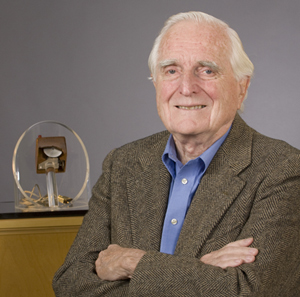
Photo: Doug Engelbart Institute
His impact on technology:
Doug Engelbart is most celebrated for his role in inventing the mouse (along with his lead engineer at the Stanford Research Institute, Bill English, who fashioned the first mouse prototype). At a time when many people are turning to track pads and touch screens, the mouse remains perhaps the most commonly used peripheral of the past three decades.
But the mouse was a minor piece of Engelbart’s larger project, the oN-Line System. The unveiling of the NLS at the 1968 Fall Joint Computer Conference in San Francisco has been called “the mother of all demos” by some, because it packed video conferencing, networked collaboration, the mouse, hyperlinks and text editing into one presentation. These are now core technologies that make up what we think of as modern computing.
While the mouse proved to be a big hit with most, there was one man who questioned Engelbart’s design — specifically, how many buttons the mouse should have.
“We tried as many as five. We settled on three. That's all we could fit. Now the three-button mouse has become standard, except for the Mac. Steve Jobs insisted on only one button. We haven't spoken much since then,” Engelbart told Wired magazine in 2008.
NORMAN ABRAMSON
WIRELESS HERO

Photo: Public Domain

His impact on technology:
For technophiles, Hawaii is more than just a great place to surf — it’s also the birthplace of wireless LAN technology. Norm Abramson’s claim to fame lies in his achievements with the ALOHAnet, the first wireless local area network. Designed and developed by Abramson at the University of Hawaii, the ALOHAnet was the first network to transmit data successfully using radio signals — a fundamental technological breakthrough.
While Hawaii may be better known for its natural beauty than for its technological inventions, it actually makes sense that the wireless network was born there. Data transmission and IT resource sharing among the university’s campuses, spread across the state’s many islands, was essential. Abramson’s ALOHAnet used high-speed data packets, known as ALOHA channels, to transmit data over radio frequencies. ALOHA channels in particular have proved to be resilient technology, used in every generation of mobile broadband, from 1G to 4G.
Abramson’s ALOHAnet and its packet broadcast technology was a revolutionary advance over the switched-circuit data technologies of the time. Robert Metcalfe, who went on to develop Ethernet, spent considerable time with Abramson, studying the way that the ALOHAnet used data packets. Ironically, Abramson’s wireless technology helped lay the foundation for Metcalfe’s wired technology.
JACK NILLES
TELEWORK TITAN

Photo: JALA International
His impact on technology:
If your company has work-from-home Fridays, you can thank Jack Nilles. His efforts to define and promote the concept of telework is partially responsible.
People often jest that it “doesn’t take a rocket scientist” to figure out solutions to common problems. Telework, it turns out, did. Jack Nilles was working as a rocket scientist in the early 1970s when he was struck by the amount of congestion on the roads. He realized that the daily commute that people made just to get to work was responsible for the stress-inducing traffic everyone had to suffer through.
To Nilles, the answer was obvious: Get people off the road by removing the requirement that they come into the office to work. With that goal in mind, he began working with a team at the University of Southern California to design, define and test a telework initiative at an insurance company using satellite offices, Nilles said in an interview with BizTech magazine.
As he later found out, technology wasn’t the biggest obstacle in getting organizations and managers to accept telework — it was an old-fashioned mindset that work could only be done within the confines of an office.
“I learned early on that one of the key features of getting telecommuting going was patience and persistence,” Nilles told BizTech magazine. “Now we’ve got millions of people doing [telework], and they’ll even admit to it.”
HOW ARE THESE TECHNOLOGIES EVOLVE THROUGH TIMES?
THE EVOLUTION OF TECHNOLOGY: PAST, PRESENT AND FUTURE
Technology runs our lives these days. Smartphones, tablets and computers – we really can’t seem to function without them. In a very short amount of time, technology has exploded in the market and now, many people cannot imagine a life without it.
To understand how we left the dark ages (which really wasn’t all that long ago) to where we are today, it is important to understand how technology evolves and why it matters.
PURPOSE DRIVES TECHNOLOGY FORWARD
All technologies are born out of purpose. For example, search engines were created to sort through the massive amounts of data online. With each new upgrade technology compounds existing technologies to create something better than what was previously used before. And on and on it goes.
With the lightning speed of technological evolution, it is no wonder many people have struggled to keep up. To be fair, the scope of technology’s expanse is so great, wrapping everything up into a single blog post is practically impossible.
Here is just a brief glimpse into how rapidly the Internet and technology as a whole have evolved in recent years.
THE PRESENT: SNAPS, CHATS AND DOUBLE TAPS
Fast-forward a short decade later (side note: remember VHS tapes!? The OG fast-forward? OK, moving on…).
Since the days of dial-up, access to the Internet is available almost everywhere. It is rare these days for consumers to go into a coffee shop, library or any place of business and not be able to access a Wi-Fi signal. If there isn’t a Wi-Fi signal in close range, most people still have access to the Internet via their cellular data connection on their smartphones and personal hotspots, no problem.
THERE’S AN APP FOR THAT
With this anywhere/anytime access to the Internet, businesses created web applications to answer common needs of consumers. These applications can do everything from tracking food portions to sending massive amounts of information in a click of a button.
MYSPACE, YOURSPACE, BOOKFACE: THE SOCIAL MEDIA AWAKENING
We’ve watched texting evolve from sending text-only messages (literally texting) to the addition of imagery, thanks to the viral spread of gifs, memes, emojies and bitmojies. In fact, with the spike in video-sharing, actual text is shrinking (meet SnapChat, Instagram Stories, Facebook Stories, Periscope, Vine, etc. and shorthand abbreviations). SMH.
Social networks continue to change the way people engage with one another. Ironically, the constant connection and way people interact with one another seems to morph to a more superficial setting online. Although superficial at times, this form of communication helps people stay closer to each other when they would have otherwise lost contact.
FACE TO FACE (VIRTUALLY, SPEAKING)
Face-to-face conversations via technology are resurfacing, though, and even strengthening, thanks to higher-quality video and streaming capabilities (enter: Skype, Google Hangouts, Zoom, FaceTime, live streaming, etc.). With more people engaging in web/video conferencing online, geographic barriers that once hindered communication were torn down. Instead, companies can engage with consumers in a more human manner, people can talk to people face-to-face without the need for costly travel and reaching out to people all over the world is faster and easier.
CUTTING THE CORD: THE ERA OF VIDEO STREAMING
Remember when Netflix was a primarily a DVD delivery company, bringing your favorite movie via mail? Back when binge-watching wasn’t a thing?
Today, people are cutting the cord when it comes to cable, opting for digital streaming and video services like Netflix, YouTube and Hulu. Big brands are trying to keep up and compete, doing their best to one-up each other with original content, availability and delivery channels (e.g. Apple TV, Amazon Fire TV, Google TV, etc.). User-generated content is a force to acknowledge as well. Thanks to streaming options like Facebook Live, Instagram Live and Periscope, individuals and business are able to broadcast their own videos and content.
In a nutshell, videos are popping up everywhere and trending big time. And they thought talking pictures would never last…
TODAY’S TECH FORECAST: ICLOUDY DAYS AHEAD
More people and companies are using cloud-based services for their business and store everything online instead of on a single device. This change will continue to have an enormous impact on the way business is done, transforming our once-traditional office environments and how people interact with companies on a regular basis. Flash drives are almost extinct with the prevalence of cloud storage, like iCloud, Google Drive, Dropbox and FTP sites.
With so many new technologies permeating the way people access information and access each other, the forward momentum looks promising for future technological developments.
SMART IS THE NEW SEXY
And by “smart” we mean the continued evolution of smart devices and rise of artificial intelligence (AI) technology.
Smart devices will continue to evolve to work better together. These machines will share data automatically limiting the need for human involvement. Of course, it’s not just smartphones, watches, TVs or tablets anymore.
THE INTERNET OF THINGS
You’ll hear more and more about the “Internet of Things” (IoT) now and in the future. The deeper we dive into technology, the more it seems we try to blend the physical and virtual worlds together. Smart speakers, smart homes and even smart cars are the tech wave to ride in the future, but it’s just the beginning.
Think of the Internet of Things as a network of physical devices – like handheld gadgets, vehicles, home appliances or any kind of electronic item with embedded software or technology – connected together and able to exchange data.
Gartner, an analyst firm, speculates there will be more than 26 billion connected devices by 2020. Imagine a future where your car warns you of heavy traffic or your alarm clock notifies you about your coffee brewing itself in the kitchen. Imagine living in a smart home in a smart city.
In other words, the future happening is now. Or at least, it’ll be here sooner than you may think.
WHY BOTHER KEEPING UP WITH TECHNOLOGY?
It’s a fair question. Technology is constantly changing and it sometimes feels like way too much effort to keep up with a moving target. Just remember - keeping up with technology adds value to your business.
Staying up-to-date helps ensure you don’t miss opportunities, become irrelevant or fall behind your competitors. Remember Kodak? They taught us all an invaluable lesson: don’t be afraid to embrace change.
Here are a few ways to keep up and stay informed:
- Follow industry blogs (like ours!)
- Listen to industry leaders
- Follow topics on social media
- Join groups (online and in-person)
- Listen to podcasts
- Engage in tech forums
- Subscribe to relevant eNewsletters
- Set up Google alerts
Task
DIRECTION:
Answer the following questions coherently.
1. What do you think of when you hear the word "technology"?
2. How has technology changed in the past?
3. How has technology changed your life?
4. What do you think technology will be like in the future?
5. Could you live without technology? Why or why not?
Process
Input
Discussions about technology with sub-topics are considered as the input of this page.
The main topic is: WHAT IS TECHNOLOGY?;
and the sub-topics are:
WHAT IS A TECHNOLOGY?
WHAT ARE THE DIFFERENT TYPES OF TECHNOLOGY?
WHO ARE THE PEOPLE BEHIND VARIOUS NOTABLE TECHNOLOGIES?
HOW ARE THESE TECHNOLOGIES EVOLVE THROUGH TIMES?
Task
Essays are given as a task in this entire module.
Evaluation
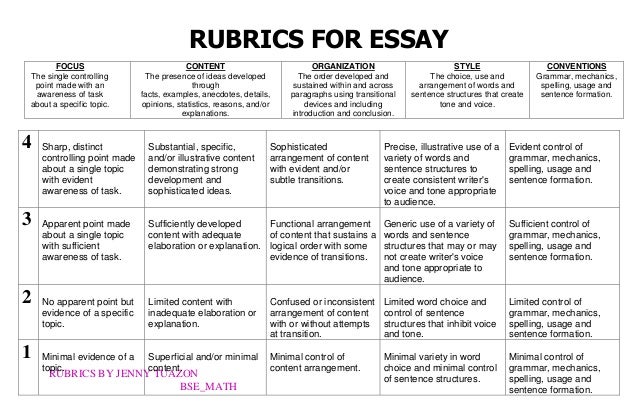
A certain and thorough rubrics that assess the performance of the students in the given tasks are provided.
Conclusion
The conclusion is a segment that gives light about the pros and cons of having the technology, mostly in the present age. It enlightens about the advantages and disadvantages of such.
Evaluation
Conclusion
There are clearly both pros and cons of adolescent technology use. The fact is, it is important for adolescents to learn and understand technology. It's become a part of daily life for all people to use a computer or a cell phone. It is necessary in most situations, especially for when they are older and have jobs. However, technology use must not be excessive. Extreme technological use in adolescents can cause all sorts of problems; socially and physically. It is important for adolescents to understand that yes, technology is an amazing thing; but at the same time, it should not be used all of the time. They should not be overly dependent on it. Adolescents need to learn that sometimes, technology is not the right answer for a situation.
Credits
The following sites are the sources of the input in this page:
8 Different Types Of Technology In 2022
https://www.rankred.com/different-types-of-technology/
Fathers of Technology: 10 Men Who Invented and Innovated in Tech
The Evolution of Technology: Past, Present, Future
https://www.discovertec.com/blog/evolution-of-technology
Teacher Page


This page is made possible through the efforts of the following educators and teachers:
LUSTE, REYJOHN
PALPITA, JESSA ANN
TABAÑAG, RESHNEE
TRAZONA, WENNA MARIE
This, in fulfillment for the final term project of the Cebu Normal University, Education 4- Technology for Teaching and Learning.