
Introduction
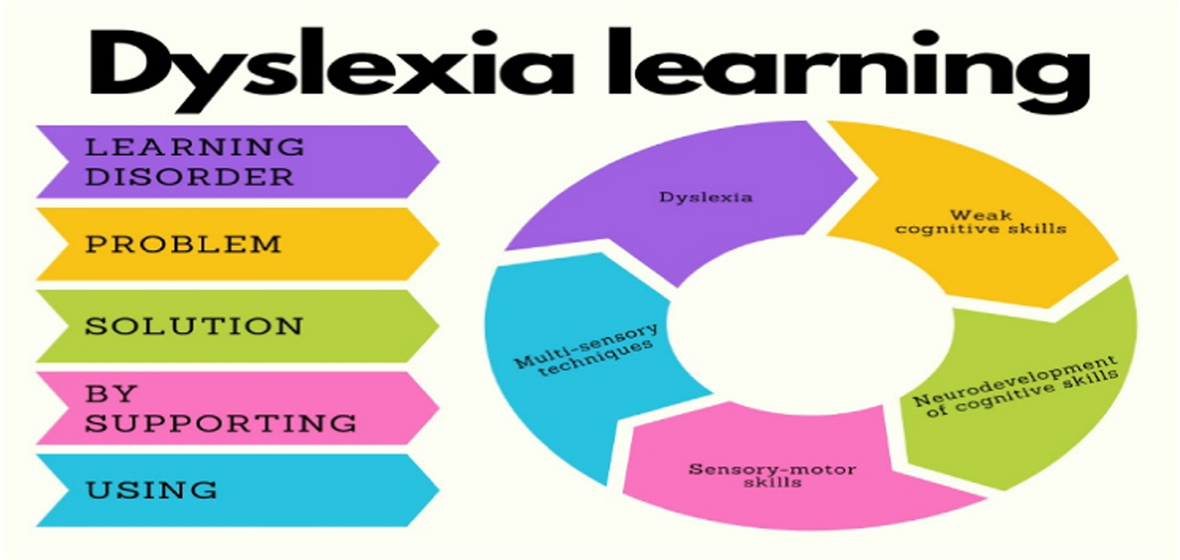
Dyslexia is in my view the mother of all learning difficulties. It is a problem associated with difficulties with reading and writing. Learners may read or perceive letters as upside down or fail to make sense out of them .Learners with Dyslexia may do well in Maths but doing story sums is a nightmare. More problems that come with dyslexia are poor self-esteem, poor comprehension and more.
As educators , it is fundamental to create an inclusive learning environment that caters for diverse needs. This WebQuest focuses on accommodating learners with dyslexia in the classroom. You'll work in teams to research , design and implement strategies to support learners with dyslexia.

Task
Your team will create a comprehensive guide for teachers on supporting students with dyslexia.You'll research , design and present your guide to a panel of educators that is school teachers , educational therapists and parents doing homeschool.

Process
1. Research: Gather information on dyslexia , its effects on learning and effective startegies for support such as the International Dyslexia Association , educational journals.
2. Brains: Collaborative with your team to generate ideas for supporting students with dyslexia.
3. Design: Create a visual guide (inforgraphic video , or presentation outlining strategies for teachers.
4. Peer Review: Show your work with peers and cooporate feedback and incooporate feedback
5. FinalPresentation: Present your guide to the educators
RESOURCES
International Dyslexia Association https://dyslexiaida.org/
Educational Journals : Journal of Learning Disabilities Dyslexia
https://doi.org/10.1080/03054985.2020.1765756 / https://www.frontiersin.org/journals/public-health/articles/10.3389/fpubh.2022.915053/full
TED Talks , Dyslexia and Learning https://www.ted.com/talks/kelli_sandman_hurley_what_is_dyslexia?language=en
Evaluation
|
Criteria |
1 - Beginning |
2 - Developing |
3 - Proficient |
4 - Exemplary |
|
I. Content Accuracy & Relevance |
Content is inaccurate, outdated, or largely irrelevant to supporting students with dyslexia. Key information is missing. |
Some content is accurate and relevant, but there are notable inaccuracies, omissions, or outdated information. |
Content is mostly accurate, current, and relevant to supporting students with dyslexia. Minor inaccuracies or omissions may exist. |
Content is highly accurate, current, and exceptionally relevant to supporting students with dyslexia. All key information is present and well-researched. |
|
II. Clarity & Organization |
The project is poorly organized, difficult to navigate, and information is presented in a confusing manner. |
Organization is inconsistent, leading to some confusion. Navigation is challenging in parts. |
The project is generally well-organized and easy to navigate. Information is presented logically, though minor improvements could be made. |
The project is exceptionally well-organized, intuitive to navigate, and presents information in a clear, logical, and engaging manner. |
|
III. Strategies & Practicality |
Strategies provided are minimal, impractical, or not evidence-based. Little to no practical application for inclusive classrooms. |
Some strategies are provided, but they may lack detail, practical application, or strong evidence basis. Limited real-world relevance. |
A good range of practical, evidence-based strategies are provided, offering clear guidance for implementation in inclusive classrooms. |
An extensive and highly practical collection of evidence-based strategies is provided, offering innovative and adaptable solutions for diverse inclusive classroom settings. |
|
IV. Engagement & Interactivity |
The project offers little to no interactive elements. It is primarily static and does not encourage active learning. |
Some interactive elements are present, but they are limited or not effectively integrated. Engagement is low. |
The project includes various interactive elements (e.g., links, videos, quizzes) that promote moderate engagement and active learning. |
The project is highly engaging and interactive, utilizing a variety of multimedia and tools that actively involve the learner and foster deep understanding. |
|
V. Support for Diverse Learners (Specifically Dyslexia-Friendly Design) |
The project design does not consider the needs of dyslexic learners (e.g., poor font choices, busy layouts, lack of audio/visual aids). |
Minimal consideration for dyslexic learners. Some elements might be problematic, but basic accessibility features are present. |
The project shows good awareness of dyslexia-friendly design principles (e.g., clear fonts, sufficient spacing, headings). Some audio/visual support is included. |
The project is meticulously designed with dyslexia-friendly principles, incorporating excellent font choices, uncluttered layouts, multi-modal content (audio, visual, text), and accessible navigation to maximize usability for all learners. |
|
VI. Resources & Citations |
Resources are absent, unreliable, or not properly cited. |
Some resources are provided, but they may be limited in scope, quality, or citation is inconsistent. |
Adequate and reliable resources are provided and generally well-cited. |
A comprehensive list of high-quality, reliable, and diverse resources is provided, all meticulously cited according to academic standards. |
|
VII. Overall Impact & Value |
The project offers little educational value and is unlikely to positively impact teaching practices. |
The project offers some educational value, but its impact on teaching practices may be limited or inconsistent. |
The project provides valuable information and strategies, likely contributing positively to educators' understanding and practice. |
The project is an exceptionally valuable resource that significantly enhances understanding and provides actionable strategies, leading to a profound positive impact on inclusive teaching practices. |
Conclusion
This WebQuest has explored defining dyslexia, signs and strategies of helping learners with dyslexia in the classroom set up thus accommodating them. It has fostered enthusiasm for research through constructvism and connectivism which are fundamental in the process of teaching and learning among educators and learners. It is my hope that educators are inspired to research more about dyslexia and strategies to help and support such learners.
Credits
|
Title & Author/Source |
Publication Date |
Key Takeaways/Relevance |
Link |
|
Teaching Strategies for Students with Dyslexia (American University School of Education) |
January 17, 2023 |
Comprehensive overview of multisensory learning, assistive technology, and appropriate accommodations for dyslexic students. |
|
|
Five inclusive teaching strategies for supporting diverse learners (Essential Resources NZ) |
February 27, 2025 |
Discusses practical inclusive teaching strategies for neurodivergent learners, including those with dyslexia, focusing on universal design for learning and differentiated instruction. |
|
|
Creating an inclusive classroom for children with dyslexia and literacy difficulties (Maria Buttuller, OLT International) |
October 4, 2023 |
Emphasizes creating dyslexia-friendly classrooms with strategies like small group instruction, multisensory input, and assistive technology. |
|
|
Top 3 Strategies for Supporting Students with Dyslexia (iCEV) |
November 21, 2024 |
Focuses on creating inclusive classrooms, implementing accommodations, and setting high expectations, with an emphasis on the Orton-Gillingham Approach. |
|
|
Inclusion: Effective Solutions for Students with Dyslexia in a General Education Classroom (ScholarWorks) |
December 11, 2023 |
Explores strategies for creating inclusive classroom environments, highlighting early identification, strength-based interventions, and understanding the impact of dyslexia. |
|
|
8 Research-Based Instructional Recommendations for Students with Signs of Dyslexia (Discovery Education) |
Ongoing (Updated Regularly) |
Provides eight key recommendations, including multisensory learning, explicit instruction, and fluency development. |
|
|
Teachers' Perceptions and Preparedness for Teaching English as a Foreign Language to Students with Developmental Dyslexia: A Systematic Review (PMC - PubMed Central) |
April 16, 2025 |
A systematic review that, while focused on EFL, provides insights into teacher preparedness, training needs, and general challenges in supporting dyslexic learners. |
|
|
The effectiveness of multisensory approaches in teaching reading to children with dyslexia (International Journal of Literacy and Education) |
August 19, 2024 |
Discusses the principles and effectiveness of multisensory instruction for teaching reading to children with dyslexia, including the Orton-Gillingham approach. |
|
|
Effective Evidence-Based Dyslexia Intervention Programs: A Complete Guide (The Learning & Literacy Clinic) |
Ongoing (Updated Regularly) |
Detailed guide on evidence-based interventions, key features of effective programs (e.g., Orton-Gillingham, Wilson Reading), and school implementation strategies. |
|
|
The Importance of Early Identification and Tailored Interventions for Dyslexia (Dyslexia UK) |
January 23, 2025 |
Highlights the critical role of early identification, tailored teaching methods, and support systems at home and school for dyslexic learners. |
|
|
What To Look For When Selecting Interventions For Dyslexic Learners (Dyslexia Ireland) |
January 23, 2025 |
Provides guidance on selecting effective literacy interventions, emphasizing systematic phonemic awareness, multisensory practices, and a cumulative approach. |
|
|
Jamie Oliver called for a Dyslexia Revolution: here are some steps to make it happen (University of Birmingham) |
June 19, 2025 |
Discusses universal screening and improving initial teacher education about dyslexia, advocating for holistic, neurodiversity-informed approaches. |
Teacher Page
Tinotenda Makoni
Born: 17 June 1982 , Harare , Zimbabwe
Qualifications:
Cert of Teaching and Learning , ACU , 2009
Cert of Language and Speech Management , ZOU , 2022
BA HSS Community and Health Psychology , UNISA , 2015
Present occupation: Running a Learning Centre for learners with neurodiversity and giving psychosocial support to parents whose children have development disorders.