
Introduction
Have you ever wondered why some animals live in groups? Why do they stay together? Wouldn't it be easier to take care of themselves? We are going to explore why some animals live in groups and how it helps them.
Use the worksheet to help keep track of everything you are learning.
Task
Watch the video about animals working together by clicking the link below.
https://www.youtube.com/watch?v=xTifxmHu4L8
Throughout the WebQuest, you will explore the different groups that animals live in and how it helps them survive. You will use the worksheet to help keep track of all the information you are gathering and to help you complete your final project.
You will write 1-2 paragraphs about one of the animals in the WebQuest. You must include what kind of group the animal lives in, what different members do in the group, how it helps them survive and why.
Each group will be discussed in the Process portion of the WebQuest.
Process
Kinds of Groups and Animals that live in the groups
- Pack- Wolves live in packs. This means that they live and hunt together.
- Herd- Elephants live in herds. This means that they live, feed, or migrate (move from one place to another because of seasons changing) together.
- Pod- Dolphins live in pods. This means they feed, migrate, and care for their young together.
- Pride- Lions live in prides. This means that they are a family and stay together.
What it takes to be in the Pack

Wolves are very social animals. They live and hunt together in groups called packs. A wolf pack is really just another name for a family of wolves. A pack is usually made up of an adult male and female wolf and their offspring of various ages. Pack sizes range from three to twenty wolves. Living in the pack makes sure that the young are taken care of and fed. It also allows wolves to defend their territory and bring down larger prey.
Life in the Herd
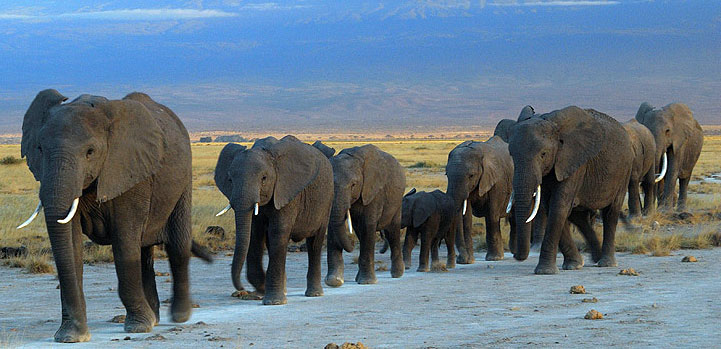
In a herd of elephants, females are in charge. Elephants live in families that consist of a mother, her sisters, her daughters, and their babies. Their families can be from 3-25 members. The elephants help look after the babies. One way they look after the babies when they are traveling, is to walk in a straight line. This lets the babies hold on to their mother's tail to keep up and if danger comes the elephants are able to surround the babies to protect them. When the elephants work together to protect the babies, this helps more babies to survive.
Swim in the Pod
Click on the link to watch dolphins work together to catch fish.
https://www.youtube.com/watch?v=bzfqPQm-ThU

A group of dolphins is called a pod. Dolphins are social mammals that live and play with one another, swim together, protect each other, and hunt for food as a team. Pod life plays a very important role in protecting dolphins from predators such as sharks. When the dolphins hunt for food, they are able to work together and use different ways to catch as much food as they can without getting hurt. They work together to make the fish go where it is easy to catch them so they can take turns grabbing the food. Most pods contain anywhere from 2–30 dolphins depending on the kind of dolphin and what is going on at the time.
Pride Rock
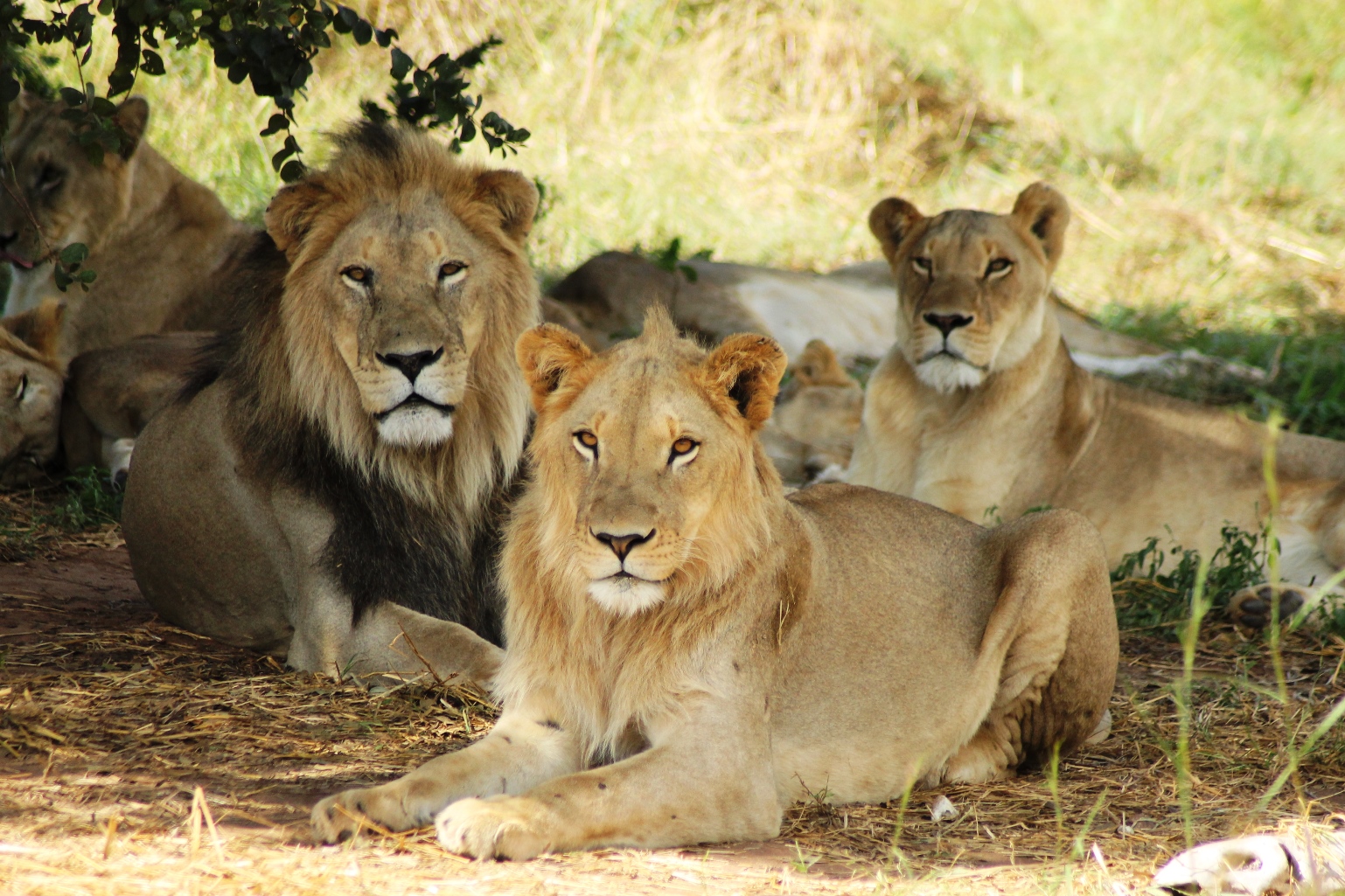
Lions are the only cats that live in groups, which are called prides. Prides are family units that may include up to three males, a dozen or so females, and their young. All of a pride's lionesses are related, and female cubs typically stay with the group as they age. Young males eventually leave and establish their own prides by taking over a group headed by another male. The male lions protect the pride's territory while the females hunt for the food. The females work together to take down their food and bring it back to the rest of the pride.
Evaluation
You have made it through the end! What you are going to do now, is work on writing 1-2 paragraphs about one of the animals discussed.
Your paragraph(s) must include what kind of group it is in, how members help, how it helps them survive and why.
The information needs to be clear and neatly written.
Credits
Chepkemoi, Joyce. “What Animals Live in Groups?” WorldAtlas, 3 Aug. 2017, www.worldatlas.com/articles/what-animals-live-in-groups.html.
“Dolphin Facts and Information.” Whale Facts, 16 Sept. 2019, www.whalefacts.org/dolphin-facts/.
Helena Williams @helena_williams. “Six Facts about Elephant Families.” The Independent, Independent Digital News and Media, 19 Dec. 2013, www.independent.co.uk/voices/comment/six-facts-about-elephant-families-….
Jw. “Wolf Families.” All About Wolves - Wolf Families, teacher.scholastic.com/wolves/gabout3.htm.
Sartore, Joel. “African Lion: National Geographic.” Lion | National Geographic, 21 Sept. 2018, www.nationalgeographic.com/animals/mammals/a/african-lion/.
WDC. “Facts about Dolphins.” Whale & Dolphin Conservation USA, us.whales.org/whales-dolphins/facts-about-dolphins/.
Teacher Page
3-LS2-1
Performance Expectation: Construct and support an argument that some animals form groups that help members survive.
Clarification Statement: Arguments could include examples of group behavior such as division of labor in a bee colony, flocks of birds staying together to confuse or intimidate predators, or wolves hunting in packs to more efficiently catch and kill prey.
The Disciplinary Core Ideas for this unit focus social interaction and group behavior. The students will have a focus on how being a part of a group helps the animals to find food, protect their young, and defend themselves. Groups or members within group may also serve different functions. Each member is important in how the group survives. Throughout the WebQuest students must read the information about the types of groups and how those animals work in a group. They will fill out a graphic organizer and answer questions about what they are reading to make sure they are getting the information they need. At the end they will need to write 1-2 paragraphs about one animal from the WebQuest using the information they gathered.