
Introduction
Welcome: Living Things' Survival in the Desert
Description: Every living thing live in different environments and have to adapt to their environment. In this WebQuest, you will explore what living things need to do in order to survive in one of the most difficult environments in the world known as--- the desert.
Grade Level: 3-5
Curriculum: Science
Keywords: Desert,carnivore, herbivore, cold-blooded, survive, habitat, living things
Author(s): Sedonia Beverly
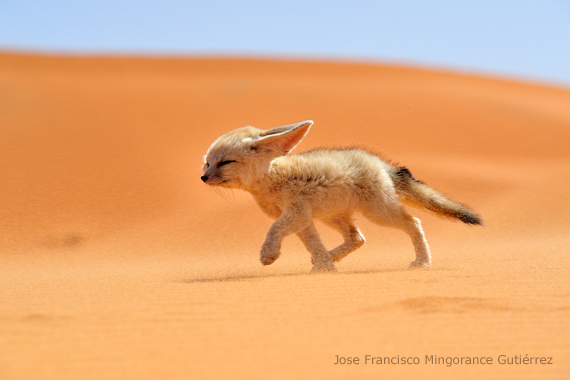
Imagine yourself and your classmates in a desert surrounded by animals and plants. Also imagine that those plants are alive and that the animals can talk. You can hear them arguing amongst each other over what territory is “theirs”. Your reaction to this situation would be either that you are in awe of the talking and moving plants and animals or your unnerving desire to quench your thirst or both. All you know is that you are hot and thirsty and do not want to be there in the first place, but you noticed that they are arguing about the five basic things that even you need to survive. What do you think are these five basic needs that all living things need to survive? What do the animals and plants need to survive in their desert climate?
Knowing this knowledge, you figured you will do something about it.
It is up to you along with your classmates to figure what food each animal needs to survive in the desert. Moreover, describe the importance for each living thing’s existence in that environment by showing them how they interact with each other to attain the basic life requirements.
Task
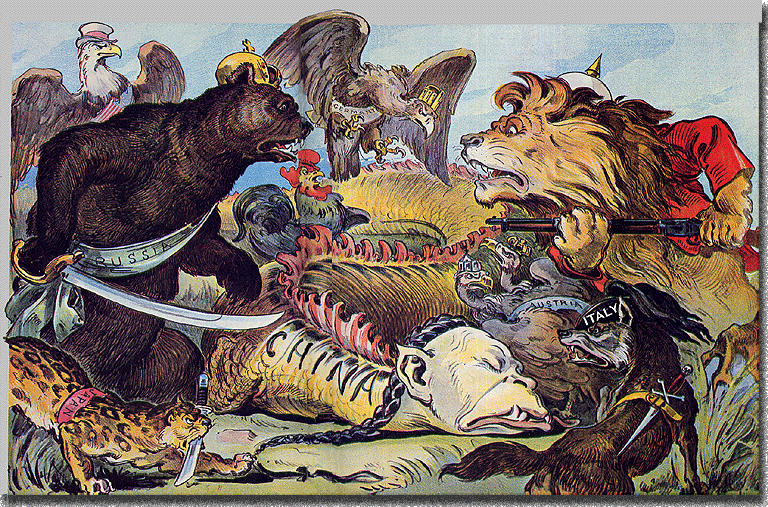
The animals and plants depend on you and your group, who mysteriously got involved in a conflict that you all accidently became involved in, for their survival and for them to cease their fighting. In order for the animals and the plants to know how much they depend on each other and the plan into which each animal should take to survive and live among their neighbors peacefully, you and your group must create a drawing (cycle diagram) and chart to show the importance of how one living thing depends on the other and the solution to their problem in obtaining their basic needs
Process

- Your teacher will assign you to groups of three or four.
- You and your group must be able to convince the animals and plants that they need each other to survive. In order to do this, you and your group must create a chart demonstrating the similarities and differences of the characteristics of plants and animals and create a cycle diagram or food web showing how plants, animals and the environment interact to fulfill basic requirements for life (use the four animals and three plants for both the diagram and chart)
- Each group will pick one animal or plant and find information about each plant or animal characteristics
- In total, there should be four animals (a bird, a mammal, a reptile, and an amphibian) and three plants
- For the chart, your teacher will draw a chart on the board with nine rows and seven columns labelled with the group number on each column.
- You will research what these living things eat and what these organisms do for water. Also, you will figure out what habitat is best suited for these plants and animals
- You can go to this website to find what animals you would like to observe and do this assignment on:
http://www.desertanimals.net/ and http://inchinapinch.com/hab_pgs/terres/desert/animals.htm (for animal locations and other information and when you click on any of the animals, it will take you to a different page with more information)
- You can look for three plant species at these websites:
http://www.abdnha.org/ and http://www.gardenguides.com/88957-information-plants-desert.html (for plants that take in and store water)
- On these rows and columns, your teacher will label the rows with the animals and plants you chose and the columns with the characteristics. On the first row, your teacher will place seven organisms (one of each of the three plants and four animals you chose under each group) and on the first column your teacher will place the characteristics (Carnivore, Herbivore, Store fat, Store Water, Cold-blooded, Live underground (caves, burrow, etc), Live in plants, and Where they are found (Part of the world and Name of the desert)).
- With each category, you will answer yes or no, tell what they eat, and where they store fat or water (ex. Roadrunners are Carnivores. They eat fruits, lizards, small mammals, etc. For storing water, Kangaroo rats take most of the water from their urine, so their droppings are dry).
- After everyone has found information for their plant or animal, Each group will then go up to the board and place what they found about that plant or animal on the board.
- If some groups are still looking for information, those groups that are finished can place what they found on the board and can go on to the next part of the assignment. Wait for your teacher’s instructions or ask your teacher for what to do after you have finished finding information about your plant or animal.
- After you have gathered the information for your animal or plant, you will then create a food web or cycle diagram of how the animals and plants depend on each other to survive.
- For an example of how your cycle diagram or food web should look, you can look at an example by clicking the link below: http://comeseethenamib.weebly.com/plants-and-animals.html
- Use the chart on the board to make your diagram. You will start from bottom to top (from plants to animals that eat these plants then to animals that eat the herbivores or animals that eat plants and so forth) of what the animals consume and what the plants depend on.
- For instance, some plants in the desert attain water by extending their roots below the surface to find water. You will show this example by first giving a picture of underground water and connect that to the plants with arrows to show that the plant consumes this resource.
- You will make this diagram by drawing a picture or locating the images of the plants and animals and what other sources they depend on.
- You can find images on www.google.com and www.bing.com
- Under each image, indicate the name of the animal and plant
- After you have completed your chart and your diagram, you and your group will turn in the chart and diagram you and your group created to your teacher or if your teacher prefers it, you and your group will come together with the rest of the class and have a discussion of how the plants and animals interact with their environment based on the diagrams your group and other groups have made.
Evaluation
|
|
Beginning |
Developing |
Very Good |
Exemplary |
Score |
|
Drawing |
The drawing is unclear and its items are difficult to identify. It is missing a lot of information. Overall, the quality of the drawing is poor. |
Some items of the drawing are difficult to identify and some of the information is missing. Overall, the quality of the drawing is fair. |
A few of the items in the drawing is difficult to identify. Bits of information are missing. Overall, the quality of the drawing is good. |
The entire drawing is clear and the items are easy to identify. No information is missing. Overall, the quality of the drawing is excellent. |
4 |
|
Labels |
Only a few of the items that need to be identified have labels or it is not clear which label goes with which item. |
Most of the items that need to be identified have labels. It is clear which label goes with which item. |
Almost all of the items that need to be identified have labels. It is clear which label goes with which item. |
All of the items that need to be identified have a label. It is clear which label goes with which item. |
4 |
|
Accuracy |
None of the structures were drawn. The pictures do not connect to each other and is labelled inaccurately. |
A few of the structures were drawn. A few of the pictures connect to each other and some are labelled correctly. |
Almost all of the structures were drawn and the pictures in the drawing connected to each other. Many of the pictures were labelled correctly. |
All of the structures were drawn and all the pictures connected to each other. All of the pictures were labelled correctly. |
4 |
|
Spelling |
None of the words are spelled correctly in labels, and title. |
A few of the words are spelled correctly in the labels and title. |
Almost all of the words are spelled correctly in the labels and title. |
All of the words are spelled correctly in the labels and title. |
4 |
Total Score: 16
Conclusion
Thanks to your help. You and your group’s presentation had changed the opinions of the animals and plants. They now realized how much they depend on each other for survival in this dry, hot climate. Now that you have completed click on this link to create your own habitat:
Credits
Grade 3: Standard 2-Interdepence - Tennessee Department of Education - http://tn.gov/education/standards/science/SCI_Grade_3.pdf
picture of a fennec fox in the desert - National Geographic - http://photography.nationalgeographic.com/photography/photo-of-the-day/…
picture of animals fighting - Z Geography - http://zgeography.wordpress.com/2013/02/23/geopolitical-cartoons-china-…
picture of an owl and a question mark - Masterfile - http://www.masterfile.com/stock-photography/image/400-04410242/Stylized….
picture of animals - Colourbox - http://www.colourbox.com/vector/animal-cartoon-vector-5223672
picture of desert animals - toonvectors - http://www.toonvectors.com/clip-art/cartoon-desert-landscape-scene-with…
Teacher Page
By the end of this WebQuest, the student will be able to identify animal and plant relationships and how animals and plants survive in the desert.
By the end of this WebQuest, the student will be able to compare and contrast the characteristics of plants and animals.
Tennessee State Standards
Science Grade 3 Lesson
GLE 0307.2.2 Explain how organisms with similar needs compete with one another for resources.
0307.2.1 Use a T-Chart to compare and contrast the characteristics of living and non-living things.
0307.2.3 Construct a diagram to demonstrate how plants, animals, and the environment interact to provide basic life requirements.
SPI 0307.2.1 Distinguish between living and non-living things.
SPI 0307.2.2 Determine how plants and animals compete for resources such as food, space, water, air, and shelter.
ISTES-S 3.b. Locate, organize, analyze, evaluate, synthesize, and ethically use information from a variety of sources and media.