
Introduction

The adult human skeletal system consists of 206 bones, as well as a network of tendons, ligaments and cartilage that connects them. The skeletal system performs vital functions — support, movement, protection, blood cell production, calcium storage and endocrine regulation — that enable us to survive.
Animals with internal skeletons made of bone, called vertebrates, are actually the minority, as 98 percent of all animals are invertebrates, meaning they do not have internal skeletons or backbones. Human infants are born with about 270 bones, some of which fuse together as the body develops. By the time we reach adulthood, we have 206 bones.
Task
Children will be require to make a straw skeleton and a pasta skeleton and label the skull, ribs, pelvis,etc


Process
Children will be placed into groups of three, each group will be give the following material
- Coloured construction paper
- Plastic drinking straws
- Scissors
- Clear drying, non-toxic glue
- White chalk
- Array of pasta
- pencil
Steps 1
Each group will be require to use the chalk to create an outline of the skeleton on their construction paper
Step 2
Use scissors to cut straws into smaller pieces to represent the various bones
Select pasta to represent the various bones
Step 3
Use glue to trace the outline of the skeleton on the construction paper
Step 4
Arrange pasta and straw on outline of skeleton
Step 5
Use pencil to neatly label the various bones
Evaluation
| Task | Grade | Comment |
| cooperate in group activity | ||
| complete the skeleton | ||
| label the diagram correctly | ||
| Total |
Conclusion
http://www.vtaide.com/png/skeletal-mcq.htm
The above link is to the following multiple choice test
Skeletal System
What is the skeletal system?
All the bones in the body
All the muscles and tendons
All the body's organs, both soft and hard tissue
All the bones in the body and the tissues that connect them
How many bones are there in the average person's body?
33
206
639
It varies by the individual.
Which of the following statement is INCORRECT?
Bone is where most blood cells are made.
Bone serves as a storehouse for various minerals.
Bone is a dry and non-living supporting structure.
Bone protects and supports the body and its organs.
Which bone protects the brain?
Calcium
The cranium
The cerebrum
The cerebellum
Besides the brain, the skull also protects ...
the lungs
the diaphragm
the body's cells
the sense organs
The purpose of the rib cage is to...
protect the stomach
protect the spinal cord
protect the heart and lungs
provide an object to which the lungs can attach
What makes bones so strong?
Silica
Cartilage
Blood and marrow
Calcium and phosphorous
What is the difference between cartilage and bone?
Bone is rubbery, and cartilage is firm.
Cartilage is rubbery, and bone is firm.
Bone is a more primitive tissue than cartilage.
Bone is inside the body, and cartilage is outside.
The hollow space in the middle of bones is filled with ...
air
blood
bone cells
bone marrow
What is the difference between compact bone and spongy bone?
They have different bone marrow.
They are made of different materials.
They have different sizes of bone cells.
They have different arrangement of bone cells.
What is a joint?
A hinge
A ball and socket
The place where two bones are joined
The place where tendons are fastened together
Muscles are made of ...
silica
polyester threads
calcium and phosphorous
groups of cells called fibres
How do muscles attached to the bones move the body?
automatically
pull movement only
push movement only
push and pull movement
What is the function of a tendon?
To link bones to bones
To link muscles to bones
To link muscles to ligaments
To bind the cells in compact bone closer together

Credits
Teacher Page
Functions of the Skeleton
The skeleton provides the framework of the body and it is made up of 206 bones. It is part of the skeletal system, which is composed of ligaments and cartilages, in addition to bones. Bones are connective tissues made of osseous materials that undergo calcification, a process where minerals are deposited to harden the bone. Cartilages are thick and rubbery tissues that are found in joints, the ears, the nose, and the ribs. Ligaments are tough, fibrous tissues that connect one bone to another bone, while tendons are soft tissues that connect muscles to bones.
Aside from providing the body framework, there are other functions of the skeleton. Inside the long bones are blood vessels and bone marrow, which is composed of various cells including fat cells, nerve cells, and other connective tissue cells. The important functions of the skeleton include providing body shape, support, and protection, allowing body movement, and supporting blood formation and electrolyte and acid-base balance.
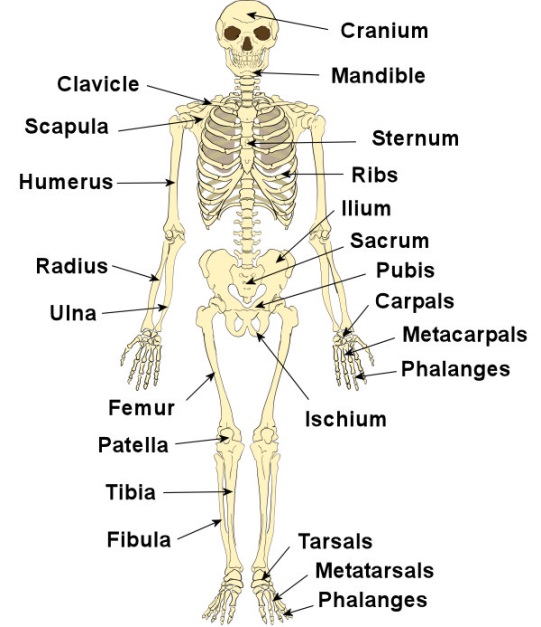
Functions of the Skeleton
The important functions of the skeleton make the human body superior to other living species. The human skeleton has special features, such as having opposable thumbs and walking erect on two legs, which make man unique and highly functional. To appreciate these, let us take a look at the vital functions of the skeleton:
- Shape. The shape of the body is determined by the skeletal framework. Your body shape develops as the skeletal system develops, making you look tall, short, narrow or wide. The size and shape of your hips, hands, feet, and other body parts also follow the shape of your skeleton. These characteristics may be genetically inherited and these are classified as body types such as ectomorphs (thin and tall), mesomorphs (muscular and short), and endomorphs (apple/pear-shaped).
- Support. Your skeleton supports the body and holds your internal organs in place. The spine or vertebral column lets you stand erect while other bones form hollow spaces to hold organs inside them. Your skull, for example, holds your brain, while your chest cavity contains your heart and lungs. On the other hand, the legs and feet, which are part of the lower appendages, support the body weight.
- Movement. The bones are attached to other bones and muscles by ligaments and tendons and work together to produce various body movements, making up the musculoskeletal system. Muscles contract and pull bones to produce movements such as walking, running, or lifting. The differences in shapes of the bones play a role in differentiating movements. For example, the small bones in the foot allow you to adapt to walking different terrains, while the small bones of the hands allow you to do detailed, precise movements.
- Protection. The bony skeleton encases vital organs and protects them from damage. The skull protects the brain, while the spinal column protects the spinal cord and nerves. The ribs and sternum comprise the thorax, which protect your lungs and heart.
- Blood Cell Production. Long bones contain spongy tissue, which is composed of two types of bone marrow involved in the production of blood cells. Red marrow develops into blood cells. Yellow marrow stores some fat, which develops into red marrow during anemia or severe depletion of red blood cells.
- Storage. Skeletal bones store minerals like phosphorus and calcium. These minerals are involved in many important body functions, such as metabolism and nerve transmission.
- Endocrine Regulation. Recent studies show that one of the functions of the skeleton is endocrine regulation. Bones have been found to participate in controlling weight and sugar metabolism, which can help prevent the development of type 2 diabetes. The skeleton releases osteocalcin, a hormone that helps in blood sugar regulation and fat distribution. This hormone also increases insulin production and function, which is important hormone in blood sugar metabolism, and reduces fat accumulation.
- Electrolyte Balance. Electrolytes like calcium and phosphate are stored in the skeletal system. These may be released into the circulation to help maintain electrolyte balance.
- Acid-Base Balance. Bone may act as buffers that protect the body from drastic changes in levels of acidity or pH.
This list of functions of the skeleton shows that your bones do not just serve as a framework to support the body but they also participate in maintaining other important body functions.