
Introduction
Activity 1:
Identify and discuss the following shop equipment needed and how this is so important if we have a shop.

_____________________________________________
______________________________________________
________________________________________________
________________________________________________

_______________________________________________

______________________________________________
Task
At the end of the lesson, the students should be able to:
- Discuss how helpful the shop equipment if you have auto mechanic shop
- Share to the Auto Mechanic shop that this tools is more comfortable to the client that this shop is know the basic shop equipment needed
Process
Shop Equipment
You also need a lot of shop equipment to fix cars. For example, you’ll need a jack, jack stands, and—of course—a toolbox for all of your tools. Here are the basics an aspiring mechanic will want to have:

You can use your air compressor to adjust tire pressure.
1. Air compressor
Technically, you may not need an air compressor as a beginner, but it sure makes working on cars a whole lot easier. You can use your air compressor to adjust tire pressure, run a pneumatic impact wrench—the list goes on and on.
If you want to run air tools, such as an impact wrench, you’ll need a compressor with a rating of 4 to 5 cubic feet per minute (CFM) at 90 psi. Also, it’s a good idea to select a compressor with at least a 20-gallon tank size, as that will limit the amount of time you spend waiting for the unit to refill.
Be sure to always have a fire extinguisher on hand in case of an emergency.
2. Fire extinguisher
You never know what might happen when you’re working in the shop. Be sure to always have a fire extinguisher on hand in case of an emergency.
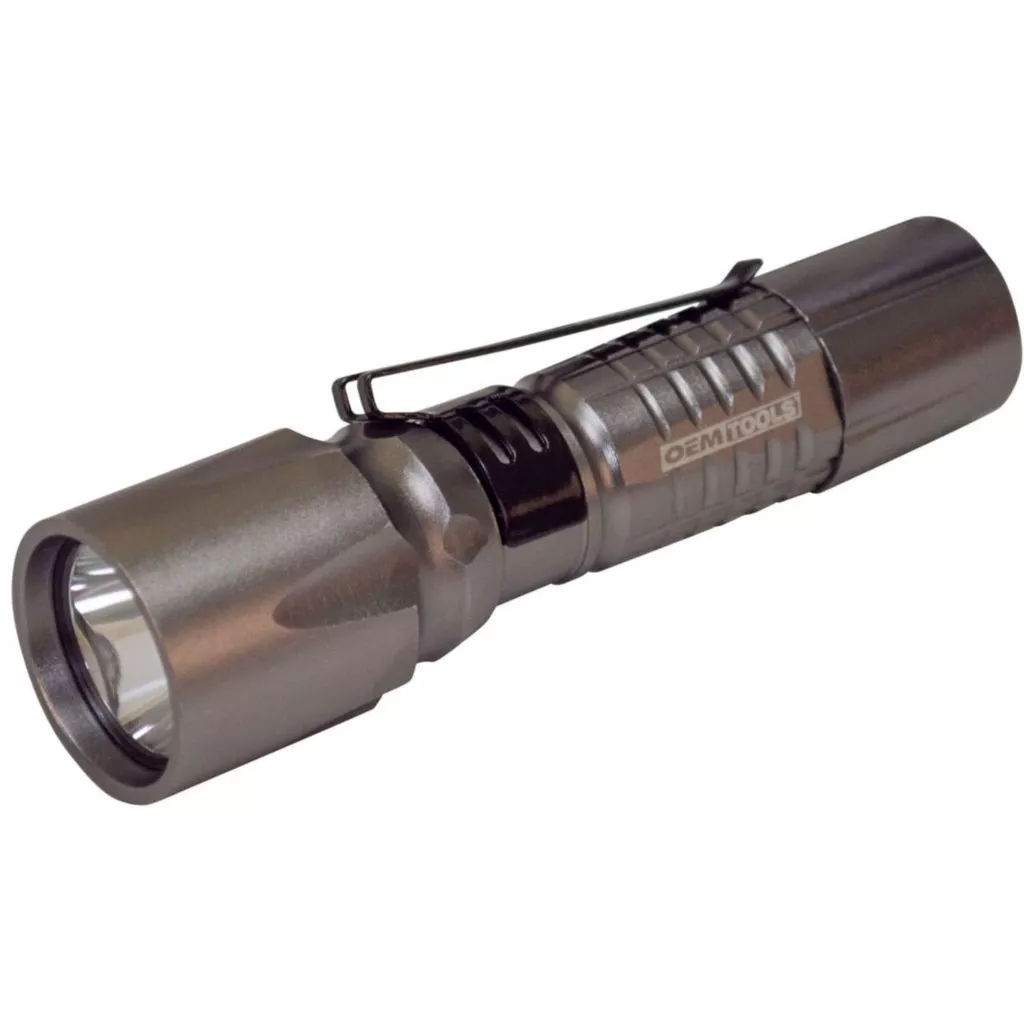
A good flashlight is something you’ll use every time you’re working on a car.
3. Flashlight
It’s important to be able to see what you’re doing when you’re poking around under the hood. A good flashlight is something you’ll use every time you’re working on a car.

Each time you change oil or do any type of work that involves draining fluids, you’re going to need a fluid drain pan.
4. Fluid drain pan
Each time you change oil or do any type of work that involves draining fluids, you’re going to need a fluid drain pan. In fact, it’s a good idea to get a couple of different drain pans: one for oil and one for coolant (the two fluids must be recycled separately).
Drain pans that double as containers are especially handy. The design prevents you from having to transfer the fluid into a separate container before heading to a recycler.

Keep oil spillage to a minimum by using a funnel every time you top off your car’s fluids.
5. Funnels
If you try to add oil (or any other type of fluid) to your vehicle without a funnel, you’ll probably end up making a huge mess. To keep spillage to a minimum, you should use a funnel every time you top off your car’s fluids.
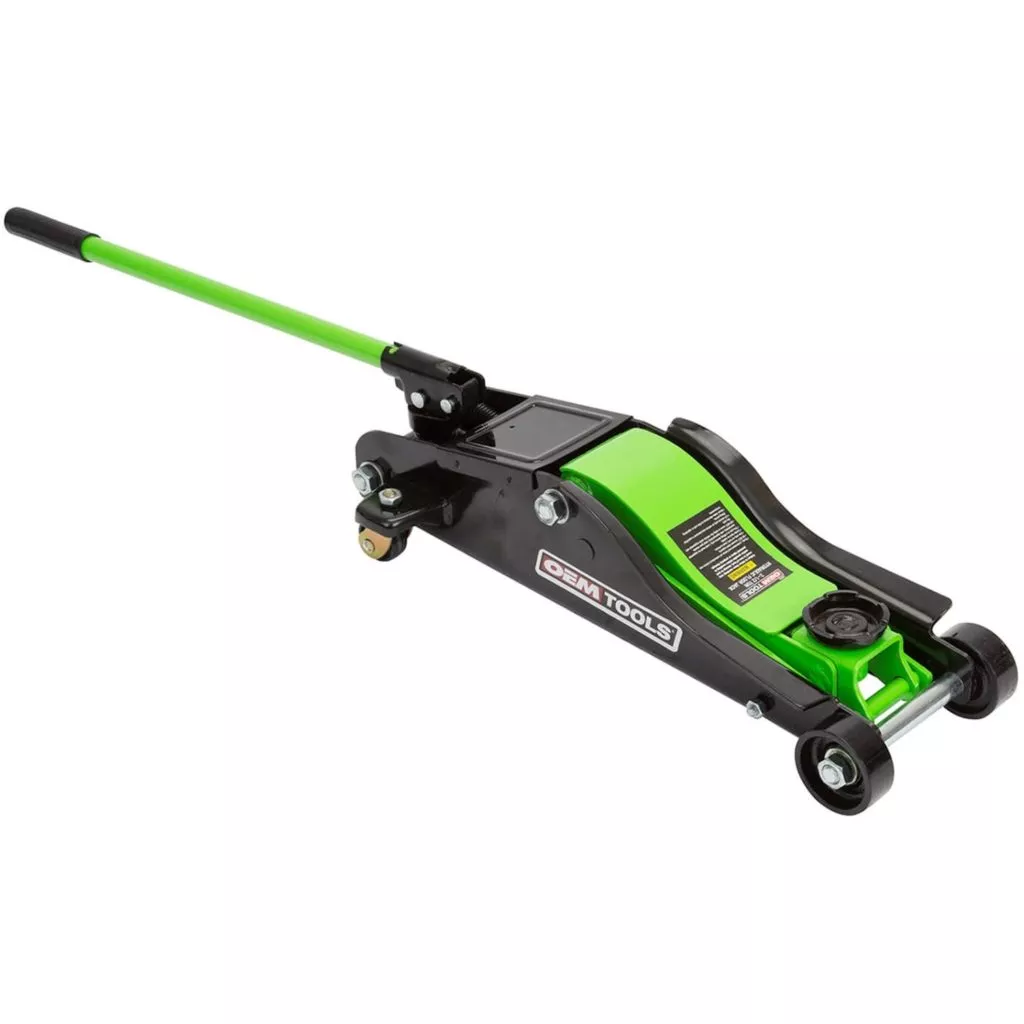
A high-quality jack and jack stands will usually last for decades, making them a worthwhile investment.
6. Jack and jack stands
For every automotive task that involves going underneath a vehicle or removing its wheels, you need a jack and a set of jack stands. A high-quality jack and jack stands will usually last for decades, making them a worthwhile investment.
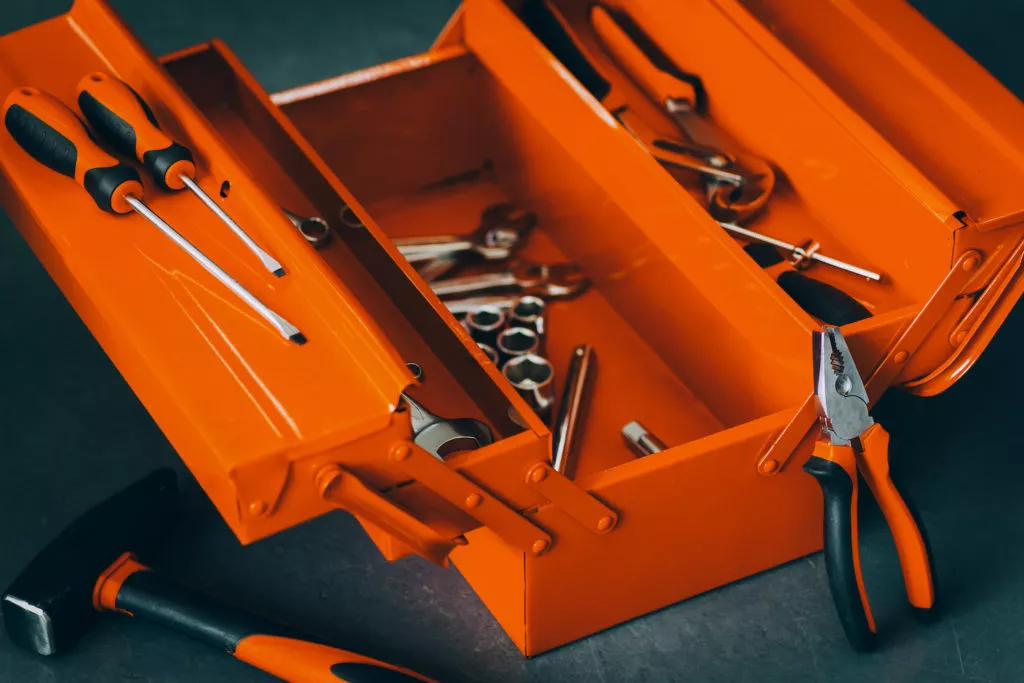
You can’t just leave your tool collection lying around the garage—you need a toolbox!
7. Toolbox
You can’t just leave your tool collection lying around the garage—you need a toolbox! Even though some toolboxes are obscenely expensive, there are plenty of affordable options if you shop around. Home improvement stores often have good deals, as do yard sales and estate sales.
Accidents are unavoidable when working on cars, and you don’t want to put your eyesight at risk.
8. Safety Glasses
Safety glasses are a must when working on cars. Accidents are unavoidable, and you don’t want to put your eyesight at risk.
Whenever you raise a vehicle and support it with jack stands, you should place chocks behind the wheels that remain on the ground.
9 Wheel chocks
As a safety measure, whenever you raise a vehicle and support it with jack stands, you should place chocks behind the wheels that remain on the ground.

Always consult a repair manual when fixing a vehicle to avoid wasting time and losing money.
10. Repair manual or access to a repair database
Modern cars (and even many old ones) are far too complex to work on without the proper repair information. To avoid wasting time, losing money—and potentially getting hurt—you should always consult a repair manual or an online repair database when fixing a vehicle.
Diagnostic Equipment
Diagnostic equipment can help you figure out what’s wrong with your car. There are a wide range of diagnostic tools available, but as a beginner, you’ll want to start out by adding these basic items to your collection:

A basic digital multimeter can be used to measure current (amps), voltage (volts), and resistance (ohms).
11. Digital multimeter (DMM)
A basic digital multimeter can be used to measure current (amps), voltage (volts), and resistance (ohms). Having that ability comes in handy for testing all kinds of circuits and electronics.

A mechanic’s stethoscope is an acoustic device used to listen to internal sounds.
12. Mechanic’s Stethoscope
Much like a doctor’s stethoscope, a mechanic’s stethoscope is an acoustic device used to listen to internal sounds. But with a mechanic’s stethoscope, you listen to parts of your car, rather than parts of the human body.

As a newbie, you’ll probably want to start with a code reader, which, as its name implies, only reads generic onboard diagnostic (OBD-II) codes.
13. Scan tool or code reader
You absolutely must have a scan tool or code reader to work on modern vehicles. As a newbie, you’ll probably want to start with a code reader, which, as its name implies, only reads generic onboard diagnostic (OBD-II) codes.
Eventually, though, you’re going to want a high-end scan tool. OEM-level scanners provide access to additional information, including manufacturer-specific codes, data, and bi-directional tests.
Evaluation
Group Activity:
Tag and search the Shop equipment that i discuss to you and perform. How this equipment work.
Conclusion
Exit Ticket: How do you differentiate the basic tools in Auto Mechanic and the Shop Equipment?
Credits
Teacher Page
This WebQuest material was prepared for Technology for Teaching and Learning 2 Students of CSTC, Sariaya Quezon by Mr. Cris Vincent G. Rivera.