
Introduction
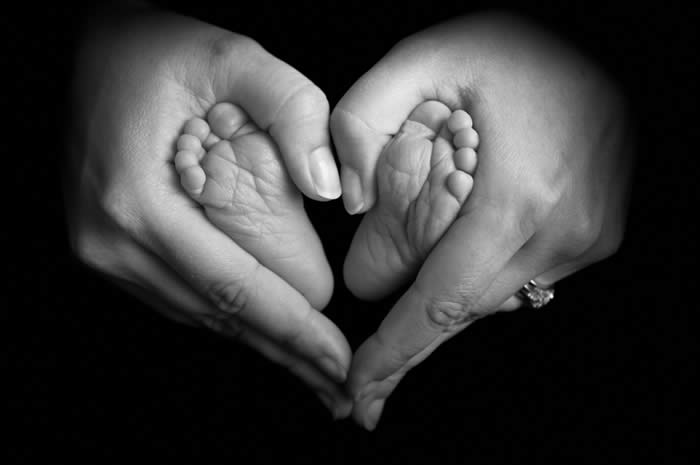
SAVE YOUR BABY FROM MENTAL RETARDATION OR EVEN DEATH
Newborn screening is an important building block in making sure that the baby has a happy and healthy future.Every year 33,000 newborns or 4 babies every hour can be saved from mental retardation and death according to Department of Health.
Newborn screening (NBS) is a public health program aimed at the early detection of infants who are affected by certain genetic/metabolic/infectious conditions.Early identification and timely intervention can lead to significant reduction of morbidity, mortality and associated disabilities in affected infants.
There are FIVE disorders currently being screened.This webquest focuses on the FIVE disorders;
CONGENITAL HYPOTHYROIDISM (CH)
CONGENITAL ADRENAL HYPERPLSIA (CAH)

GALACTOSEMIA (GAL)
PHENYLKETUNURIA (PKU)

GLUCOSE 6 PHOSPHATE DEHYDROGENASE DIFICIENCY (G6PD)
Task
You will be assigned a newborn disorder to research. Your job is to create a power point presentation on the newborn disorder that you share with the class. You will also complete a newborn screening booklet about all the newborn disorders based on information you learn from other students presentation.
Your presentation must include the following requirements:
Part 1: Introduction
State the newborn disorder that was assigned to you and give its defining characteristics.
Part 2: Diagram
Provide a pathophysiology of the newborn disorder.
Part 3: Treatment
Explain how this newborn disorder can be diagnosed and what are the possible treatment.
Part 4: Process
Discuss how the newborn screening is being done.
Process
Your class will be divided into six teams of 4-5 students. Your teams task is to learn all about one disorder that can be determined after newborn screening test was done. Your teacher will assign a newborn disorder to your team.
- use the link under each newborn disorder to do research and learn information about the disorder. ( if you want you can use books and encyclopedias from the library too)
- take notes and use it and the facts gathered to write paragraphs for each section.
- create a poer presentation (slideshow) about the newborn disorder (have atleast 8-10 slides)
- your presentation must include the following requirements:
Part 1: Introduction
State the newborn disorder that was assigned to you and give its defining characteristics.
Part 2: Diagram
Provide a pathophysiology of the newborn disorder.
Part 3: Treatment
Explain how this newborn disorder can be diagnosed and what are the possible treatment.
Part 4: Process
Discuss how the newborn screening is being done.
- present your finished presentation to the class.
- watch your classmates presentation and complete a booklet about the five newborn screening disorders
Click on the links below to find information related to your newborn screening disorder.
WHAT IS NBS
https://www.youtube.com/watch?v=GmlDH9dJ66Q
CONGENITAL HYPOTHYROIDISM
http://www.doh.gov.ph/content/newborn-screening.ht
http://ghr.nlm.nih.gov/condition/congenital-hypothyroidism
http://www.nlm.nih.gov/medlineplus/ency/article/001193.htm
http://www.newbornscreening.info/Parents/otherdisorders/CH.html
CONGENITAL ADRENAL HYPERPLASIA
http://www.doh.gov.ph/content/newborn-screening.ht
http://www.newbornscreening.info/Parents/otherdisorders/CAH.htm
http://www.clanchildhealth.org/Where-We-Work/Philippines/CAHSAPI-Commun…
http://allaboutnewbornscreening.blogspot.com/2011/09/diseases-detected-…
GALACTOSEMIA
http://www.doh.gov.ph/content/newborn-screening.ht
http://galactosemia.org/Understanding_Galactosemia.ph
http://pediatrics.about.com/od/diseasesandconditions/a/09_galactosemia…
http://www.babysfirsttest.org/newborn-screening/conditions/classic-gala…
PHENYLKETONURIA
http://www.doh.gov.ph/content/newborn-screening.ht
http://kidshealth.org/parent/system/medical/newborn_screening_tests.html
http://www.nlm.nih.gov/medlineplus/ency/article/007257.htm
http://www.marchforbabies.org/?Src=ba-modlb&utm_medium=MOD&utm_campaign…
GLUCOSE 6 PHOSPHATE DEHYDROGENASE DEFICIENCY
http://kidshealth.org/parent/general/aches/g6pd.html
http://www.babysfirsttest.org/newborn-screening/conditions/glucose-6-ph…
http://www.uptodate.com/contents/diagnosis-and-treatment-of-glucose-6-p…
http://phil-newbornscreening.blogspot.com/2008/02/g6pd-deficiency.html
VIDEOS ABOUT NEWBORN SCREENING
Evaluation
EVALUATION RUBRICS
RUBRIC ON NEWBORN SCREENING DISORDERPRESENTATION
|
NEWBORN SCREENING DISORDER: |
|
|
TEAM MEMBERS: |
1. 2. 3. 4. 5. |
|
|
Beginning 1 |
Good 2 |
Accomplished 3 |
Exemplary 4 |
Score |
|
Knowledge |
The student incompletely answered The Big Question |
The student somewhat answered The Big Question. |
The student answered The Big Question thoroughly. |
The student included all points included in the presentation checklist. |
|
|
Power point presentation |
No slides or less than 2 slides. The presentation is confusing. Topic was not explained. |
Had 5 or less slides. The presentation is well organized. Topic was incompletely explained. |
Less than 8 slides. The presentation was attractive and well organized. Topic was explained clearly. |
Had 8-10 slides. The presentation is exceptionally attractive and well organized. Topic was explained exceedingly well. |
|
|
Grammar and spelling |
Very frequent grammar and/or spelling errors. |
More than two grammatical or spelling errors. |
Only one or two grammatical or spelling errors. |
All grammar and spelling are correct. |
|
|
Teamwork |
Student was never respectful and cooperative. |
Student was sometimes respectful and cooperative. |
Student was always respectful and cooperative. |
Student was exceedingly respectful, cooperative, and helpful. |
|
|
On-Task Behavior |
Student did not use time appropriately. |
Student rarely used time appropriately. |
Student always used most the time given ppropriately. |
Student used time effectively. |
|
|
Oral Presentation |
Student did not make eye contact or speak loudly enough. |
Student attempted to make eye contact and speak loudly enough. |
Student made eye contact with audience didn't read off of the PowerPoint, and spoke loud enough. |
Student rarely looked at the PowerPoint for cues, made eye contact, and spoke loudly and clearly. |
|
Conclusion
WELL DONE ON COMPLETING THE WEB QUEST

After completing this webquest, you should have a better understanding of the newborn disorders can can be screened. This web quest offered you the oppurtunity to explore the congenital adrenal hyperplasia disorder,congenital hypothyroidism,galactosemia, phenylketunuria,glucose 6 phosphate dehydrogenase disorder and mapple syrup urine disease. Through this webquest you have learned the process of newborn screening test , different disorders of the newborn that can be screened and what are the possible effect to the baby if it is untreated.
Concluding questions from the newborn screening disorders web quest.
In your groups discuss and answer the following questions
1. What is the most important thing you learned when completing this web quest?
2. What is the most interesting thing you learned when completing this webquest?
3.What information about th newborn screening would you most want to share with others?