
Introduction
In this WebQuest, students will explore how modern day Algebra came about. The person of interest here is Muhammad ibn Musa al-Khwarizmi, who is known for the father of Algebra. As you know, in most of your time spent in Mathematics courses, tons of time is spent going over Algebraic topics. But how did Algebra come about??? Why is this so important to our every-day lives? What would a modern-day world look like if the concepts in algebra were not discovered? This WebQuest will hopefully answer these questions. This will be accomplished by having a team of researchers find out the historical facts about Algebra and Muhammad ibn Musa al-Khwarizmi to piece together and solve this mathematical mystery.
Task
In this assignment, students will be broken up into groups of three or four. One member of the group will be the "detective", doing the research and gathering up facts. These "facts" will be organized by the detective in an outline format where there will be one column designated for historical findings, a second column for books written and published by Al-Khwarizmi, a third column for mathematical problems attempted by Al-Khwarizmi. A second member of the group will serve as the "reporter". The reporter's job is to take the facts written down by the detective and write a informative essay that will be submitted to the Cleveland Historical Society. This essay should be three pages long with at least three references at the end done in MLA format. For tips on how to cite a paper in MLA, consult https://owl.english.purdue.edu/owl/resource/747/01/. A third member of the group will serve an "interviewer". The interviewer's job will be to interview a member from the Cleveland Historical Society to build a rapport with them. As part of the interview, statements will be made to the curator about the historical findings and will explain why it is so important that Al-Khwarizmi's work be added to the site. Also, the interviewer will pose questions regarding if this would have an impact on the community as well as an impact on the curator's life. These interview questions should be typed out and be double-spaced. The fourth member will be the "curator" of the Historical Society and will evaluate the points that the interviewer has brought fourth. This is an important job because its the curator's responsibility to evaluate the facts and use that evaluation to make the final decision whether the research should be published and included in the Historical Society. The evaluation piece should be typed up and follow MLA guidelines. For groups of three, I will act as the curator. Finally, in addition to the above, each member of the group will write a reflection piece describing how the research experience went. The reflection piece should be written in MLA format and be no more than one page.
Process
- The detective will be responsible for gathering historical bits of information pertaining to the work of Al-Khwarizmi's life and his contributions to modern mathematics, specifically algebra. The detective should consult these sources:
- The reporter's job is to construct an informative essay that will be published to the Cleveland's Historical Society. Note: It is crucial that both the detective and the reporter work together on this because it is going to be the facts that the detective finds and writes down that will serve as a backbone for the informative essay. It would also be useful if the reporter adds to his or her essay some facts about the political, economic, and social attributes of the country and time period that Al-Khwarizmi lived in. Knowing this will give the readers a deeper understanding of what drove Al-Khwarizmi's decisions for doing his research. Some sources to consult:
- file:///C:/Users/2635700/Downloads/FINAL%20PAPER.pdf
- https://sunnahmuakada.wordpress.com/2013/10/01/al-khwarizmi-the-father-of-computer-science-and-algebra/
- https://www.khanacademy.org/humanities/world-history/medieval-times/cross-cultural-diffusion-of-knowledge/a/the-golden-age-of-islam
- https://themuslimtimes.info/2013/09/03/the-father-of-algebra-muhammad-ibn-musa-al-khwarizmi/
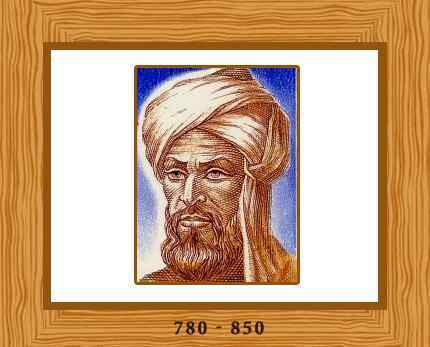
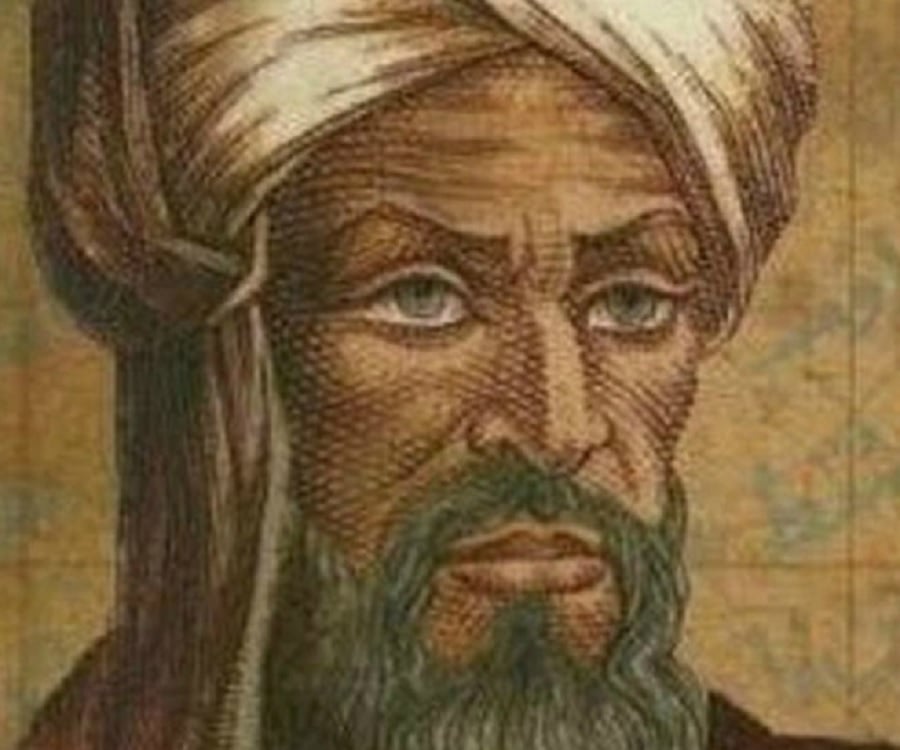
- The interviewer and the curator are going to essentially use the evidence that the detective and reporter found to come up with a decision of whether this information is worthy enough to be admitted to the Cleveland Historical Society. They both have to listen to each other and weigh the facts. This job is equally important and has a basis on the facts found by the interviewer and detective so you must work together on this. I will be assessing the thought and contribution put into this and also I will be looking to see if the questions that the interviewer poses as well as the evaluation piece from the curator tie into the research that the detective and reporter found. So, in another words, if you are lazy with the interview and the evaluation, it will adversely affect your grade.
Evaluation
|
A performance |
B performance |
C performance |
D performance |
F performance |
|
The detective does a stellar job of finding facts. All of the resources that I provided were put to use. The paper was split into sections labeled: historical facts found, contributions made, and mathematical problems attempted. The paper was done according to MLA format and had less than three spelling/grammatical errors. |
The detective does an adequate job finding all the facts. Two out of the three resources I provided were used. Most of the sections of the paper were present. The paper made adequate usage of the MLA format. Paper had exactly three grammatical errors. |
The detective does an ok job finding the facts but does not follow my instructions for the format for his findings. More than three spelling/grammatical errors were present. Paper made ok usage of MLA. |
The detective makes poor use of finding facts and did not follow the guidelines at all. No MLA was used and none of my sources were used. Paper had more than five spelling/ grammatical errors. |
The detective makes no usage of any facts or findings. Nothing was submitted at all. |
|
The reporter accurately portrays the research findings from the detective. Paper is in MLA format and learner makes use of all sources provided. Paper has fewer than three spelling/grammatical errors. |
The reporter adequately portrays the findings from the detective, however no additional sources were used. Paper made adequate usage of MLA. Paper has exactly three spelling/ grammatical errors. |
The reporter does an “ok” job at writing the informative essay but does not tie in all evidence found by detective. Paper made some usage of MLA. No additional sources were used and had more than three spelling/grammatical errors. |
The reporter went on his or her own tangent and did not address any of the findings from the detective. MLA was not used and none of my suggested sources were used. Paper had more than five spelling/ grammatical errors. |
The reporter did not even participate and no paper was submitted. |
|
The interviewer makes excellent use of the information that was found by the detective and reporter. Questions asked to the curator are relevant to the topic and has less than three grammatical/spelling errors. |
The interviewer makes adequate usage of the information from the reporter and detective. Questions asked to the curator are somewhat relevant to the topic and has exactly three spelling/ grammatical errors. |
The interviewer makes ok usage of the information from reporter and detective. Not all questions tied into information found. Some of the questions asked to the curator were off topic and irrelevant. The paper had more than three grammatical/spelling errors. |
The interviewer makes poor usage of the information from the reporter and detective. Only one question was on task. The paper had more than five grammatical errors. |
The interviewer makes no usage of any information and goofs off rather than participates. No paper submitted. |
|
The curator makes an excellent examination of the evidence and ties all the information from the other group members together well. A well-informed decision is made. Again, the evaluation paper has less than three grammatical/ spelling errors. |
The curator makes an adequate examination of the evidence and some of the information ties to the findings of other group members. There is an adequate decision made. Paper has exactly three spelling/ grammatical errors. |
The curator makes an “ok” examination of the evidence but some evidence was off topic and irrelevant so an informed decision could not be made. Examination had more than three spelling/grammatical errors. |
The curator makes a poor examination of the evidence. He or she was also goofing off during the presentation piece. Nothing was relevant to the topic and more than five spelling/ grammatical errors present. |
The curator does not even makes an examination or a decision. Rather, he or she is involved in a side conversation of what happened over the weekend. |
|
The reflection piece cross-examines the entire presentation in an excellent manner describing everything that went on during the presentation including the pros and cons. No more than three spelling/grammatical errors were present. Paper was no more than one page. |
The reflection piece adequately cross-examines the project as a whole. Exactly three spelling/grammatical errors were present and the paper was more or less than one page. |
The reflection piece had some cross-examination but did not address all the findings of the presentation. Paper had more than three spelling/grammatical errors and did not fit the one page requirement. |
The reflection piece makes a poor cross-examination of the presentation and was less than a paragraph in length. More than five spelling/ grammatical errors were present. |
There is no reflection made by the group member and goofed off the whole time. |