
Introduction
INTRODUCTION
Warning! In order to complete this webquest, read EVERYTHING. If, after reading everything, you are still unclear about a step, see me. CLICK HERE TO DOWNLOAD THE PACKET. What's the best part of an amusement park? While some might say cotton candy, churros, or water rides, I believe the best part of amusement parks are the humongous roller coasters. The bigger the better!! Why Roller Coasters? Because they're awesome thrill-seeking, scream-provoking, vomit-inducing machines. Even though these rides feel dangerous, they're actually very safe inventions designed to feel as if you're breaking all rules of science. Are they? Of course not, physics plays a huge role in the design, motion, & fun of roller coasters.
Click here to watch "Build It Bigger: Kinetic Madness"
In your packet: What's your Dream Roller Coaster? Close your eyes & picture the amazing ride that awaits you. Draw a picture of your dream roller coaster. How many turns do you have? Any loops? Any major free falls? Corkscrews?
Task
Goal: to build a complex marble roller coaster and calculate the marbles average speed while exploring physics
Final products to turn in:
Your packet
A poster of your group's final coaster, including all important measurements
The roller coaster
Conclusion questions
Group evaluation
Process
Part 1: Physics Research:
Before designing a roller coaster, you need to know the physics fundamentals.
Watch: The Physics of Roller Coasters: click here
Step A: Terms to know
Define the following words. Put in your OWN words, but you can find the definitions here:
Acceleration: click here
Centripetal Force : click here
G (force) : click here
Newton’s 3rd Law : click here
Kinetic Energy (KE): click here
Potential Energy (PE) : click here
Step B : Potential and Kinetic Energy click here
Watch the video on Potential Energy (PE) & Kinetic Energy (KE ) and answer the questions in your packet.
Watch the Eureka's on Potential Energy (PE) :click here & Kinetic Energy (KE ):click here
Watch "What is Potential & Kinetic Energy" click here and click here
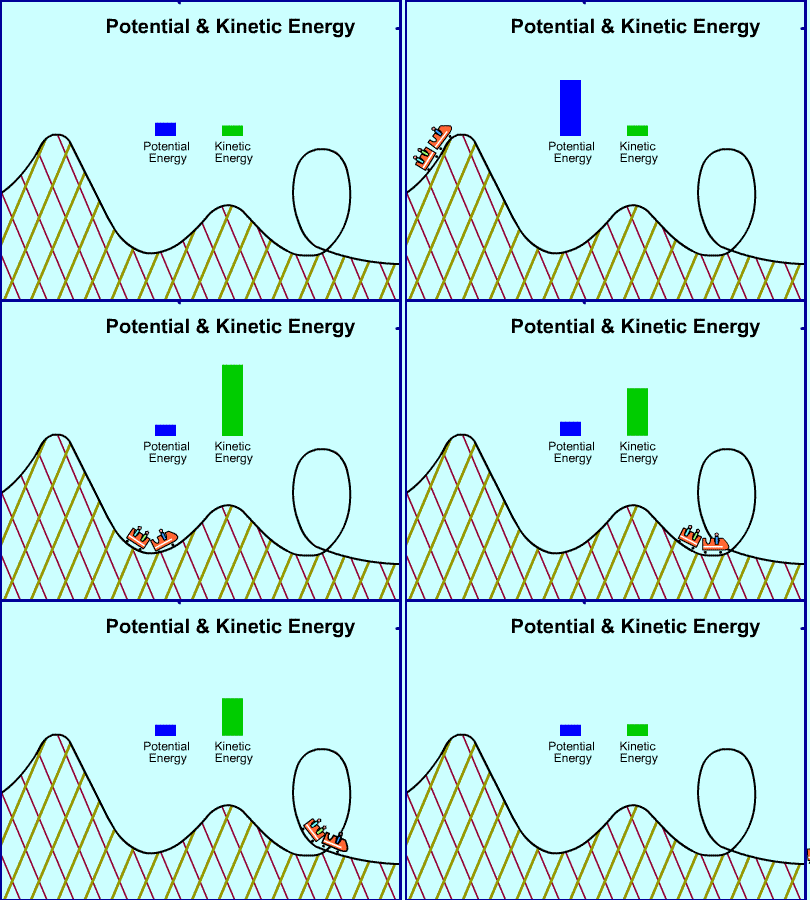
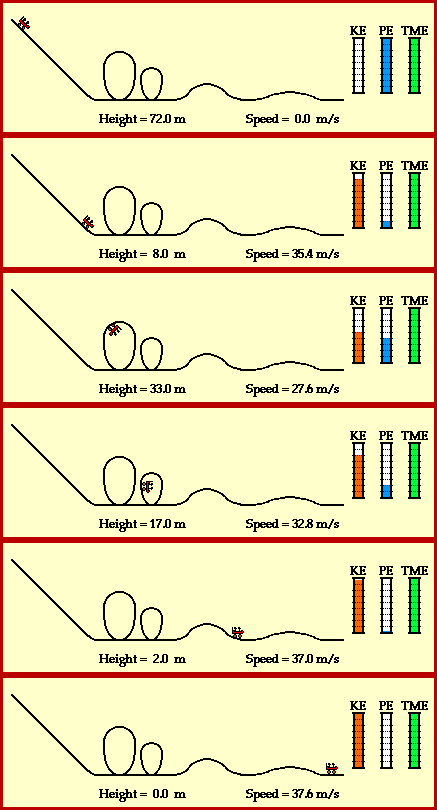
Step C: Part C : Roller Coaster Animations :
Describe 2 of the 3 animations shown here
animation 1: click here .....animation 2: click here ..... animation 3: click here
Watch: Time Warp: Roller Coaster Science: click here

Step D: Use chapter 11 from your textbook and online resources to answer the questions
Step E: Use chapter 11 and the link to answer the questions
Part 2: Roller Coaster Research
Step F: Answer these questions by visiting the following sites:
Brittanica.com: click here
Roller Coaster Record Book: find the fastest/tallest/ etc: click here
Amusement Park Physics: click here
......Successful Designs:
Using the websites listed, complete the data collection sheet to gather information regarding the types, heights, speeds, and lengths of roller coasters from various amusement parks.
Watch: How Roller Coasters Work: click here
Step: G: ..Compare THESE Designs:
Six Flags Magic Mountain Coasters: click here
Cedar Point (Ohio) Roller Coasters : click here
King's Island (Ohio) Roller Coasters : click here
Watch: Roller Coaster Physics: click here
Watch: The Tallest Floorless Roller Coaster: click here
Step: H: Roller Coaster Motion : So, here is the big question of the day:
How does a roller coaster continue to move through the twists & turns of its track if it only uses an engine at the beginning?
Read: Physics4Kids: Motion & Energy: click here
Watch: How Roller Coasters Work: click here
Roller Coaster Energies: click here
Bill Nye on Energy: click here
Step: I: Roller Coaster Elements
Butterfly Inversion ..... Camelback.... Cobra Roll....Corkscrew .... Diving Loop ....
Hammerhead Turn .... Heartline Roll .... Horseshoe .... Immelmann Loop .... Norwegian Loop ....
Pretzel Loop .... Raven Turn .... Sea Serpent Roll .... Top Hat ..... Vertical Loop
use the sites listed below, or just "Google" the terms:
Wikipedia's Roller Coaster Thrill Elements: click here
Roller Coaster Database Glossary: click here
Part 3: Planning & Designing
watch a video about a rollercoaster designer!
click here
Step: J: Complete the 6 design questions.
You may need to look up some of the terms
Step: K: Build your roller coaster on line: click here
Planning Your classroom coaster: Think about what part of the room you want to build your marble roller coaster in. What kind of special features do you want? Hills? Loops? Corkscrews? Your group will be provided with 6 foam insulation pipes and a roll of masking tape. Jot down at least 5 of your ideas