
Introduction
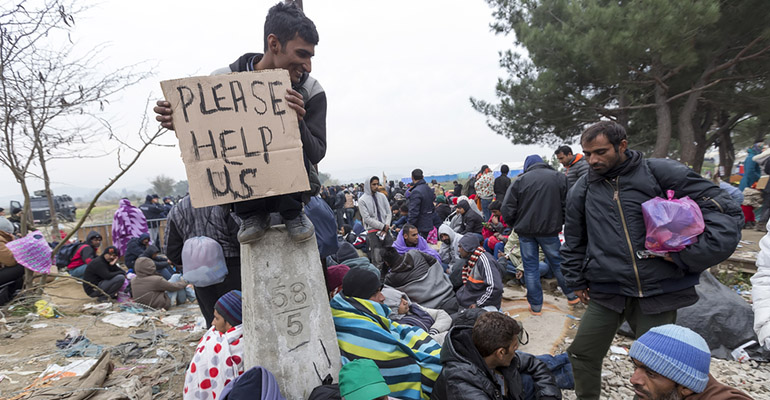
REFUGEES
A refugee is a person who has fled his or her own country and cannot return due to fear of persecution, and has been given refugee status. Refugee status is given to applicants by the United Nations or by a third party country, such as Australia.
According to the United Nations Convention relating to the Status of Refugees [PDF], as amended by its 1967 Protocol (the Refugee Convention), a refugee is a person who is:
- outside their own country and
- has a well-founded fear of persecution due to his/ her race, religion, nationality, member of a particular social group or political opinion, and is
- unable or unwilling to return.
The United Nations High Commission for Refugees (UNHCR) currently estimates there are nearly 20 million refugees in the world.
Task

After researching and finding out more information, you and your partner will create an awareness file to share the story of a refugee who made it to Australia. You will be required to complete a number of tasks with your partner so make sure you choose someone that you work well with and will put just as much effort into the task as you will. To conclude, you will write a final reflection on your study and discuss your own personal response to the time period.
Process
Activity #1:
1) Follow the link below and watch the video with your partner:
http://www.abc.net.au/btn/story/s4526308.htm
Discuss with your partner, using the following sentence starters:
- This story made me wonder why...
- It was interesting to learn that...
- This story made me feel...
Now, come up with your own definitions for the following, and write them in your books:
An asylum seeker is...
A refugee is...
A migrant is...
Activity #2:
1) With your partner, choose one of the following stories, or research and find your own story of a refugee who came to Australia.
Isaiah Lahai - fled Sierra Leone and spent 14 years in a Guinea refugee camp before being granted asylum in Australia.
Najeeba Wazefadost - was smuggled out of Afghanistan when she was 12. She flew into Indonesia on a false passport before coming to Australia on an asylum seeker boat.
Joseph Hameed - fled Iraq with his family, including his disabled daughter, because he believed they would be killed.
Tshibanda Gracia Ngoy - fled the bloodshed of the Second Congo War when she was 14.
Essan Dileri - an Afghan national who has been waiting two years for his wife and children to be able to join him in Australia.
Sahar Abdullah - an English teacher who fled Iraq and went to Jordan before coming to Australia.
Miriam Bah - left the deadly civil war in Liberia and headed to Sierra Leone. Less than a year after she arrived in Sierra Leone, a civil war erupted in the country.
Brainstorm what information you can use in your awareness file, You can include any background information that you have learnt. You can include symbols and pictures which you think might be important. However, think about WHY you are putting what you are putting in the file.Have a good reason in mind for what you are doing so that you can explain it thoroughly and accurately when asked.
2) The due date for the awareness file will be announced in class. Make sure that you have all the materials that you need. You may decide to do the task electronically via PowerPoint, or you may decide to present it on cardboard. Remember you cannot just cut and paste, it must be your own work.
Activity #3:
Imagine that you must go into hiding because a group seeks to eliminate all people like yourself (your age, younger, and older). You will be in a confined space with very limited opportunity to move and an almost constant need for silence to remain alive. You will be there for a long time with only the bare essentials to survive. Therefore, you will not have electricity, running water, etc.
-
What artifact will you take into hiding with you?
-
In future years, if you survive, how will you use it to tell your grandchildren and/or future generations about your time of fear and hiding and, finally, of survival?
-
Explain its value to a group of young people two generations removed from your life as a hidden child.
Create a story in which you describe your experiences and the importance of the artifact. Your story should be at least 2 pages, double-spaced, size 12 Times New Roman and may be submitted via a google doc or a word document.
Activity #4:
1) Each person will write a one page, double-spaced, size 12 Times New Roman, typed reflection describing what you have learned during this unit. Include your experiences from the classroom, your research, and our reading of 'Mahtab's Story' and this WebQuest activity. Reflect on what you have learned about refugees, tolerance and respect for others.
Evaluation
Marking:
Your work will be need to be handed in either in person, shared or emailed to Mrs Hitchins.
Based upon your level of engagement in class, your ability to work fairly and evenly as a pair and your final product you will be awarded a grade.
|
A |
The student has a wide knowledge and understanding of the individual and the refugee crisis and can readily apply this knowledge. In addition, the student has worked collaboratively and fairly within their group and has produced a work product that is of very high standard. |
|
B |
The student has a thorough knowledge and understanding of the individual and the refugee crisis and can apply this knowledge. In addition, the student has worked collaboratively within their group and has produced a work product that is of high standard. |
|
C |
The student has a sound knowledge and understanding of the individual and the refugee crisis and can apply this knowledge. In addition, the student has worked collaboratively within their group and has produced a work product that is of satisfactory standard. |
|
D |
The student has a basic knowledge and understanding of the individual and the refugee crisis and can apply this knowledge. In addition, the student has worked within their group and has produced a work product that is of basic standard. |
|
E |
The student has a limited knowledge and understanding of the individual and the refugee crisis and can apply this knowledge. In addition, the student has worked within their group and has produced a work product that is of limited standard. |
Conclusion
Dr. Martin Luther King, Jr. said: "In the end, we will remember not the words of our enemies, but the silence of our friends."
You have researched, created, and shared your learning with your classmates and your teacher. Congratulations on completing your quest!
Now, how will you continue to help refugees? Here are some ideas: https://www.teenvogue.com/story/6-things-you-can-do-to-help-syrian-refugees
Remember, what you think, say, and do matters.