
Introduction
As you know, all art forms reflect, in one way or another, the historical period in which they were created, and music is no exception.
Throughout this webquest, you will explore the recent history of the United Kingdom and Ireland through their music.
These assignments will count toward not only 10% of your in-class work but also 15% of your writing assignments.
Task
SECTION 1: POST-WAR BRITAIN (1945-1960)
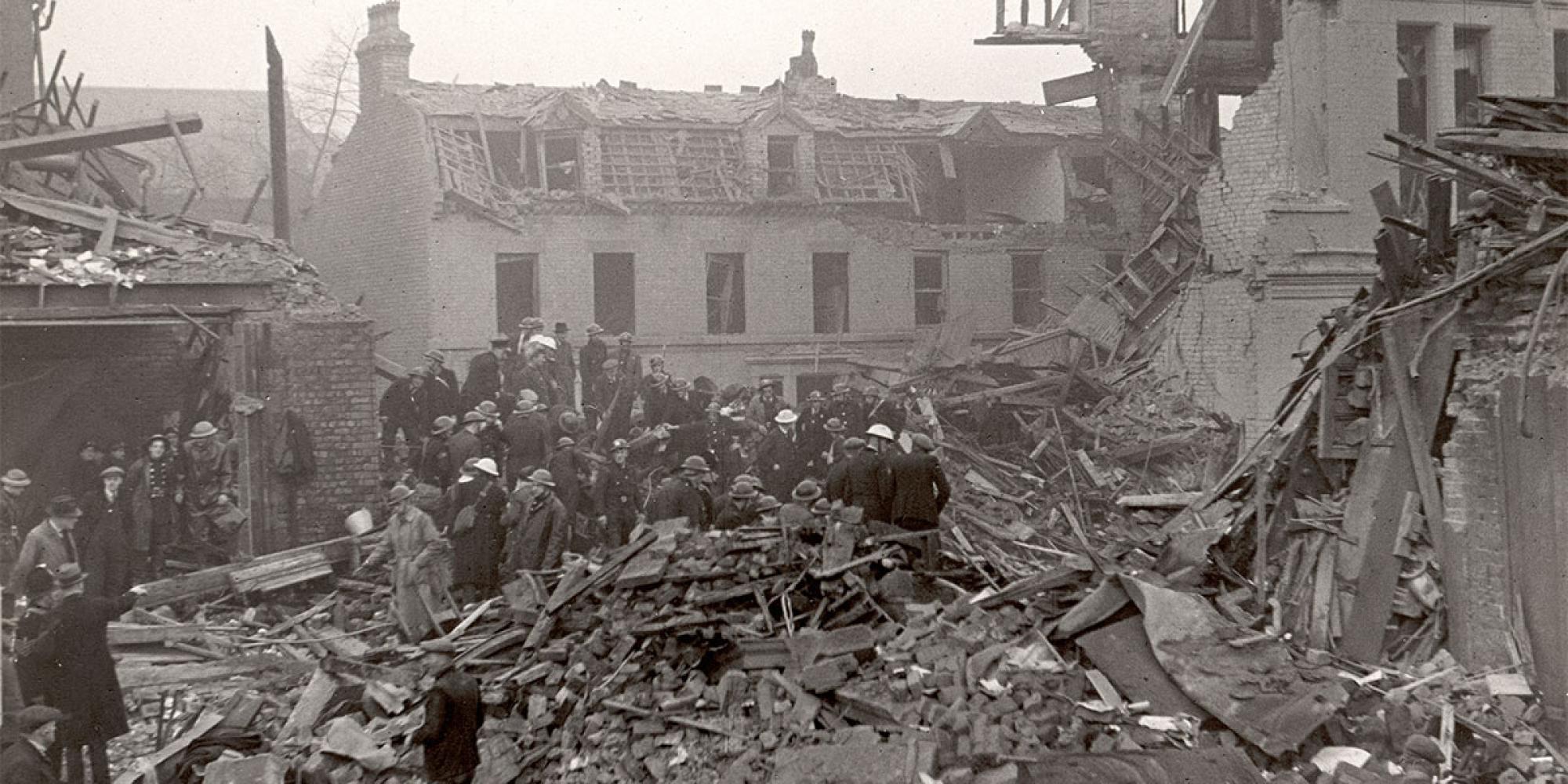
In 1940—the year John Lennon and Ringo Starr were born—the Nazis bombed Liverpool every other day. These attacks were part of the Blitz, a military strategy designed to demoralize the European Allies with relentless bombing of strategic and civilian locations in England and Northern Ireland. Because the majority of war supplies shipped from abroad (mainly the United States) entered Great Britain through the Liverpool docks, the port city was a key target throughout the war. Lennon and Starr were too young to remember the constant air raids, but they and the other Beatles certainly experienced the effects of the war as children and young adults. When they were in elementary school, much of the city was still in ruins, unemployment was high, and food rationing—which continued until 1954—was a part of daily life.
With American support, the Liverpool docks once again filled with ships in the postwar years. As Marshall Plan aid helped rebuild Liverpool’s economy, the transmission of American culture—especially movies and music—also inspired the area’s youth. Merchant seamen known as the Cunard Yanks traveled to New York City and returned to Liverpool wearing American fashion and carrying American recordings, including Blues, Country, and Rock and Roll.
TASK 1
Imagine you have been hired to help one of the Beatles write his autobiography. You have been assigned to work specifically on one chapter discussing the way growing up in Liverpool influenced their Beatle as a young man. You need to choose which chapter you'll be writing on and write a paragraph of 3-5 sentences for your Beatle's autobiography regarding one of these sections:
Part 1: Air Raid Infant: Your sentences should connect his life to the term and use the first person. For example, “I remember watching the ships come in to the Liverpool docks.”
Term: Blitz
Blitz means lightning in German. Blitz was a war strategy used by the Nazis from 1940-1941, that involved heavy bombing of strategic locations in the UK and Northern Ireland. Since the majority of war materials came through the Liverpool docks, this port city was a target throughout the war. In 1940, the year John Lennon was born, the Germans bombed Liverpool every other day.
Part 2: Growing Up on Rations: Your sentences should connect his life to the term and use the first person. For example, “I remember watching the ships come in to the Liverpool docks.”
Term: Rationing
Rationing occurs when the government restricts the amount of certain goods people can buy. For example, they might be allowed to buy only six ounces of meat per week. Citizens were given a “ration book” in which they had to show that they had not already bought a particular item before a merchant could sell it to them. Rationing was common during WWII. Britain continued to ration almost ten years after the war. John Lennon and Ringo Starr were 14 years old when rationing finally ended
Part 3: British Music Halls: Your sentences should connect his life to the term and use the first person. For example, “I remember watching the ships come in to the Liverpool docks.”
Term: Music Hall
For more than a century, British music halls were one of the main sources of entertainment for ordinary Britons, particularly from the working class. Music halls featured variety shows offering many different types of performance, but were best known for offering catchy songs in which the audience would join in on the chorus. Performers often laced their songs with comedy, sometimes wearing eccentric costumes on stage. While they eventually declined, music halls were still a popular form of entertainment immediately after World War II, a place where hard-working people could go and forget about their troubles. The music hall was a significant part of the Liverpool culture scene and had a large impact on the Beatles. In fact, Paul McCarthy was the son of a music hall performer, and his songs such as “Maxwell's Silver Hammer” and “Octopus' Garden” reflect the music hall sound.
Part 4: America: The Land of Opportunity. Your sentences should connect his life to the term and use the first person. For example, “I remember watching the ships come in to the Liverpool docks.”
Term: The Marshall Plan The Marshall Plan was an American program that sent aid to Europe following WWII. Marshall Plan aid helped countries modernize and recover from the devastation of the war. Many young Europeans, including the young men who would become the Beatles, looked to America as a land of hope and optimism.


Part 5: American Rock and Roll.
Term: Cunard Yanks
The “Cunard Yanks” were merchant seamen who traveled between New York City and Liverpool, bringing American fashion and music to Liverpool. (Cunard is a British-American shipping company that still operates today.) Some claim the Beatles got their American Rock and Roll records from these merchants before this music was discovered by the rest of Great Britain. The Beatles were heavily influenced by new sounds from American musicians such as Elvis Presley, Chuck Berry, and Little Richard. The Cunard Yanks are a symbol of cultural diffusion.
https://www.youtube.com/watch?v=O7V520MqpmY
Part 6: Skiffle Music. Your sentences should connect his life to the term and use the first person. For example, “I remember watching the ships come in to the Liverpool docks.”
Term: Skiffle
Skiffle is a type of country-folk music that was first played in the United States but later become popular in postwar Britain. Skiffle is played on improvised instruments such as washboards, kazoos and other homemade instruments. It was popularized in Britain by Lonnie Donegan, who had a string of hits both in Britain and the United States. Skiffle was extremely popular in 1950s Liverpool. John Lennon formed a Skiffle band in 1957 called the Quarrymen and was soon joined by Paul McCartney, forming the basis of the band that would go on to become the Beatles.
TASK 2
After World War II, Britain was rebuilding its economy and society. The 1960s brought optimism, youth culture, and the rise of pop music. Bands like The Beatles became symbols of a new era.
1. LISTENING COMPREHENSION: Listen to the song and answer:
-
What is the singer’s main feeling at the beginning?
-
What changes at the end of the day?
-
Find two examples of informal language.
-
What does the song suggest about working life?
2. READING COMPREHENSION: Read the text and answer:
-
Why was the 1960s different for young people?
-
What role did music play?
-
Find a synonym for “freedom” in the text.
Youth Culture in Britain in the 1960s
After World War II, Britain went through a period of reconstruction. By the late 1950s and especially during the 1960s, the country began to experience important social and cultural changes. This period is often referred to as the “Swinging Sixties.”
Young people started to have more freedom than previous generations. Many of them had jobs and their own money, which allowed them to spend more on clothes, music, and entertainment. As a result, youth culture became a powerful force in society.
Music played a central role in this transformation. Bands like The Beatles became international icons and influenced fashion, language, and attitudes. Their music represented a break from the past and symbolised optimism and change.
At the same time, traditional values were being questioned. Young people challenged authority, experimented with new lifestyles, and expressed themselves more openly. This created a generation gap between parents and their children.
The 1960s were not only about music, but also about identity, freedom, and social change. Music helped define a generation and gave young people a voice.
TASK 3


The Beatles, 1961 The Beatles, 1964
1. Prior to the filming of A Hard Day’s Night, the Beatles went through a long period of refining their image, working alongside their manager Brian Epstein to achieve their approachable aesthetic. Answer the following questions:
- How would you describe the clothes and mood in the first picture from 1961?
- How would you describe the clothes and mood in the second picture from 1964?
- What kind of image do you think the band is trying to present in each of the pictures?
2. Have a look at the picture, ead the article, watch the video and answer the questions:

Excerpt from “Building the Beatle Image”
By Vance Packard, Saturday Evening Post March 21, 1964
What causes an international craze like the current Beatlemania?
Press agentry can only swell a craze. To get one started you need to bring into fusion five vital ingredients.
Only three years ago it is doubtful that any observer of pop culture would have picked the Beatles to inspire madness on both sides of the Atlantic. In 1961 the Beatles affected a beatnik look. They wore black T-shirts, black leather jackets, blue jeans and disheveled hair. In one picture taken of them that year they scowled at the camera as good beatniks should.
Then along came Brian Epstein, an aristocratic-looking young Englishman who ran a record shop and soon became their manager. First he made them scrub, comb their hair and get into civilized clothing. Then little by little, by a combination of hunch, luck and design, he began exploiting the five ingredients that will create a craze.
First, the Beatles needed a symbol that would make them stand out in the people's minds, a symbol such as the coonskin cap that Walt Disney gave to his Davy Crockett creation. For a symbol it was decided to exploit their already overlong hair. The Beatles let it grow longer and bushier, combed it forward - and then had it immaculately trimmed. The result was not only eye-catching but evocative. Such hairdos were common place in the Middle Ages and the new coiffure suggested the ancient roots of England.
A second ingredient necessary for a craze is to fill some important subconscious need of teenagers. Youngsters see themselves as a subjugated people constantly exposed to arbitrary edicts from adult authorities… Rock 'n roll music, of course, annoys most parents, which is one of the main reasons why millions of youngsters love it. But the Beatles couldn't possibly hope to outdo Elvis Presley in appalling parents. Instead of open opposition, the Beatles practice an amiable impudence and a generalized disrespect for just about everybody. They succeeded, happily, in getting themselves denounced in some pretty high adult places. The Lord Privy Seal indicated his annoyance. And Field Marshal Lord Montgomery growled that the Army would take care of those mop-top haircuts if the Beatles were ever conscripted.
But the Beatles - under Mr. Epstein's tutelage - also have put stress on filling other subconscious needs of teen-agers. As restyled, they are no longer roughnecks but rather lovable, almost cuddly, imps. With their collarless jackets and boyish grins, they have succeeded in bringing out the mothering instinct in many adolescent girls.
The subconscious need that they fill most expertly is in taking adolescent girls clear out of this world… The Beatles have become peculiarly adept at giving girls this release. Their relaxed, confident manner, their wild appearance, their whooping and jumping, their electrified rock 'n roll pulsing out into the darkness makes the girls want to jump - and then scream…
A third ingredient needed to get a craze started - as Brian Epstein obviously knew - is an exciting sense of freshness. In an informal poll conducted through my offspring, who are at high school and college, I find that the fact that the Beatles are somehow "different" - something new in the musical world - made the deepest impression. Teen-agers feel they are helping create something new that is peculiarly their own. And as my 15 year-old expert (feminine) explained, "We were kind of at a lag with popular singers."
The delivery, if not the music, is refreshingly different with the Beatles. Surliness is out, exuberance is in. Sloppiness is out, cleanliness is in. Self-pity is out, whooping with joy is in. Pomposity is out, humor is in.
A fourth ingredient needed to keep a craze rolling once it shows signs of starting is a carrying device, such as a theme song. The carrying device of the Beatles is found in their name. It playfully suggests beatnik, but it also suggests "beat" -- and the beat is the most conspicuous feature of the Beatles' music. It is laid on heavily with both drums and bass guitar. When the screaming starts, the beat still gets through.
Finally, a craze can succeed only if it meets the mood of the times. England, after centuries of cherishing the subdued, proper form of life, is bursting out of its inhibitions. There has been a growth of open sexuality, plain speaking and living it up. The Beatles came along at just the right time to help the bursting-out process.
- Describe some of the reactions in the audience.
- What are the five elements Packard describes as necessary for creating Beatlemania?
- What elements might you add to Packard’s list? What elements do you disagree with, if any?
- Is Beatlemania evidence of mass hysteria? What does Brian Epstein think about the word “hysteria”? What does the interviewer think?
- How does the interviewer see Epstein’s role as the band’s manager? To what does the interviewer attribute the band’s popularity?
- How would you define the “commercial machine”?
- Have you ever been “obsessed” with an artist, an athlete, or an actor? Why do you think people create strong attachments to celebrities?
SECTION 2: THE TROUBLES IN NORTHERN IRELAND(1960s–1998)
Before you continue, you need to watch this, otherwise it will be very difficult for you to understand anything:
“The Troubles” was a conflict in Northern Ireland between:
-
Nationalists (mostly Catholic)
-
Unionists (mostly Protestant)
In 1972, British soldiers shot unarmed civilians during a protest in Derry—this event is known as Bloody Sunday.
TASK 1
1. LISTENING: Listen to the song and answer the questions
-
What event is the song describing?
-
Find three words related to violence.
-
What message does the band want to communicate?
-
Is the tone angry, sad, or hopeful? Explain.
2. READING: Read the text and answer the questions
-
When did Bloody Sunday happen?
-
Who was involved?
-
What were the consequences?
Bloody Sunday and The Troubles
The Troubles was a period of conflict in Northern Ireland that lasted from the late 1960s until 1998. It involved political, religious, and social tensions between two main groups: Nationalists, who wanted Northern Ireland to join the Republic of Ireland, and Unionists, who wanted to remain part of the United Kingdom.
One of the most important and tragic events of this period was Bloody Sunday. On January 30, 1972, a group of civil rights protesters marched in the city of Derry. They were protesting against discrimination and demanding equal rights.
During the march, British soldiers opened fire on the crowd. Fourteen unarmed civilians were killed, and many others were injured. The event shocked the world and increased tensions in Northern Ireland.
After Bloody Sunday, violence intensified. Many people lost trust in the British government, and support for paramilitary groups grew. The conflict continued for many years, causing suffering and division in society.
Music became a way to express emotions and protest against violence. Songs like “Sunday Bloody Sunday” helped raise awareness of the situation and called for peace.
3. WRITING:
Write an opinion essay (140–190 words):
👉 Can music be a form of protest? Use the song as an example.
SECTION 3: ECONOMIC CRISIS AND PUNK MOVEMENT (1970s-1980s)
In the late 1970s, Britain faced:
-
High unemployment
-
Economic crisis
-
Social unrest
TASK 1
1. READING: Read the text and answer the questions:
-
Why did punk music appear?
-
How did it express people’s feelings?
-
Find one adjective describing punk music.
The Punk Movement in Britain
In the late 1970s, Britain faced a serious economic crisis. There was high unemployment, especially among young people, and many families struggled to make ends meet. Cities experienced social problems such as poverty and crime.
In this context, a new musical movement appeared: punk. Punk music was fast, loud, and aggressive. It rejected traditional styles and expressed anger, frustration, and rebellion.
Bands like The Clash became symbols of this movement. Their songs often talked about political problems, social injustice, and the difficulties of everyday life. Punk musicians wanted to show the reality of society, not hide it.
Punk was not only about music—it was also a cultural movement. It influenced fashion, with torn clothes, leather jackets, and unusual hairstyles. It also promoted a “do-it-yourself” attitude, encouraging people to create their own music and express themselves freely.
Although some people criticised punk as negative or aggressive, others saw it as an honest reflection of society. It gave a voice to young people who felt ignored and frustrated.
2. LISTENING: Listen to the song and answer the questions in the worksheet uploaded in Classroom.
3. WRITING: Write a paragraph (120–150 words):
👉 Why do you think young people used music to express anger?
SECTION 4: IRELAND, IDENTITY AND MIGRATION (1980s–1990s)
TASK 1
1. READING: Read the text and aswer the questions:
-
Why did people emigrate?
-
How did it affect society?
-
Find a word related to “identity.”
Ireland, Migration, and Identity
During the 1980s, Ireland experienced significant economic difficulties. There were not enough job opportunities, and many people, especially young adults, decided to leave the country in search of a better life. This process is known as emigration.
Thousands of Irish people moved to countries such as the United Kingdom and the United States. While emigration helped individuals find work, it also had a strong emotional impact. Families were separated, and communities became smaller.
At the same time, Ireland was still affected by the conflict in Northern Ireland. Violence and political tension influenced people’s sense of identity and belonging.
Music became an important way to express these experiences. Bands like The Cranberries created songs that reflected pain, loss, and national identity. Their music often addressed both personal emotions and political issues.
For many Irish people, music was a way to stay connected to their culture, even when they lived abroad. It helped them express who they were and where they came from.
2. LISTENING: Listen to the song and answer the questions.
-
What historical event inspired the song?
-
What emotions are expressed?
-
What does “Zombie” symbolize?
Process
You will complete 4 main sections, each focused on a historical period.
You will work individually to:
-
Analyse songs from different decades.
-
Understand the historical context behind each song.
-
Complete listening, reading, and writing activities.
-
Produce a final written reflection connecting music and history.