
Introduction
In the years leading up to the Great Depression the United States had enjoyed a time of financial prosperity known as the Roaring Twenties. However, this delightful time came to an end October, 29, 1929 with the crash of the stock market. The United States was hit very hard with a collapse of epic portion. There were many cause, and no real solutions until Roosevelt New Deal was enact, but still the United States was not full back on it feet until it entered in to WWII with the mass production of supplies. WWII was no mistake it was a process that started at the end of war world I with the treaty of Versailles. This treaty was seen as unfair treatment by the German people because of it rules, and regulations brought against them. The purpose of this assignment is to create a five day web quest that can be used in the classroom for social studies. This web quest is based from specific concepts that come the Social Studies strands. This web quest is constructed to focuses on an elementary Social Studies level to demonstrate drafting, arranging, and implementing of instruction.

Welcome: Social Studies Benchmark Assessment
Description: 5 Day Web quest: Day 1 - Strand 1: Concept 8, Day 2 - Strand 2: Concept 8 Day 3 - Strand 3: Concept 4, Day 4 - Strand 4: Concept 1, Day 5 - Strand 5: Concept 3
Grade Level: 7 grade
Curriculum: Social Studies
Keywords: Great depression, economy, unemployment, War World II, Europe, Axis and Allie power
Author: Jessica Reed
Task
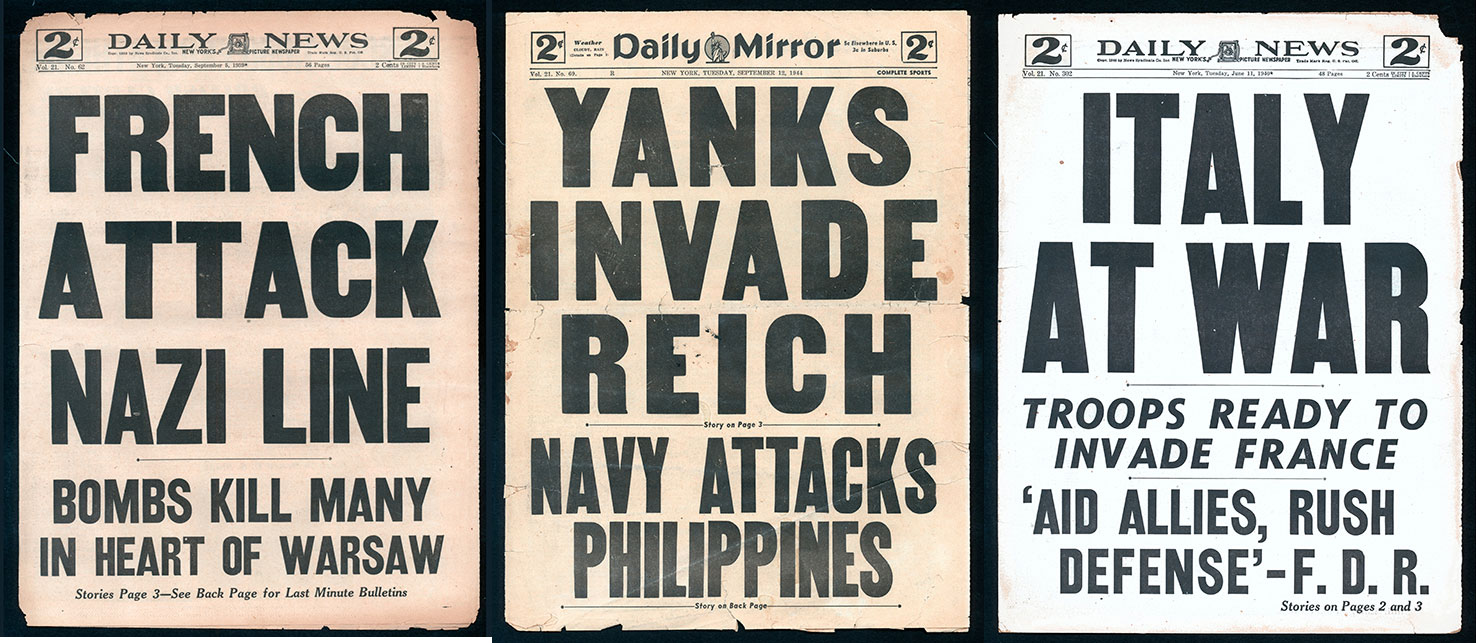
Lessons overview of Goals: The goal of this lesson is to allow students to build an understanding of the Great Depression which was a vital factor that pushed America and the world into WWII.
Lesson overview: This lesson will concentrate on the multidisciplinary aspect of the social studies field in order to develop a clear picture of historical events, places, governmental impact, and people.
Standards:
PO 3. Describe how the following New Deal programs affected the American people: a. works programs
PO 4. Describe how Pearl Harbor led to United States involvement in World War II. : PO 5. Describe the impact of World War II on economic recovery from the Great Depression.
American History: Day 1- Students will focus on the several New Deal programs such as the Federal deposit insurance, National recovery administration, social security, and the civilian conservation corps. They will develop an understanding of the importance of the programs and those who needed them.
Students will examine the facts about Japan’s plans to attack the United States
Students will look at the economic displacement that many nations were going through which did not get resolve until WWII. For example, the U. S. did not fully get back on its feet until WWII.
Material: pencil, paper, textbook, internet, and paper for a timeline
Vocabulary: New deal programs, Japan, Bombing of Pearl Harbor, great depression, and World War II
Standard:
PO 2. Summarize the outcomes of World War I: a. Treaty of Versailles
World History: Day 2- The question that will be asked is what is the treaty of Versailles and who stand to gain or suffer from its enactment.
Material: Printer, textbook, internet, and paper
Vocabulary: treaty of Versailles, and Europe
Standards:
PO 3 Describe the importance of citizens being actively involved in the democratic process.
Civics/Government Day 3- The question that will be asked is what is the role of the government and its citizens. Students will identify the role of the government in hard times such as the Great Depression. Students will also develop an understanding of citizen’s rights, and responsibilities. Students will also examine the facts should the government intervene in states and individual affairs or should just local charities and churches solely deal with the issues.
Materials: Pencil, paper, textbook, internet
Vocabulary: government, and citizen’s rights,
Standards
PO 1. Construct maps, charts, and graphs to display geographic information.
Geography: Day 4- World War II started in Europe, but eventually the United States entered the war. Students will take a look at the geographic location of the different countries that were involved in WWII.
Materials: blank map, color markers, paper, internet
Vocabulary terms: government, citizen, and nations geographic features
Standards:
PO 1. Describe the effects of inflation (e.g., higher prices, rising interest rates, less business activity) on society
PO 2. Analyze the effects (e.g., inflation, unemployment) of the Great Depression.
Economics: Day 5-Marcoeconmic is the economic system that stresses the general characteristic and the procedures that make up a national economic system which also reflects the different ways in which different sections of the economy are linked. During the Great Depression there were several issues were the nation went wrong, which put them at risk for an economic hardship. Students will develop an understanding of what industries had a high unemployment rate such as textiles, farming, and coal mining. They will question what led to such a decreases in these areas. By 1932, 12 million people were unemployed what segment of the population was hit the worst. Students will analyze this impact on the average family. Students will also look at how inflation got out of hand, and how buying with credit help widen the cracks to an economic down slide.
Material: pencil, paper, internet, glue, construction paper, question work sheet to be worked on in groups.
Students will be introduce to Vocabulary terms- Buying Frenzy, Credit, Debt, Economic crises, Economic recovery, Enterprise, Federal Reserve, Industry, Inflation, Loans, Recession, Short-term investors, Stock Market, and Unemployment.
Process
_28.jpg)
American History: Day 1- Students will be placed into groups and decide which New Deal program they are. They will have to convince the class that their program is beneficial for the American people. The next task is that students will write a short summary of the relationship between Japan and the United States. They will have to give details about the strategic bombing of Pearl Harbor. The final task is that students will identify the elements that led the nation into an economic depression. The student’s task will be to create a time line in which they will identify key points and place them on the time line starting from 1920 to 1945.
World History: Day 2- Students will research the Treaty of Versailles and its impact on the German people. They will make a list of demands that were placed on the German people by the treaty. Students will then create a flier supporting the treaty of Versailles, or empathizing with the German People.
Civics/Government: Day 3-The task will be that students will create a graphic organizer in which they will use their critical thinking skills to develop categories to place vital points into. Finally students will be placed into groups and discuss their graphic organizer.
Geography: Day 4-Students will be handed a blank world map in which they will have to label the countries that were involved in WWII. They will also color the Axis nation’s red, and the Allie nations blue. Students then will develop a chart in which they will place counties in columns according to their color. Students then will be placed into groups to research a nation that they have chosen from the columns in which they will draw or use a printout to identify the nation’s geographical features such as valleys, mountains, and vital bodies of water. They will have to include a map key illustrating the different features.
Economics: Day 5-Students will use the internet to look up the meanings of each words, and also will have to write a sentence in their own words to show true understanding of the terms. Students will make flash cards for each word and will go over them in their groups. Students will also discuss and answer several questions in their groups concerning the economic flux of the great depressions.
Questions 1. What was the main reason for the economic crises?
2. How did the unemployment rate jump so high with several years of prosperity before the depression?
3. What made the price of goods go down?
4. What was the unemployment rate in 1925, 1930, 1935, 1940, and 1945 * Students will see the decreases and also the recovery of the economy.
5. What hurt the economy more was it politics or the consumer
Evaluation

Evaluation
|
Criteria |
1. Beginning |
2. developing |
3. Accomplished |
4. Mastered |
Score |
|
Standards |
Student display basic level of understanding and performance skills |
Students display improvements in skills, but still has many errors |
Student has display full understanding and performance with few errors |
Student has mastered all levels of skill and has no errors |
|
|
American History |
Student has not complete all task |
Student has completed some work, but the quality of the work is insufficient |
Student has completed all tasks and demonstrates an understanding of the material and topic with few errors. |
Student was able to complete all task with full demonstration of understanding at a high level of quality. |
|
|
World History |
Students has not taken the time to research the topic, and their flier is not well developed. |
Student has completed some work but quality of the flier is poor. |
Student has shown sufficient skill in completing the task, but there still remains few errors. |
Students did sufficient research in order to create a flier. They also have demonstrated full understanding of the topic |
|
|
Civics/ Government |
Student has not completed their graphic organizer , and struggle to perform quality work |
Student has not completed the task at a quality level |
Student has completed the task with few errors to improve on. |
Student has shown critical thinking skills, and has mastered the task with no errors |
|
|
Geography |
Student has not completed all task |
Student has done some work but there are several errors |
Student has a grasp of the material, and has shown sufficient skills, but there are a few errors that remain. |
Student has fully completed the maps, chart, and mastered understanding of the subject with no errors |
|
|
Economics |
Student has not fully completed all task |
The quality of the work is poor, and student is lacking a understanding of the material |
Student has completed the task with sufficient skills |
Student has performed well and has mastered the task with no errors |
|
Conclusion
 Conclusion
In the years leading up to the Great Depression the United States had enjoyed a time of financial prosperity. Nevertheless, with over spending on credit and industries at risk it made the unemployed rate grow. There were several issues that led to an economic depression that affected every level of society. There was some hope with the enactment of the New Deal programs, but the United States did not fully recover until it entered WWII. This war was started in Europe, but had made its way across the ocean to American shores with the bombing of Pearl Harbor. This upheaval led to many changes, but also to the economic recovery and stability of the United States as a world power. The purpose of this web quest was created to use as an educational tool to better help students in their quest to learn.
Credits
References
Burgan Michael (2002) We the people: The Great Depression Minneapolis , MN. Compass Point Books
Farrell Jacqueline (1996) World History Series: The Great Depression San Diego California, Lucent Books, Inc.
Levy Pat (2004) The World Wars: The Home Front in World War II , Chicago Il., Rain tree
The Arizona Department of Education’s Social Studies Standards retrieved 08/04/2014
from:http://www.azed.gov/standards-practices/social-studies-standard/
Resources
The American Experience- The Presidents: FDR
http://www.pbs.org/wgbh/amex/presidents/nf/featured/fdr/fdec.html
The Great Depression Facts &Summary History. COM
www.history.com/topics/great-depression
The New Deal Network
Teacher Page
AZ- Arizona Academics Standards
Social Studies
6-8 grade
Strand 1: American History : Concept 8: Great Depression and World War II PO 3. Describe how the following New Deal programs affected the American people: a. works programs
PO 4. Describe how Pearl Harbor led to United States involvement in World War II
PO 5. Describe the impact of World War II on economic recovery from the Great Depression.
World History : Concept 8: World at War
PO 2. Summarize the outcomes of World War I: a. Treaty of Versailles (e.g., restrictions on Germany,
Civics/Government :Concept 4: Rights, Responsibilities, and Roles of Citizenship Standards:
PO 3 Describe the importance of citizens being actively involved in the democratic process
Geography : Concept 1: The World in Spatial Terms:
PO 1. Construct maps, charts, and graphs to display geographic information.
Economics Concept 3 : Macroeconomics- Security, exchange regulations
PO 1. Describe the effects of inflation (e.g., higher prices, rising interest rates, less business activity) on society.
PO 2. Analyze the effects (e.g., inflation, unemployment) of the Great Depression.