
Introduction
In this webquest, you will be using the internet as a resource to help you investigate the geography and it's impact of the three regions of the world we have studied: Africa, Southern and Eastern Asia, and Southwestern Asia.
Task
Southwest Asia (Middle East) - by Mr. Farr, Hall County Schools
SS7G5:
1) Why is the "Jordan River" getting smaller every year?
2) Why is the "Strait of Hormuz" so important?
3) Which two waterways are connected by the "Suez Canal?"
4) How many Palestinians live in the "Gaza Strip?"
SS7G6: 5) Although the Middle East represents 5% of the world's population, it accounts for _____% of the world's freshwater supply.
6) What is most of the water in the Middle East used for?
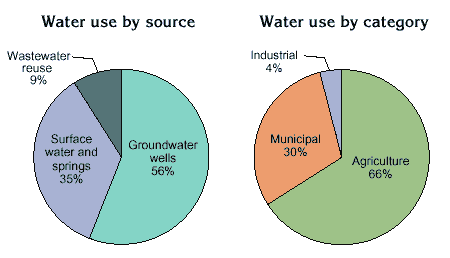
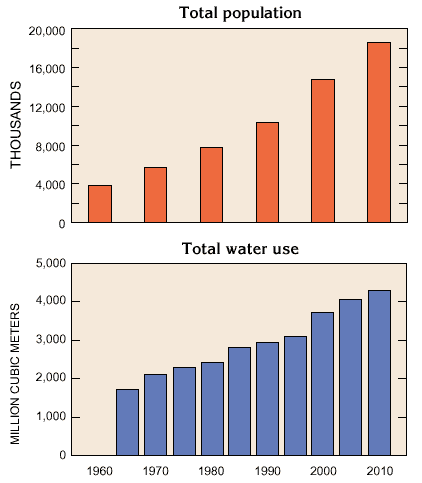
7) How much freshwater was used in the Middle East in 2010?
8) Why is the government of Iraq blaming the government of Iran for high amounts of water pollution?
SS7G7:
9) Which Middle Eastern country is the world's largest producer of oil?
10) In terms of oil supplies, what do SW Asian nations such as Israel, Jordan, and Afghanistan have in common?
11) Which continent is the largest consumer of oil that is produced in the Middle East?
SS7G8:
12) Which religions are practiced by the Arabs?
13) Which religion is practiced by most Kurds?
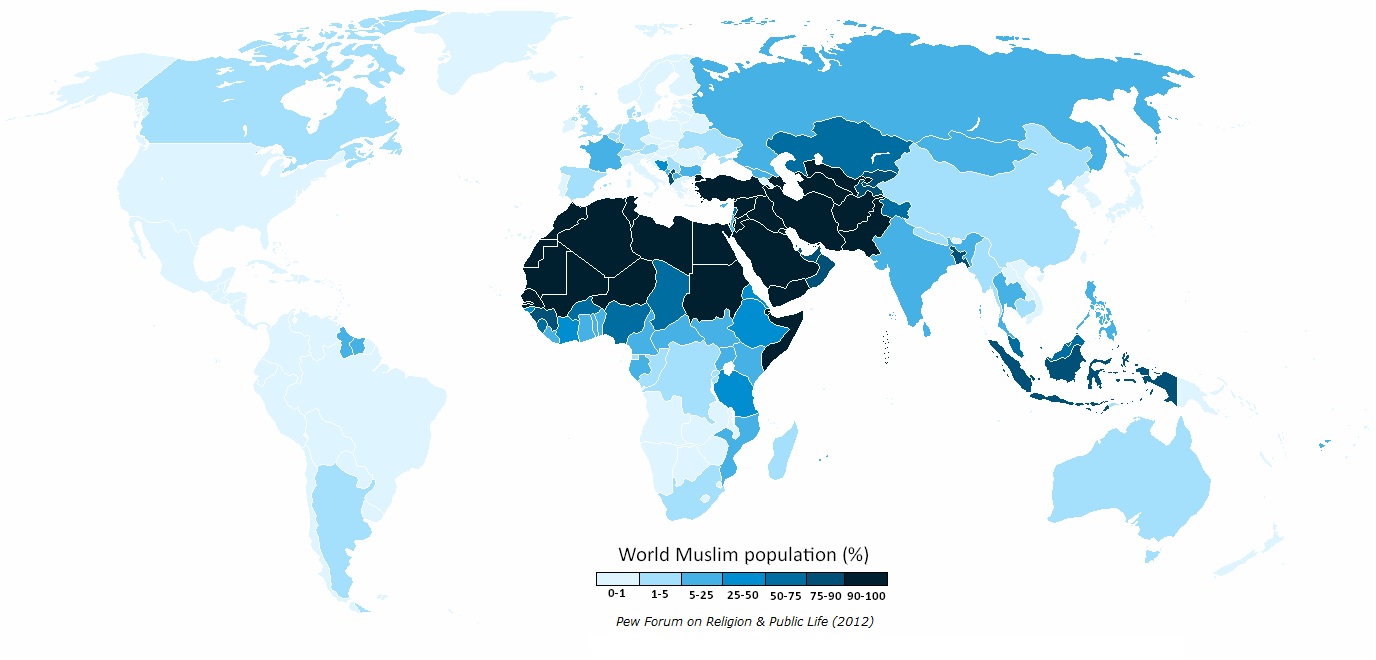
14) Where are most Muslims located in the world today?
15) What caused the division between the Sunni Muslims and the Shia Muslims?
__________________________________________________________________________________________________
Africa Webquest
Directions: Go to Mrs. Carlisle’s African Cultures Webquest page to complete the activity! http://zunal.com/webquest.php?w=218878
World Book Student Data Base
Directions: In the Search Box type in Ashanti / Choose the article titled “Ashanti”
- Where are the Ashanti located?
- What is the trade of the Ashanti?
- How are women viewed in the Ashanti culture?
- What is the significance of the Golden Stool?
Directions: Complete a new search with the word Bantu / Choose the article titled “Bantu”
- Where are the Bantu people found?
- What are some of the best known Bantu groups?
- Explain the Bantu migration.
Directions: Complete a new search with the word Swahili / Choose the article titled “Swahili”
- Who are the Swahili?
- Where are the Swahili located?
- What religion are Swahili?
- How did the Swahili culture develop?
Exploring Africa: Religions
Directions: Answer the questions by following the directions and links on the webquest.
- Make of list of the characteristics of God in African religions. What are the similarities and differences between how African religions view God and the way the major monotheistic religions (Christianity, Islam, Judaism) view God?
- In your own words, describe the importance of ancestors to African religions and societies.
- According to most African religions, what are the two main causes of disease and misfortune?
- How can people promote security and well-being of themselves, their families and communities?
Directions: Go to Mrs. Carlisle’s African Cultures Webquest page to complete the activity! http://zunal.com/webquest.php?w=218878
World Book Student Data Base
Directions: In the Search Box type in Ashanti / Choose the article titled “Ashanti”- Where are the Ashanti located?
- What is the trade of the Ashanti?
- How are women viewed in the Ashanti culture?
- What is the significance of the Golden Stool?
Directions: Complete a new search with the word Bantu / Choose the article titled “Bantu”
- Where are the Bantu people found?
- What are some of the best known Bantu groups?
- Explain the Bantu migration.
Directions: Complete a new search with the word Swahili / Choose the article titled “Swahili”
- Who are the Swahili?
- Where are the Swahili located?
- What religion are Swahili?
- How did the Swahili culture develop?
Exploring Africa: Religions
Directions: Answer the questions by following the directions and links on the webquest.
- Make of list of the characteristics of God in African religions. What are the similarities and differences between how African religions view God and the way the major monotheistic religions (Christianity, Islam, Judaism) view God?
- In your own words, describe the importance of ancestors to African religions and societies.
- According to most African religions, what are the two main causes of disease and misfortune?
- How can people promote security and well-being of themselves, their families and communities?
S&E Asia Webquest -created by Ms. Ellington
|
|||


|
|
|||