
Introduction
PREPARE ELECTRICAL SUPPLIES, MATERIALS AND TOOLS
Electrical task can be accomplished systematically to save time, effort, and resources. Most of the work cannot be done using bare hands. To do the task, electrical tools or equipment are needed to perform the job. This lesson will discuss the function/use of each tool or equipment used in electrical wiring installation.
Activity 1: I CHALENGE YOU!
Identify the following pictures.
|
E_E_T__I_ _R_L_ |
_R_N_E_ |
|
S_RE_D__V__R |
L__D_R |
/GettyImages-713840367-99d913591a6b45eba4111eefc0dbac7e.jpg)


Task
At the end of the lesson, the students should be able to:
- identify electrical supplies, materials, and tools needed in electrical wiring installation.
Process
ELECTRICAL TOOL AND EQUIPMENT
The following are common Electrical tools and equipment needed in the installation of electrical wiring.
a. SCREW DRIVERS
These tools are made of steel hardened and tempered at he tip used to loosen or tighten screws with slotted heads. They come in various sizes and shapes.
Types of Screwdriver
- Flat head (slotted head) screwdriver
- Phillips Screwdriver
- Pozidriv Screwdriver
- Robertson or Square Screwdriver
- Torx Screwdriver
- Hex Screwdriver
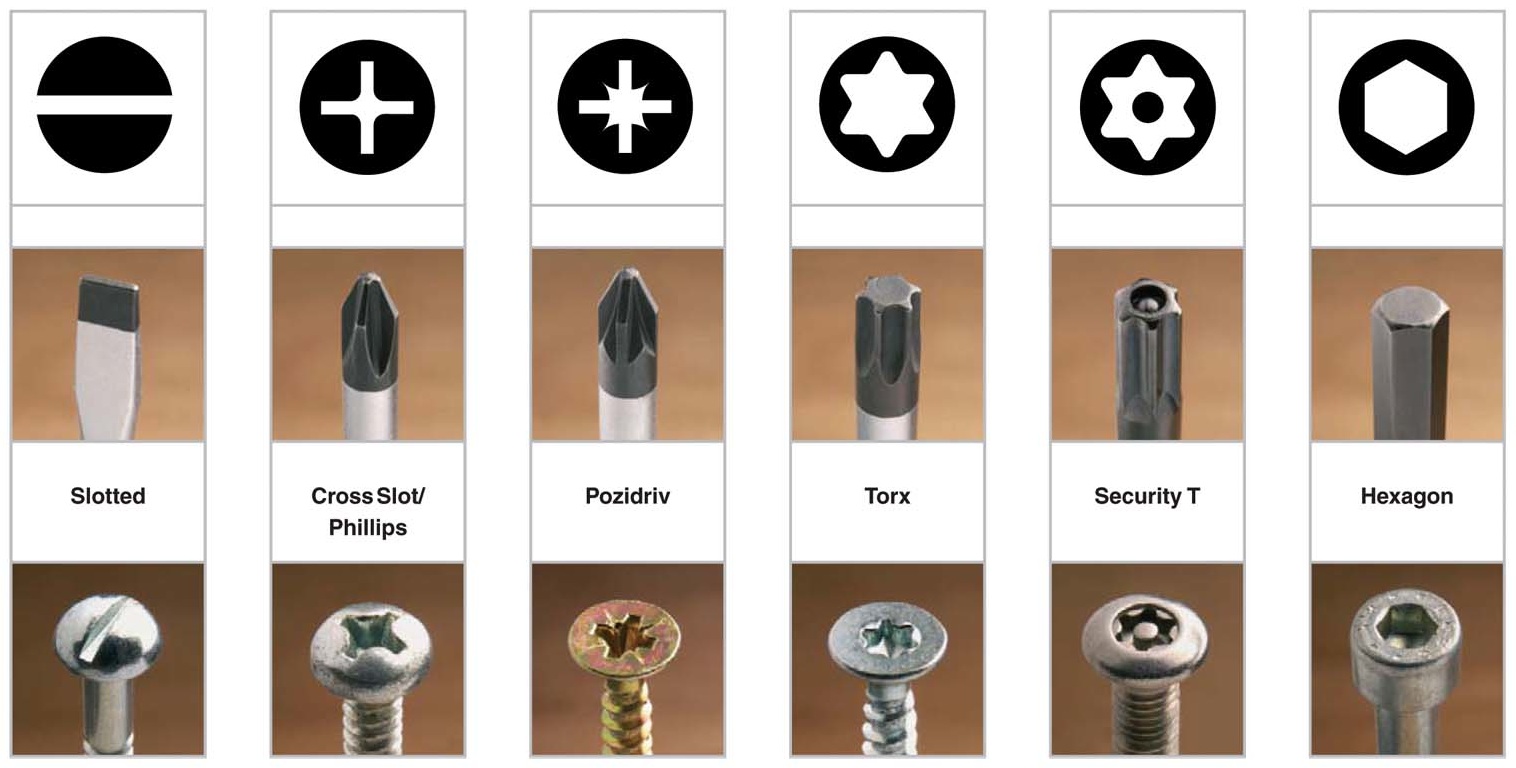
1. Flat Head (or Slotted Head) Screwdriver
It is one of the oldest types of screwdriver. It was invented in the 15th century in Europe and one of the most common types of Screwdriver. As the name suggest it has a flat shape shaft tip with a single slot which engages with the slotted screw head only. It can be manual driven or power driven, but not often power driven because slotted head has ‘cam- out effect’.
2. Phillips (or Cross Slot) Screwdriver
As today’s world is moving from a manual driven to power or motor driven, these were the first step towards power driven screwdrivers to save time and do things more precisely and accurately. These were invented in 19th century by Henry Phillips with an aim to introduce the power driven screwdrivers in most of the industries. When you see these screwdrivers from the front, the tip looks like a cross sign. These types of screwdrivers also shows cam- out effect but it does purposely when the torque exceeds a limit while tightening up of screw which resist the damage of screwdriver profile and screw and clearly extends the life of the tool.
3. Pozidriv Screwdriver
The pozidriv screwdriver, unlike Phillips screwdriver, has two cross sign which are offset at 45 degree angles. These are designed and widely used in Europe. This shape doesn’t completely overcome the cam-out effect but provide better resistance to slipping and offer more stability than Phillip profile, therefore used for the applications which require high torque for tightening of screw.
4. Robertson or Square Screwdriver
The square screwdriver also known as Robertson screwdriver, named after a Canadian inventor. The engagement of quite tapered square shape opening screw with the square protrusion, with no angle involved, neglects the cam-out effect, thus improve centering. Slight Taper shape at the front of the tool provides a good locking with the screw and thus makes it more comfortable for use. These screwdrivers types were first used for industrial purpose by ford motor company, because these drivers speed up the production, reduce damages, and highly reliable. These are very famous in USA and Canada.
5. Torx Screwdriver
Torx screwdriver is becoming very common and often used by automotive technicians. Many times they are called as star tips by technician. This driver has a star shape tip with 6 rounded lobes. Because of the circular geometry of the lobes there is low radial force in a torx screwdriver, which increases the life of the screw and the screwdriver bit. Unlike Phillips or pozidriv screwdrivers, much higher torque can be transferred with the same amount of force with no chance of tool slipping, even at high driving speed power tools, which makes its more reliable to use. Torx types of screwdrivers comes in variety of sizes and uses a number system to determine the size of the tip like T8, T10, T15, T25 etc.as the number goes up, size of the tool tip increases.
6. Hex Screwdriver or Hexagon Screwdriver
It has six straight lobes, like hexagon. These are used to fasten often bolts rather than screws. You must have seen these bits in your ratchet box for tightening up or loosing hex bolts, nuts and screws. No slipping or cam- out effect takes place while driving this hence most of the power driver tools can be fitted with hex arrangement bits and thus makes the production fast and with less error.
b. HAMMER
Hammers come in a wide array of weights and sizes, each designed for a specific task. There are hammers for blacksmithing, carpentry, automotive mechanics and many other applications. Using a hammer that isn't intended for the task can require more effort, possible injury or even damage to work surfaces and fasteners. So if you don't already, it's good practice to have a collection of hammers in your shop rather than improvising with a limited set.
Types of Hammer
- Claw Hammer
- Ballpeen Hammer
- Mallet
1. Claw and Framing Hammer
While these hammers all feature a round head for driving nails, the claw end is every bit as useful for prying, splitting wood, tearing drywall and other small demolition tasks. The claw is curved on a claw hammer, and straight on framing hammers.
These hammers are best for: Woodworking, Prying, Finishing, Framing, Splitting and Small demolition.
2. Ball peen Hammer
The ball peen hammer was originally designed for peening, or shaping metal materials by hammering. One end of the head is ball-shaped for this purpose. The other end is flat and is used for driving.
Ball peen hammers are best for: Metalworking, Rounding edges, punching and riveting.
3. Mallet
A mallet is a block on a handle, which is usually used for driving chisels. The head on a rubber mallet is made of rubber. These types of hammers deliver softer impact than hammers with metal heads. They are essential if your work needs to be free of impact marks.
Mallets are best for: Shaping metal, Fitting wooden parts and Plaster board.
c. PLIERS
Pliers are an essential tool for both tradesman and DIY enthusiasts, but like every tool, actually deciding which ones you need can be a real problem – especially if you’re not in the trade. Pliers are used for a wide range of purposes. From cutting and shaping wires to gripping bolts, removing nails and more, you’ll find that there’s a plier for every job.
Types of Pliers
- Combination Pliers
- Side cutting Pliers
- Long nose Pliers
COMBINATION PLIERS
The ideal tool for the DIY user but still a popular choice amongst professionals, combination pliers combine attributes from a number of other pliers, like the ability to cut, crimp, strip, pull and twist. Though they’re less specialized, they often feature the attributes required to effectively do a number of jobs.
SIDE CUTTING PLIERS
Proper use of side cutting (lineman's) pliers: Many applications including electrical, communications and construction work. Use to grip, splice or cut wires, and strip insulation.
LONG NOSE PLIERS
Long-nose or needle-nose pliers are ideal for working in tight spaces and are ideal for a wide range of tasks, from Jewelry work to cutting small-gauge wire. They feature long, slender jaws with a pointed tip which makes it easy for the pliers to reach small spaces.
d. WIRE STRIPPER
A wire stripper is a small hand-held tool that is used to remove the insulation from electric wires. These portable hand-held tools are extremely popular among electricians and even DIYers for removing the insulation in order to replace or repair the wire.
e. PORTABLE ELECTRIC DRILL
Used primarily for boring holes in nearly all materials, the electric drill can also be used for a variety of other tasks, facilitated by a number of accessories and attachments. These include sanding, screw driving, grinding, and mixing paint to name but a few.
f. HACKSAW
A hacksaw is a type of hand tool designed specifically for cutting through materials such as plastic, steel, and other metals. They are a variant of the traditional hand saw, typically used for cutting wood, and have become a staple tool for professionals and hobbyists alike.
ELECTRICAL SUPPLIES AND MATERIALS
Electrical materials- Are developed and constructed for a special purpose.
a. Convenience Outlet
A convenience outlet is a common in wall electrical receptacle, which delivers power to devices which are plugged into the convenience outlet.
b. Male plug
it is a type of connector with one or more uncovered or exposed pieces of conductor which can be inserted into a female connector to ensure a physical connection. A male connector is also called a plug, and it is used for establishing an electrical or data connection between two devices.
c. Lamp holder (Receptacle)
A lamp holder is used to secure the bulb in a fitting, a fundamental element of most fixtures which also provides the circuit.
d. Switch
A switch is defined as a device that is used for making and breaking of electric current in a circuit. It is used to turn on and turn off daily used equipment like television, washing machine, fan, light, etc. A switch can be used in series and parallel circuits.
e. Fuse
The fuse breaks the circuit if a fault in an appliance causes too much current to flow. This protects the wiring and the appliance if something goes wrong. The fuse contains a piece of wire that melts easily. If the current going through the fuse is too great, the wire heats up until it melts and breaks the circuit.
f. Circuit Breaker
it is a protective device used to automatically blows and cuts the current when trouble in the circuit such as short circuit or overload occurs.
g. Junction Box
an octagonal shaped electrical material where the connections or joints of wires are being done.
h. Utility Box
a rectangular shaped metallic or plastic PVC materials in which flush type convenience outlet and switch are attached.
To see why we need to know the different tools materials and equipment here's some classification:
Evaluation
How much have you learned?
Show that you learned something in this lesson by doing this applications.
Application 1: Identification
Identify each of the following tools/materials. You only have 1 minute to answer each questions below.
https://quizizz.com/admin/quiz/621f13eeef2f2b001d5986e2
Application 2: Video Presentation
Make at least 3-5 minutes video showing or presenting the proper use of six (6) Screwdriver that we discuss.
Credits
References:
K to 12 Electrical Learning module from SlideShare retrieved from: https://www.slideshare.net/kenjoyb/k-to-12-electrical-learning-module?next_slideshow=23077254
Different types of pliers and their uses retrieved from: https://www.mad4tools.com/blog/the-types-of-pliers-and-their-uses/
Different types of Hammers and their uses retrieved from: https://www.grainger.com/know-how/equipment-information/kh-types-of-hammers
Different types of screwdrivers and their uses retrieved from: https://www.mechanicalbooster.com/2018/05/types-of-screwdrivers.html
Classification of Electrical Tools materials and equipment retrieved from youtube: https://youtu.be/a6ON65x26n8
Electrical supplies and Materials retrieved from youtube: https://www.youtube.com/watch?v=Upax5u65nIU
Electrical tools and Equipment retrieved from youtube: https://www.youtube.com/watch?v=q0RiHVBJC7Y
Teacher Page
This WebQuest materials was prepared for Performance Task3 (Webquest-IBL) on MJTIC207 by Prof. Anabel Sta Cuz- Sollano of CSTC Sariaya, Quezon.
Prepared by: Jorine B. Remo (BTVTED-ET2)