
Introduction
The Pilgrim Journey
Have you ever felt like there are some rules that aren't fair? The Pilgrims did!
A pilgrim is someone who makes a journey to start a new life in a new place. Imagine you live in the 1600's, in England. The Church of England made laws about how people should pray. People who wanted to pray in a different way were punished. Do you agree with this law? Some people did not think it was fair. They wanted religious freedom.

Praying in secret.
___________________________________________________________________________________________________________________
Can you imagine leaving your home and moving across the ocean? The Pilgrims did!
In 1620, the pilgrims set sail for North America. Some wanted freedom of religion. Some wanted good jobs. Everyone wanted a better life. They left their homes behind to sail across the ocean to "the new world".

The Pilgrims chose to leave their homes and journey to North America for a better life. (Haywood, n.d.)
Task
It is time to step into the shoes of a pilgrim in 1620!
Soon, you'll be given a pilgrim journal which you will carry with you across the ocean. Each page will take you further along your journey. As you travel, use the prompts in your journal to describe your life as a pilgrim.
You will explore:
- reliable sources
- why the Pilgrims left home
- what they brought with them
- life on the journey
- life in the new world
- the Native Americans' experience
Good luck on your journey!

Process
Before You Begin
A reliable source has facts we can trust. Not all the facts on the internet are true. Some come from unreliable sources and have mistakes or incorrect information.
Do you think that kindergarteners are a reliable source of information about pilgrims? Will they give you facts you can trust? Watch the video below. Does it have any mistakes or incorrect information?
Click Here to listen to Kindergarteners give facts about Pilgrims.
Turn and talk with a partner about this video. When you are ready, give the teacher a thumbs up or thumbs down.


Thumb Up Thumb Down
Kindergarteners are reliable sources. Kindergarteners are unreliable
They can be trusted to give ONLY sources because they might make
true facts about pilgrims. mistakes or give incorrect information.
Use the information below to help you write in your pilgrim journal. As you explore, make sure you are staying on pages that give true facts about the pilgrim journey.
___________________________________________________________________________________________________________________
Journal Prompt 1
Describe why you are leaving and what you will bring.
Why did the Pilgrims leave England?
Why did the Pilgrims make this journey? (song)
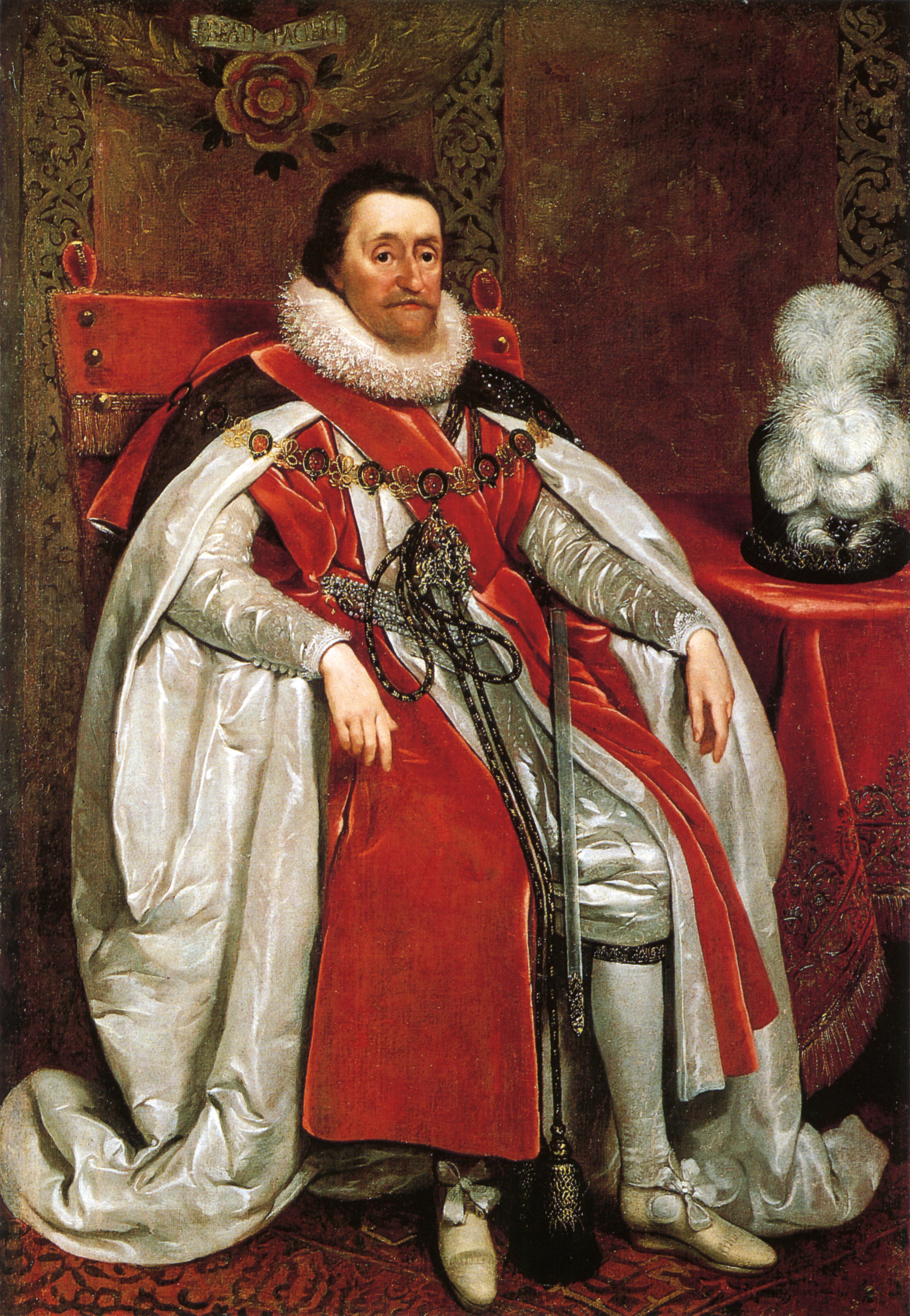
James I, King Of England in 1620 (Mytens, 1621)
___________________________________________________________________________________________________________________
Journal Prompt 2
What do you see, hear, smell, feel and taste on the ship?

'tween decks
___________________________________________________________________________________________________________________
Journal Prompt 3
Describe the journey to the new world.
Read about the journey on Epic
Read a letter written by a real pilgrim on the Mayflower.

The crew weathering a storm.
___________________________________________________________________________________________________________________
Journal Prompt 4
Describe life in the new world.
Read a pilgrim's letter about arriving in Plymouth.
Explore life on Plymouth Plantation.
Learn about the first Thanksgiving feast.
Read a letter about the feast.
[video:https://youtu.be/u10W7w5YfQ8?t=40s width:420 height:315 align:center]

Plymouth Plantation
___________________________________________________________________________________________________________________
Journal Prompt 5
Describe the lives of the Native Americans.
Letter From a Wampanoag: Harvesting and Preparing for Winter
Letter From a Wampanoag: Will We Live in Peace?
Letter From a Wampanoag: The Feast of the Pilgrims

Evaluation
Reread your journal.
Make sure you have lots of details and that your information is correct.
Then, use the editing checklist below to revise your work.
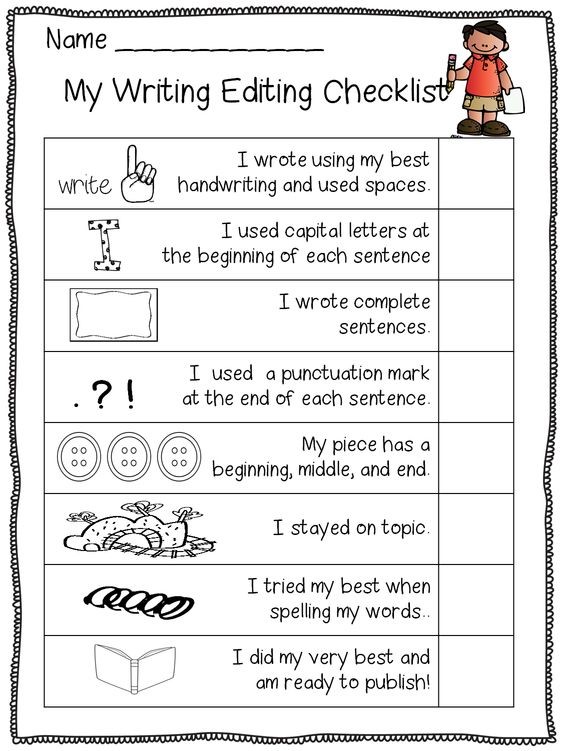
First Grade Wow
Conclusion
You've learned about:
- reliable sources
- why the Pilgrims left home
- what they brought with them
- life on the journey
- life in the new world
- the Native Americans' experience
The Pilgrim's journey happened a very long time ago.
Why do we still talk about it today?
Turn and talk to a partner about this.
We'll have a whole group discussion when everyone is ready.
While you wait, click the painting below to review a summary of the Pilgrim journey.

The First Thanksgiving (Ferris 1923)
Credits
Resources:
Daniel Mytens, Portrait of James V (1621)
ECONEdLINK. No Extra Room On the Mayflower. (n.d.) Accessed Via: http://www.econedlink.org/interactives/EconEdLink-interactive-tool-player.php?filename=em675_dragndrop.swf&lid=675#.TrNoQkoFIts.google
Ferris, J.L.G. Ferris. (1932). The first Thanksgiving 1621
First Grade Wow (n.d.) accessed via :https://www.pinterest.com/pin/426856870907188010/
"Howland Overboard," a painting by maritime artist Mike Haywood. (n.d.) Accessed Via: http://mayflowerhistory.com/howland/
Keengwe, Jared, Grace Onchwari. Early Childhood Education Journal. December 2009. Technology and Early Childhood Education: A Technology Integration Professional Development Model for Practicing Teachers.
Plimouth Plantation Gallery Images. (n.d.) Accessed Via: http://www.pbase.com/sc_20170/plimoth
Plimoth Plantation. Thanksgiving Interactive; You are the Historian. (n.d.) Accessed Via: http://www.plimoth.org/sites/default/files/media/olc/wampanoag.html
Scholastic. Letter From a Pilgrim Child. 1996. Accessed Via: http://www.scholastic.com/scholastic_thanksgiving/letters/Mayflower_letter1.htm
Scholastic. The Mayflower’s Voyage. (n.d.) Accessed Via: http://www.scholastic.com/scholastic_thanksgiving/voyage/
Signing the Mayflower Compact 1620, a painting by Jean Leon Gerome Ferris 1899
Scholastic. The First Thanksgiving. (n.d.) Accessed Via: http://www.scholastic.com/scholastic_thanksgiving/
The History Channel. The Mayflower Video. (n.d.) http://www.history.com/topics/mayflower/videos/the-mayflower
The History Channel. Kids History: The First Thanksgiving. Accessed Via: http://www.history.com/topics/mayflower/videos/the-mayflower
Teacher Page
Standards Addressed
Connecitcut Common Core State Standards
CCSS.ELA-Literacy.W.2.3
Write narratives in which they recount a well-elaborated event or short sequence of events, include details to describe actions, thoughts, and feelings, use temporal words to signal event order, and provide a sense of closure.
Participate in shared research and writing projects (e.g., read a number of books on a single topic to produce a report; record science observations).
Recall information from experiences or gather information from provided sources to answer a question.
2.3 Create various forms of written work to demonstrate an understanding of history and social studies issues.
Evaluation
The Pilgrim Journal will be evaluated using the rubric below which is a hyrbid version of the Second Grade Scoring Rubrics For Informational and Narrative writing by Lucky Calkins and Colleagues from The Teachers College Reading and Writing Project. (2013)
Scoring Tips:
Lucky Calkins Reading and Writing Project has developed a writing program called The Units of Study. The scoring checklists in that program have been modified for this webquest. The procedure for using the rubric will remain as explained in the Units of Study's Rubrics book. Their process is also briefly outlined here.
See Lucy Calkin's Units of Study Rubrics for scoring protocol. Then, use the Lucy Calkins chart to convert these points to a scaled score.
[img_assist|nid=38320|title=rubric|desc=|link=none|align=left|width=640|height=428]
[img_assist|nid=38319|title=final line|desc=|link=none|align=left|width=640|height=105]
[img_assist|nid=38318|title=scaled score|desc=|link=none|align=left|width=399|height=178]
Scaled Score:
1- Emerging Skills
2- Developing Toward Expectations
3- Meeting Expectations
4- Exceeding Expectations