
Introduction
Owls are a Raptors. The word “raptor” means “to seize or grasp” in Latin. Raptors use their powerful, sharp talons to capture their prey and to defend themselves. Eagles, hawks, kites, falcons, and owls are all considered raptors.
Owls usually live and hunt alone. Some owls can see well enough in sunlight to hunt by day as well as by night; however, the majority of owl species hunt for food at night. Most night-hunting owls have keen vision in the dark; however, some have such sensitive hearing that they rely very little on vision. These owls locate and catch mice, voles, and other small mammals in total darkness by listening to the rustling noise the animals make running through the forest. Owls eat mostly mammals. The larger owls catch rabbits and squirrels, and the smaller ones catch mice, rats, and shrews. Some owls also hunt a few birds and insects; others have been known to take fish from shallow waters. Like hawks, owls tear large prey into pieces when they eat it. If the prey is small enough, they swallow it whole. They later cough up pellets of undigested bones, fur, scales, and feathers. These owl pellets are found under their nests and roosting areas.
There are about 145 different species of owls. They are found throughout the tropical, temperate, and subarctic regions of the world and on many oceanic islands. The smallest species is the tiny elf owl, measuring about 6 inches (15 centimeters) long, that lives in Southwestern United States and western Mexico. The largest species is the great gray owl that lives deep in woods of Canada and Alaska as far north as trees grow. Gray owls grow to about 30 inches (76 centimeters) long and have a wingspread of 54 to 60 inches (137 to 152 centimeters).
Task
You will complete a graphic organizer and create an owl identification sign/ plaque including a picture and at least 5 facts.
Process
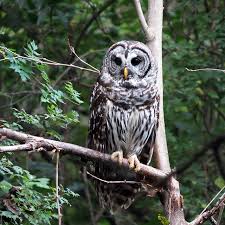
STEP 1
- Choose an owl to research
- Use the graphic organizer to record your notes on your owls.
The Burrowing Owl
|
Link 1
Link 2
Link 3
Link 4
|

The Great Horned Owl
The Barn Owl
|
Link 1
Link 2
Link 3
Link 1
Link 2
Link 3
Link 4
|


The Elf Owl
|
Link 1
Link 2
Link 3
|

The Snow Owl
|
Link 1
Link 2
Link 3 |

STEP 2
Your graphic organizer has extra blanks for you to add additional information you think is important. Make certain that you find all the information in your organizer and answer the questions completely.
STEP 3
It is time to create your animal identification sign/plaque about your owl. Your sign/plaque should include a picture and at least 5 accurate details and facts.
Evaluation
Rubric: To receive a "3" (I did what you asked of me) you must turn in your completed graphic organizer and your sign/plaque must include a picture and 5 accurate facts/details.
(Remember, "I did all you asked and more, that is why I got a "4")
Conclusion
Culmunating Project 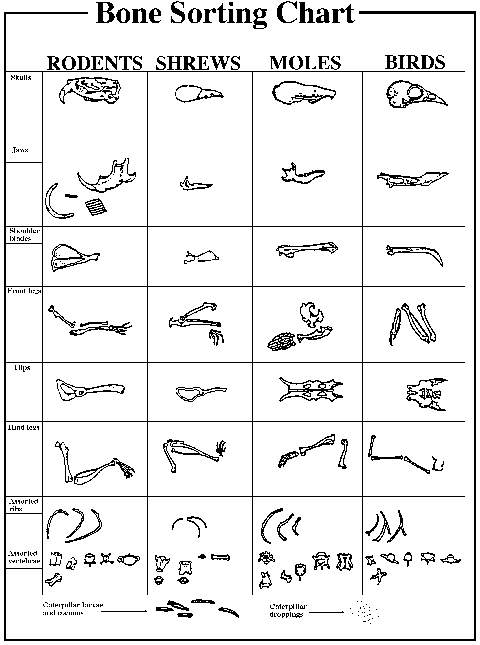
Owl Pellet Dissection.
We will finish our study of owls by dissecting an actual owl pellet. You will first dissect a virtual owl pellet and then dissect an actual owl pellet.
Use the following link to complete the virtual dissection. Virtual Owl Pellet
Credits
The information for this Webquest was obtained from: