
Introduction
Welcome, grade 3 students! Today marks the beginning of our captivating journey into a key mathematical concept – ODD and EVEN NUMBERS!
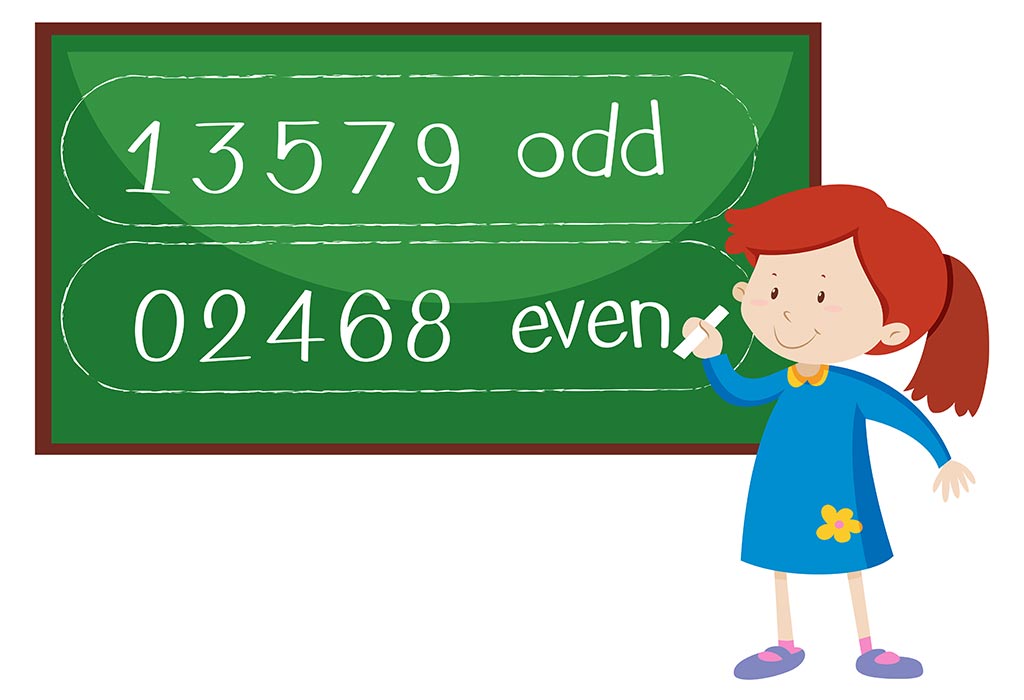
Have you ever pondered why numbers are sorted into these distinct categories? Prepare yourselves for an adventure where we untangle the secrets behind these numerical patterns.
To kick things off, let's consider a straightforward question: When you observe a group of numbers, what catches your eye? Some numbers appear to have partners, while others stand independently. In our session today, we'll master the art of discerning between these numerical companions and lone figures.
Task
TASK 1:
- Participate in a sing-along session while the song "The Even and Odd Song" is being played.
TASK 2:
- Watch a YouTube video explaining odd and even numbers.
TASK 3:
- Participate in an interactive activity to review counting and identifying odd and even numbers.
TASK 4:
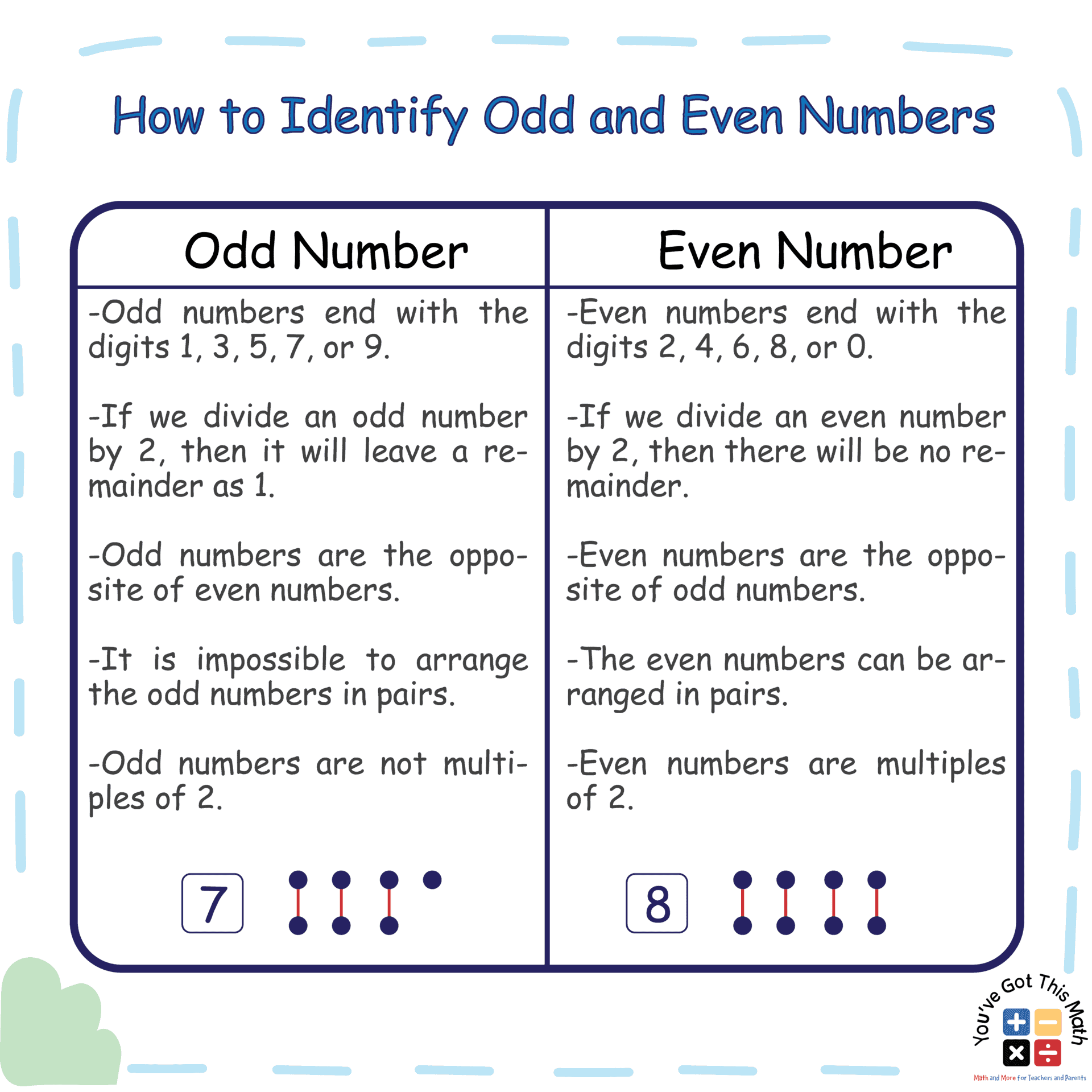
- Examine a chart to comprehend the guidelines for explaining odd and even numbers.
TASK 5:
- Demonstrate understanding through a game of "Odd and Even Number Bingo" in groups.
TASK 6:
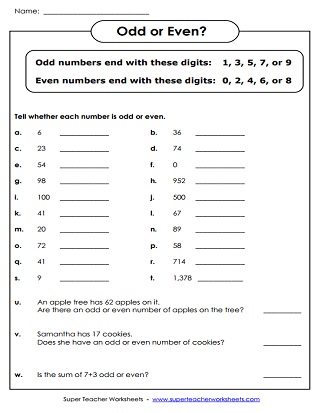
- Complete a worksheet activity.
TASK 7:
- Complete a QUIZZES extended activity online.
Process
Term 1
Teacher's Name: Ms. Gordon
School: Blossom Primary
Subject: Mathematics
Grade: 3
Date: November 20, 2023
Duration: 60 minutes
Topic: Understanding Odd and Even Numbers
Focus Question: How can we differentiate between odd and even numbers?
Attainment Target: By the end of the lesson, students should be able to differentiate between odd and even numbers and apply this knowledge in simple scenarios.
Benchmarks:
- Recognize odd and even numbers up to 100.
- Demonstrate the ability to categorize numbers as odd or even.
Prior Learning: Students are expected to have basic number recognition skills and an understanding of counting up to 100.
Specific Objectives:
- Cognitive: Identify and classify numbers as odd or even.
- Psychomotor: Engage in hands-on activities to reinforce understanding.
- Affective: Develop confidence in recognizing and distinguishing between odd and even numbers.
Key Skills:
- Number recognition
- Classification
- Logical reasoning
Key Vocabulary:
- Odd numbers
- Even numbers
- Categorize
- Patterns
Materials/Resources:
- Number cards
- Whiteboard and markers
- Bingo chart
- Laptop
- Projector
- Speaker
- Tablet
- Chart
- Youtube Video
- Worksheet
- Interactive online games
Learning Outcome: Students will successfully differentiate between odd and even numbers through engaging activities.
Assessment Criteria: Students will be assessed based on their participation in class discussions, completion of activities, and ability to correctly categorize numbers as odd or even.
Differentiation Strategies to Meet Diverse Needs:
- Provide additional support for struggling students through one-on-one assistance during activities.
- Enrichment activities for advanced learners, such as exploring patterns in larger numbers or real-life examples.
Procedures/Activities:
ENGAGEMENT:
- To begin the lesson a song titled "The Even and Odd Song" will be played as a way of introducing the topic for the day.
- Students will be asked to guess the topic from the song they heard.
- Students will then recall what they remember about odd and even numbers.
EXPLORE:
- To further explore the content, a YouTube video will be shown explaining what is odd and even numbers.
- After watching the video, a quick interactive warm-up activity to review counting and identifying numbers will be done.
- Distribute number cards to each student in the class.
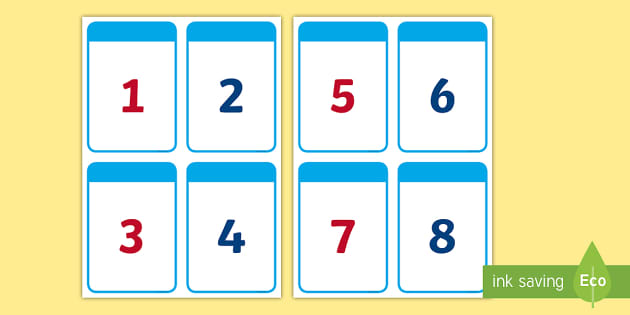
- Have students stand up, and call out numbers. Students must determine whether the number is odd or even and sit down accordingly.
- Facilitate a class discussion about how they made their decisions.
EXPLAIN:
- Guide students in understanding the rules for identifying odd and even numbers. This procedure will be facilitated by the use of a chart.
- Students will demonstrate their understanding by playing a game of "Odd and Even Number Bingo" in groups.
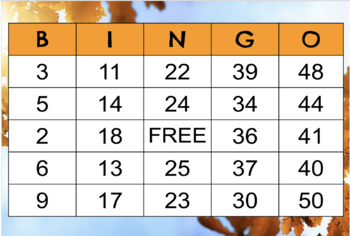
- The bingo cards will be distributed to each group of students.
- Explain the rules of the game: the teacher will call out a number, and students need to identify if it is odd or even. If they have the number on their bingo card, they can mark it.
- Start calling out numbers randomly, giving students enough time to determine if it is odd or even, and mark their cards accordingly.
- The first student to have a complete row (horizontally, vertically, or diagonally) of marked numbers should call out "Bingo!"
- Verify the winning card, and then continue playing additional rounds if time permits or until all students have had an opportunity to win.
- The teacher will demonstrate and model this activity initially.
ELABORATE:
- The teacher will delve deeper into elucidating the significance of understanding even and odd numbers in the context of fundamental arithmetic operations such as addition, subtraction, multiplication, and division.

Evaluation
EVALUATION:
- To culminate the lesson, students will engage in an activity where they apply and solidify their comprehension of the covered content by completing a worksheet.
Extended Activity:
Conclusion
The activities outlined aim to make grade 3 students competent in understanding and applying odd and even numbers, emphasizing their relevance in addition, subtraction, division, and multiplication. The learning approach is interactive, incorporating hands-on tasks and electronic devices like tablets. Students will engage in interactive games, fostering creativity and critical thinking, and ensuring adaptability for diverse abilities. The activities are carefully tailored to the age group, encouraging active participation and offering follow-on tasks for advanced learners while maintaining accessibility for all students. Overall, the goal is to create an engaging and comprehensive learning experience that goes beyond rote memorization.
❌ Photo unavailable
Credits
-
Even and Odd Numbers - Math for Kids. (n.d.). Www.youtube.com. https://www.youtube.com/watch?v=eF_FxSW8QwY
-
Even and Odd song. (n.d.). Www.youtube.com. https://www.youtube.com/watch?v=L6Sz5matzYI
-
Odd or Even? (n.d.). https://www.superteacherworksheets.com/even-odd/even-odd_TWQDM.pdf
-
Odd and Even Numbers | 102 plays | Quizizz. (n.d.). Quizizz.com. Retrieved December 16, 2023, from https://quizizz.com/admin/quiz/5d8d2afd2037f3001a0b455e/odd-and-even-nu…
-
Google Images
Teacher Page
The objective of this WebQuest is to reinforce the understanding of odd and even numbers, through a variety of interesting activities.
The inclusion of “The Even and Odd Song,” will immediately catch students’ attention and set a positive tone for the class. Followed by a YouTube video and a warm-up exercise involving number cards, both of which provide different ways for students to fully understand the concept.
Another instance is game-based learning such as the “Odd and Even Number Bingo” which works well in getting students engaged in the teaching and learning. It will help not only in reinforcing what has been learned but also encourage cooperation between learners as well as healthy competition among them thereby improving on their overall experience in class.
Moreover, inclusion of online quizzes into lesson showed how technology could be easily incorporated without any noticeable hitches. This enabled teachers not only to assess their students individually but also gave them an opportunity use modern methods while assessing students’ level of comprehension.
In summary, this WebQuest has been meticulously organized to provide learners with a comprehensive and enjoyable experience. It incorporates a variety of activities that cater to diverse learner preferences. Whether it's listening to the song, watching videos, engaging in hands-on practical work with objects, or participating in group discussions, each activity contributes to a thorough comprehension and identification of odd and even numbers.