
Introduction
by: Michelle S. Lecaros, Bicol University College of Education
Developmental psychology focuses on human growth throughout the lifespan. Childhood is obviously a time of tremendous change, but people also continue to grow and develop during the early adult, middle age, and senior years. In this section, learn more about topics including child development, intellectual development, cognitive development, and the aging process.
Learn about developmental psychology through theories developed by Erik Erikson, Lawrence Kohlberg and Jean Piaget. Apply these theories to a popular figure in the media, setting the character into appropriate stages of each theory based on critical analysis of the character.
Did you know that people develop in different ways throughout their ENTIRE lives? Now is your chance to find out what some of these ways are. By learning about four very important psychologists, you will discover various types of development and how they pertain to different stages of life. Then you will have the chance to become a psychologist, as you analyze your favorite media figure! Happy development!
Task

Express your understanding of the psychological theories of development discovered by Erik Erikson, Lawrence Kohlberg and Jean Piaget.
Process

OUTLINE
* First you will research back ground information on the three psychological figures of focus: Erik Erikson, Lawrence Kohlberg and Jean Piaget. With this information you will create three bibliographical paragraphs by answering the provided questions.
* Next you will research the developmental theories of each psychologist, and compose a table demonstrating these ideas.
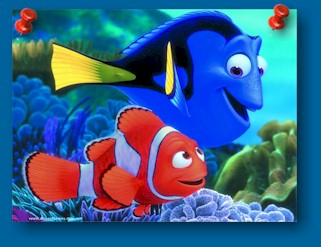
* Finally you will choose a character from the media. In my example, I chose NEMO. You will analyze this character and place him or her into particular stages of each developmental theory, giving examples to support your claim throughout your work. You may do this in essay, power point, or table form.
BIBLIOGRAPHICAL INFORMATION
* Use the following links to find the answers to the questions below for EACH psychologist. Answer the questions in paragraph form using Microsoft Word or another word processing program. Make sure that you do NOT plagiarize. If you do choose to borrow direct lines from the information provided, cite your sources.
1. What is this character's name?
2. When was this character born?
3. During what year/decade this is person create their developmental theory?
4. What is their developmental theory called?
DEVELOPMENTAL THEORIES
* Use the links above (the same you used for the bibliographical information) and the links below to learn about the three developmental theories. Create a table demonstrating the stages of each theory. Use Microsoft Word's table feature to complete this task, and do so underneath your three bibliographical paragraphs.
MEDIA PROJECT
* Choose a media figure (i.e. NEMO) and apply theories from each of the three psychologists to this character. Choose which way you would like to present the information: essay format, power point, table.
Evaluation
Evaluation
|
Beginning 1 |
Developing 2 |
Accomplished 3 |
Exemplary 4 |
Score |
|
|
Question Answers |
Not all questions were answered, and the answers that were given were consise. |
Not all questions were answered, but the questions that were answered were answered thoroughly. |
All questions were answered, but in a consise manner. |
All questions were answered in a thorough manner. |
|
|
Task Completion |
Not all tasks were completed, and those that were completed were not done within the specified guidelines. |
Not all tasks were completed, but those that were completed were done within the specified guidelines. |
All tasks were completed, but not according to the specified guidelines. |
All tasks were completed according to the specified guidelines. |
|
|
Character Analysis |
The analysis was generic, and all elements did not fit appropriately into the three psychological theories of developement. |
The analysis was creative, but all alements did not fit appropriately into the three psychological theories of development. |
The analysis was generic, but all elements fit appropriately into the three psychological theories of development. |
The analysis was creative, and all elements fit appropriatley into the three psychological theories of development. |
Conclusion
Great job! As you have now learned, developmental psychology means different things to different people. Erik Erikson, Lawrence Kohlberg and Jean Piaget each came up with unique developmental theories that still pertain to psychological analysis today. I hope you had a wonderful time stepping into the shoes of a psychologist as you analyzed your media figure. If you would like to test your knowledge on the subject, you can follow the links below to a few short quizzes. Happy development!
Credits
Wikipedia the Free Encyclopedia http://www.wikipedia.org/
About.com http://www.about.com/
Learning Place Online http://www.learningplaceonline.com/stages/organize/Erikson.htm
Understanding http://www.funderstanding.com/piaget.cfm
Permissions
we all benefit by being generous with our work. Permission is granted for others to use and modify this Web Quest for educational, non-commercial purposes as long as the original authorship is credited. The modified Web Quest may be shared only under the same conditions. See the Creative Commons Attribution • Non-Commercial• Share-Alike license for details.
Teacher Page
Developmental psychology examines issues such as the extent of development through gradual accumulation of knowledge versus stage-like development--and the extent to which children are born with innate mental structures, versus learning through experience.