
Introduction
You are about to explore the Latin American Revolutions! Follow the Direc
tions of Each Task and fill out your handout as you go!

Task
Task #2: Haiti... A success?
Directions: Watch the video from the link below and answer the questions on your handout.
http://www.choices.edu/resources/scholarsonline/bogues/tb13.php
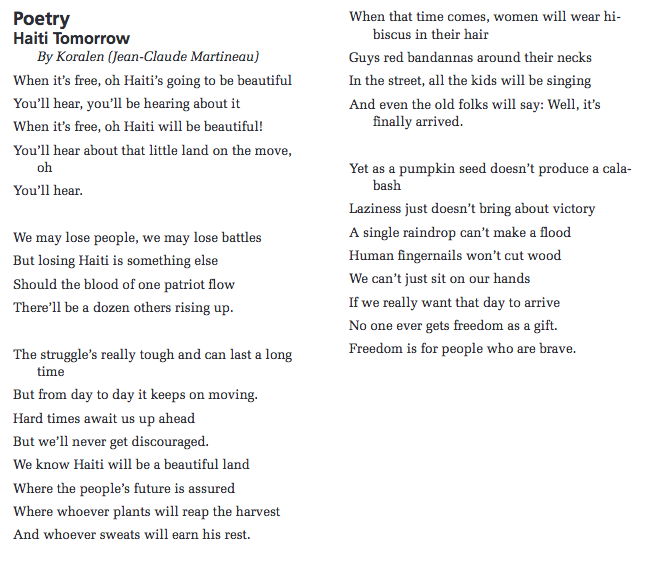
Task #3: A Haitian Poem
Directions: Read the poem below then answer the questions on your handout.
Task #4: Social Classes in Latin America
Directions: Read about the social classes below and then complete the chart on your handout. One is created for you. Once you have completed your chart answer the questions provided below your handout.
Latin American Class System, 1700s
The class system was very important in Latin America. It determined a peoples place in society. Many countries lived by this system for many hundreds of years. The Spanish colonies in Latin America were no different.
In the Latin American colonies, individuals that were born in Spain and then moved to the Americas were in the highest class. Spaniards only made up two percent of the population, but had most of the power and ran the government. They were a very powerful group.
Creoles were next in line. They were individuals that were born in the Americas, but had parents or ancestors that had been born in Spain. Even though Creoles were not mixed with another race they had less power than the Spaniards and could not hold government office. They were eighteen percent of the population.
Thirty percent of the population was made up of Mestizos. They were part Native and part Spanish; they worked as craftspeople, shop owners, managers in mines or on plantations and sometime held minor positions in the church. The Mestizos lived better than the Indians or slaves, but had little opportunity for improving their lives.
Natives were people that were originally from the area in Latin America. Although Natives made up the largest part of the population, forty-five percent, most were poor and had few rights. They worked in mines and on plantations, but many still lived in the mountains, forests and jungles, having little to do with the colonies.
Finally the most oppressed, least powerful group of all were the slaves. These were Africans that had been brought, by the Spanish, to the Americas starting in the early 1500s. They made up the remaining five percent of the population. The lower three classes made up the majority of the population, but they were the poorest, least educated and oppressed. Throughout all of the colonies in Latin America the Europeans were at the top of the ladder and the Natives and African were at the bottom.
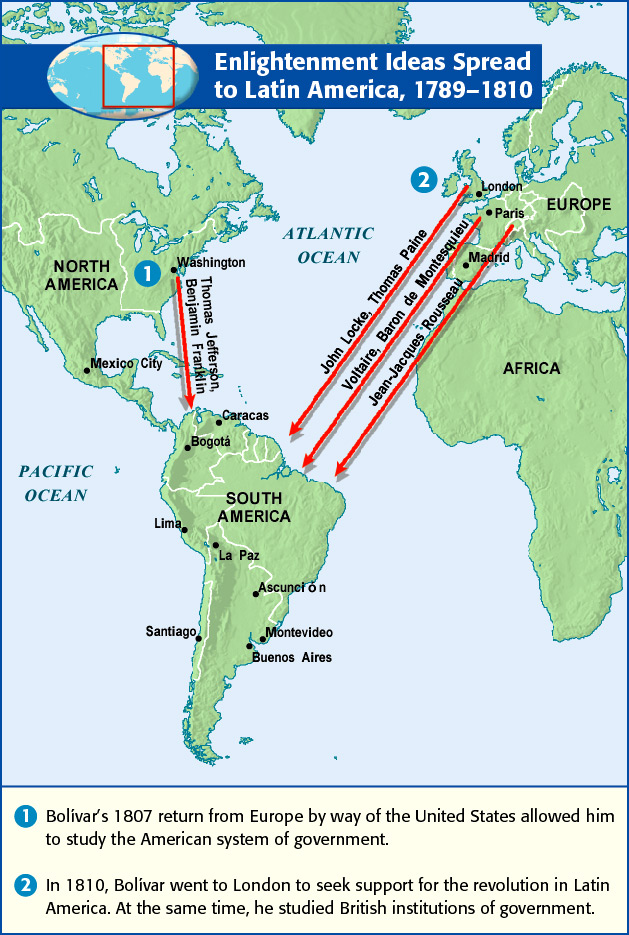
Task 5: Enlightenment Thinkers and Other Revolutions
Directions: Using the map below complete the tasks on your handout.
<b><b>
Task #6: Weakening of Spain due to Napoleon
Directions: Use the reading below and the sentence starters that follow to answer the question using ACE.
For the angry Creoles, opportunity came in 1808 to take action. In that year, the armies of Napoleon Bonaparte conquered Spain. His brother, Joseph Bonaparte, became king of Spain. The Latin American colonists refused to accept French rule. Revolutions broke out in many parts of Latin America. Even after the Spanish king was restored to the throne in 1814, the revolutions continued. Most colonists did not want to return to the old ways. They wanted independence.
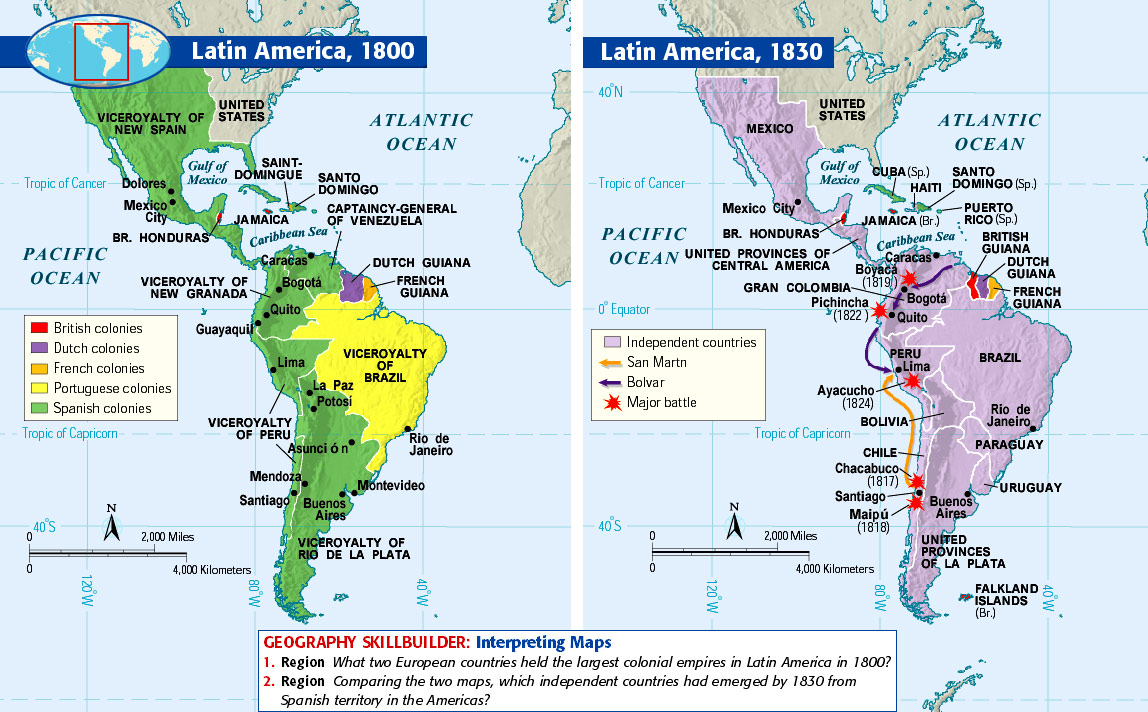
Task # 7: Latin American Maps Compared
Directions: Use the map below to answer the questions on your handout.
Task # 8: Latin American Revolutionaries
Directions: Choose one of the leaders of the Latin American Revolutions below and research about their impact. Then create a facebook page about them.
Simon Bolivar
Miguel Hidalgo
Jose de San Martin
Consider the following things:
1. Birth and death
2. Where is he from?
3. What countries did he start revolutions in?
4. Were they successful?