
Introduction
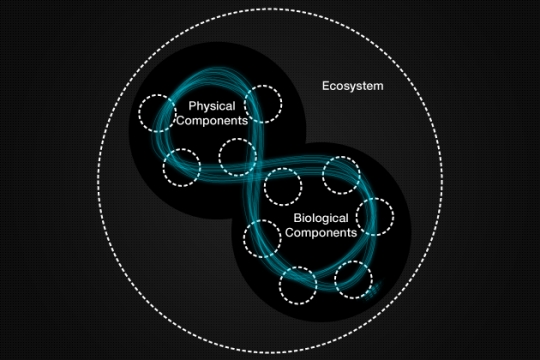
Every aspect of life is a component of something else. The cell is the basic unit of life and the processes inside the cell involve transformation of energy and matter. Matter is anything that occupies space and has mass. As a result of a series of scientific investigations, people are now aware that matter is made up of atoms. These atoms react with one another forming more complex form of matter such as elements, compounds, and other substances.
As the planet Earth came in the Holocene epoch that is characterized by overpopulation and industrial revolution, studies showed that the stability of the planet's natural resources has been triggered. With this, man started to focus on the chemical alterations in the environment.
A pure substance is a form of matter that cannot be separated into two different species by any physical means. Pure substances are elements and compounds.
On this webquest, you will learn more about the classification of matter and their importance.
Task
For Individual Activity:
Acids and Bases
I. Objective
- Describe what happens when an acid and a base are mixed
II. Materials
sodium hydroxide evaporating dish
litmus paper hydrochloric acid
For Group Activity:
Natural Indicator for Acids and Bases
I. Objective
- Determine what local materials can serve as indicators for acids and bases
II. Materials
25 mL of 0.5 M HCI acid 25 mL of 0.5 M NaOH
funnels 6 medicine droppers
10 test tubes or vials filter paper
60 mL ethyl alcohol 60 mL water
Normal
0
false
false
false
EN-US
X-NONE
X-NONE
/* Style Definitions */
table.MsoNormalTable
{mso-style-name:"Table Normal";
mso-tstyle-rowband-size:0;
mso-tstyle-colband-size:0;
mso-style-noshow:yes;
mso-style-priority:99;
mso-style-parent:"";
mso-padding-alt:0in 5.4pt 0in 5.4pt;
mso-para-margin-top:0in;
mso-para-margin-right:0in;
mso-para-margin-bottom:10.0pt;
mso-para-margin-left:0in;
line-height:115%;
mso-pagination:widow-orphan;
font-size:11.0pt;
font-family:"Calibri","sans-serif";
mso-ascii-font-family:Calibri;
mso-ascii-theme-font:minor-latin;
mso-hansi-font-family:Calibri;
mso-hansi-theme-font:minor-latin;
mso-bidi-font-family:"Times New Roman";
mso-bidi-theme-font:minor-bidi;}
Process
Procedure for Activity 1
1. Put some dilute (mixed with water) sodium hydroxide solution in an evaporating dish.
2. Use a litmus paper to test what kind of substance it is.
3. Slowly add diluted hydrochloric acid to it.
4. Use the litmus paper test. Stop adding acid when the blue litmus paper does not change color.
After that, write your observation and conclusion.
What happens when an acid and a base are mixed?
Procedure for Activity 2
1. Prepare 100 mL of alcohol solution by mixing 50 mL water and 50 mL alcohol. Place 20 mL of the solution into each of the five tubes.
2. Chop separately the red gumamela, yellow bell, green mayana, and red mayana. Place five grams of each chopped material separately in the four test tubes with alcohol; place red or black beans in the fifth test tube. Let the mixtures stand overnight. The solution of one part alcohol and one part water should be just enough to completely submerge the materials.
3. The following day, filter the mixtures separately. Collect the filtrate of each mixture in a separate clean container. Note the color of each filtrate. Clean the test tubes so you can use them again. Pour 5 mL of 0.5 M HCI solution into each of the five test tubes. Into each of the remaining five test tubes, pour 5mL of 0.5 M NaOH solution.
4. Add two or three drops of an extract into one of the test tubes containing HCI solution. Note the change in color. Repeat using other extracts. Do the same thing with the NaOH solution.
Write the results in the data table.
Data Table 1
|
Natural Indicators |
Color of Filtrate |
Color (Filtrate + NaOH) |
Color (Filtrate + HCI) HCI |
|
Red gumamela |
|
|
|
|
Yellow bell |
|
|
|
|
Green mayana |
|
|
|
|
Red mayana |
|
|
|
|
Red or black beans |
|
|
|
5. Select the two indicators producing the sharpest color contrast in acid (to be labeled indicator A) and base (to be labeled indicator B) solutions.
6. Test separately the color reactions of the extracts of calamansi, kamias, ampalaya, guava, okra, and tomato with two or three drops of these chosen indicators (A and B).
Write the results in the data table.
Data Table 2
Normal
0
false
false
false
EN-US
X-NONE
X-NONE
/* Style Definitions */
table.MsoNormalTable
{mso-style-name:"Table Normal";
mso-tstyle-rowband-size:0;
mso-tstyle-colband-size:0;
mso-style-noshow:yes;
mso-style-priority:99;
mso-style-parent:"";
mso-padding-alt:0in 5.4pt 0in 5.4pt;
mso-para-margin-top:0in;
mso-para-margin-right:0in;
mso-para-margin-bottom:10.0pt;
mso-para-margin-left:0in;
line-height:115%;
mso-pagination:widow-orphan;
font-size:11.0pt;
font-family:"Calibri","sans-serif";
mso-ascii-font-family:Calibri;
mso-ascii-theme-font:minor-latin;
mso-hansi-font-family:Calibri;
mso-hansi-theme-font:minor-latin;
mso-bidi-font-family:"Times New Roman";
mso-bidi-theme-font:minor-bidi;}
table.MsoTableGrid
{mso-style-name:"Table Grid";
mso-tstyle-rowband-size:0;
mso-tstyle-colband-size:0;
mso-style-priority:59;
mso-style-unhide:no;
border:solid windowtext 1.0pt;
mso-border-alt:solid windowtext .5pt;
mso-padding-alt:0in 5.4pt 0in 5.4pt;
mso-border-insideh:.5pt solid windowtext;
mso-border-insidev:.5pt solid windowtext;
mso-para-margin:0in;
mso-para-margin-bottom:.0001pt;
mso-pagination:widow-orphan;
font-size:11.0pt;
font-family:"Calibri","sans-serif";
mso-ascii-font-family:Calibri;
mso-ascii-theme-font:minor-latin;
mso-hansi-font-family:Calibri;
mso-hansi-theme-font:minor-latin;
mso-bidi-font-family:"Times New Roman";
mso-bidi-theme-font:minor-bidi;}
|
Natural Indicators |
Color Change with Indicator A |
Color Change with Indicator B |
Nature of Extract (Acidic, Basic, Neutral) |
|
calamansi |
|
|
|
|
kamias |
|
|
|
|
ampalaya |
|
|
|
|
guava |
|
|
|
|
okra |
|
|
|
|
tomato |
|
|
|
Questions for Analysis
1. Describe the reaction of the plant indicators to acids and bases.
2. What does change in color of the indicator used indicate?
3. Classify the enumerated natural indicators as acid or base indicators in the data table. Put a check under the appropriate column.
Data Table 3
Normal
0
false
false
false
EN-US
X-NONE
X-NONE
/* Style Definitions */
table.MsoNormalTable
{mso-style-name:"Table Normal";
mso-tstyle-rowband-size:0;
mso-tstyle-colband-size:0;
mso-style-noshow:yes;
mso-style-priority:99;
mso-style-parent:"";
mso-padding-alt:0in 5.4pt 0in 5.4pt;
mso-para-margin-top:0in;
mso-para-margin-right:0in;
mso-para-margin-bottom:10.0pt;
mso-para-margin-left:0in;
line-height:115%;
mso-pagination:widow-orphan;
font-size:11.0pt;
font-family:"Calibri","sans-serif";
mso-ascii-font-family:Calibri;
mso-ascii-theme-font:minor-latin;
mso-hansi-font-family:Calibri;
mso-hansi-theme-font:minor-latin;
mso-bidi-font-family:"Times New Roman";
mso-bidi-theme-font:minor-bidi;}
table.MsoTableGrid
{mso-style-name:"Table Grid";
mso-tstyle-rowband-size:0;
mso-tstyle-colband-size:0;
mso-style-priority:59;
mso-style-unhide:no;
border:solid windowtext 1.0pt;
mso-border-alt:solid windowtext .5pt;
mso-padding-alt:0in 5.4pt 0in 5.4pt;
mso-border-insideh:.5pt solid windowtext;
mso-border-insidev:.5pt solid windowtext;
mso-para-margin:0in;
mso-para-margin-bottom:.0001pt;
mso-pagination:widow-orphan;
font-size:11.0pt;
font-family:"Calibri","sans-serif";
mso-ascii-font-family:Calibri;
mso-ascii-theme-font:minor-latin;
mso-hansi-font-family:Calibri;
mso-hansi-theme-font:minor-latin;
mso-bidi-font-family:"Times New Roman";
mso-bidi-theme-font:minor-bidi;}
|
Natural Indicators |
Color Change with Indicator A |
Color Change with Indicator B |
|
Calamansi |
|
|
|
Kamias |
|
|
|
Ampalaya |
|
|
|
Guava |
|
|
|
Okra |
|
|
|
Tomato |
|
|
Evaluation
|
Criteria |
Description |
|||
|
15 |
9 |
6 |
3 |
|
|
Accuracy of Content |
The facts, information, and explanation are clearly, concisely, and logically presented with supporting information. |
The facts, information, and explanation are clearly and logically presented with supporting information. |
The facts, information, and explanation are clearly presented with supporting information. |
The facts, information, and explanations are clearly presented with no supporting details. |
|
Presentation of Output |
Presentation shows considerable originality and inventiveness. It is presented in a unique and interesting way. |
Presentation shows some originality and inventiveness. It is presented in an interesting way. |
Presentation shows an attempt of originality and inventiveness. |
Presentation shows very little attempt of original thought. |
|
Creativity |
The work is very creatively done and very appealing. It is appropriate to the topic. |
The work is creatively done and appealing. It is appropriate to the topic. |
The work is somewhat creatively done and not so appealing. |
The work is not creatively done and not appealing. |
Conclusion
From this webquest, you've learned about recognizing the classification of substances into elements and compounds. Also, the students gathered information about common elements through performing the individual and group activity. The topic is very effective for discovery learning which the teacher used the experimental method in presenting her lesson.
Credits
This webquest is made by Rosallie D. Ayende, a CCT I-A student of Bicol University - College of Education, Daraga, Albay. It serves as a requirement to one of her subject which is Educational Technology by Prof. Gerard Protacio.