
Introduction
Congratulations!!!!!!!!!!!!!!
You have been chosen as a Movie Analyst for the New York Times!!! This job requires you to watch, anaylze, critique and review interesting films from the past six years! Many movie-goers across the United States rely heavily on your opinions and reviews on what to spend their hard-earned money on. Therefore, it is vitally important for you to pay close attention to specific details. The four major genres of films you will critique will consist of: Drama, Comedy, Action, and Documentary. Afterwards, you will present your study to the Editor-In-Chief and the Board of Directors for final evaluation and edit. Now it's up to you to show movie-goers which films have the best sequence. GOOD LUCK!
Task
You will divide into groups of four and analyze four different genres of films. In the films you will be looking heavily at the plot sequence, themes, and different motifs that are active throughout the movies. Many movie-goers rely heavily on your feedback and opinions so it is very important that you impress the panel and film watchers world-wide. You will create a project on a display board along with a typed, 12 point font, double-spaced paper showing your grasp and concepts of plot sequence, themes, and motifs to get you ready for expressing major events in your movies. Your report will be published at the end of your critique in the New York Times!!!!
The plot sequence consists of: exposition, rising action, climax, falling action, and resolution. Pay close attention to how the story develops, what actions lead to the most dramatic scene, what happens afterwards and how the problem is ultimately solved.
Themes are what is learned in the end of the film. What new knowledge has the protagonist gained after the experience? How will they approach life afterward? These are some questions that should be asked when coming up with the theme.
Motifs are events, or items that significantly impact the protagonist and their world. What items or events shape how the protagonist is precieved? How do these pieces of information form the overall development of the character? These are questions that you should think about when discovering your motifs.
Process
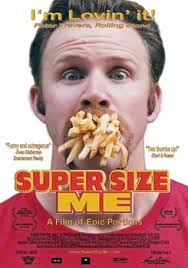
Group 1: Your group will be analyzing the plot sequence, themes, and motifs of the documentary "Super Size Me" starring Morgan Spurlock.
Group 2: Your group will analyze the plot sequence, themes, and motifs of the drama, "12 Years a slave" starring Chiwetel Ejiofor and Lupita Nyong'o.
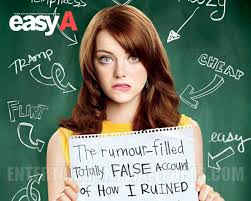
Group 3: Your group will anaylze the plot sequence, themes, and motifs of the comedy, "Easy A" starring Emma Stone.
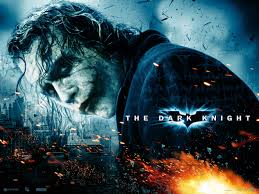
Group 4: Your group will analyze the plot sequence, themes, and motifs of the action film, "The Dark Knight" starring Christian Bale and Heath Ledger.
Evaluation
|
Student Name: ________________________________________ |
|||||
|
CATEGORY |
4 |
3 |
2 |
1 |
|
|
Plot Sequence |
Student recalls several details for each main points of the Plot Sequence accurately. |
Student recalls some details for each main points of the Plot Sequence. |
Student is able to locate a few of the details for Plot Sequence but not accurately. |
Student cannot locate details with accuracy on the Plot Sequence. |
|
|
Themes |
Student recalls several details for each main points of the Themes accurately. |
Student recalls some details for each main points, of the Themes. |
Student is able to locate a few of the details for Themes but not accurately. |
Student cannot locate details with accuracy on the Themes. |
|
|
Motifs |
Student recalls several details for each main point of the Motifs accurately. |
Student recalls some details for each main point, of the Motifs. |
Student is able to locate a few of the details for Motifs but not accurately. |
Student cannot locate details with accuracy on the Motifs. |
|
|
Organization |
Student is very well organized and well prepared. |
Student is somewhat organized and prepared. |
Student needs to be more organized as well as more prepared. |
Student not organized or prepared at all. |
Conclusion
Congratulations for completing your first film analysis for the prestigious New York Times. Your film analysis gave many readers guidance and information before they reached the theater. You are now a published movie critic! Our readers will be looking forward to future movie reviews from you. The panel was also very pleased with your work and looks forward to working with you more in the future. Thanks again for all your hard work!
Credits
Vance McGhee, Engish Education, Tallahassee, FL, group leader
Dallas Terry, History Education, Atlanta, GA
Willie Heard, English Education, Atlanta, GA