
Introduction
Im sure you may have heard of the term climate change, but what does it mean?
Climate Change is a word used to describe the change in our planet's temperature. In recent years, our planet's temperature has been increasing. This is not good for our planet because the change in weather can make our weather more extreme, cause certain species to go extinct, and so much more.
One thing that climate activists and scientists have been trying to do in order to help fight climate change is by improving our planet’s biodiversity.
Biodiversity describes the large variety of ecosystems, species and other organisms living within a biological community. Basically, all of the different animals, plants, and other living things that live in the same place!
In order for life on earth to exist, we need to have biodiversity, as every organism on our planet contributes to the natural balance of our world.
Similar to the positive effects of having a biodiverse ecosystem has on the planet, having a variety of different kinds of people in our world is also beneficial. The many people we see everyday are all of different ethnicities, identities, cultures and countries, and they each have different stories to tell!
Variety is important in the spread of ideas, culture, and so much more.
Task
In this Webquest titled, "Natures Melting Pot," you will be:
- Watch a short video to learn more about biodiversity
- Use your knowledge of the benefits of biodiversity to discuss in groups the benefits they see in having a diverse population of people in the world.
- Examine and identify the aspects of a piece that make it more appealing to the eye.
- Respond to a painting by Frida Kahlo by answering questions about the works structure and possible meanings.
- Read about Frida Kahlos life and how her experiences helped to shape her artistic style.
- Create a self portrait using variety that reflects yourself as an animal of your choosing that you feel represents you.
- Write a short paragraph explaining what animal you used in your portrait and how that animal represents you.
Process
Nature's Melting Pot
Part 1:
Biodiversity
In order to gain a better understanding of what biodiversity is, and how it impacts our planet, what the video below to learn more.
While watching the video, think about how all organisms in our ecosystem play a role in our planet's wellbeing.
https://youtu.be/XTC4qiXd36Q?si=dIfvrOGQuZ3T9oAb
Part 2: Diversity in Our World
When you finish the video, break out into your groups. Introduce yourself before you begin the activity. Once you have, talk about the following:
We learned about how having different kinds of animals, plants and ecosystems benefits our planet. How can having different kinds of people in our world also benefits us?
Think about the different people you have met in your life, your friends, family, classmates, teachers etc. What makes them different? What new and interesting things have you learned from them? How do they make your life better?
Part 3: Looking at Self Portraits
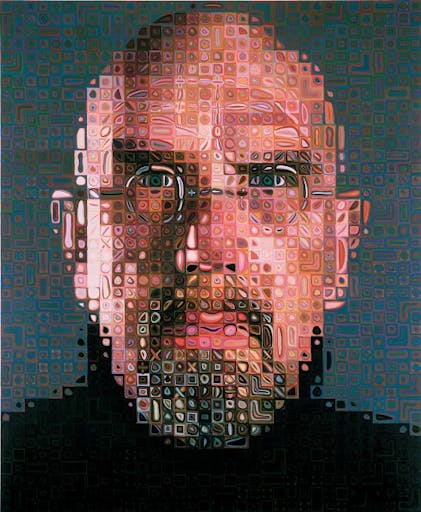
Below are 5 self portraits made by different artist.
After looking at each portrait, pick one portrait you believe is most interesting and engaging. You will label this piece as "Interesting." Then, pick one that you believe is the least interesting piece to look at. This one will be labeled as "Boring."
In your groups, discuss the two portraits you chose and why you put them in the categories "Interesting" or "Boring."
Discuss what elements of art the artist used to make their work more interesting. If you think a piece is "interesting", what about it makes it interesting? If its "boring", what is lacking in the piece that makes it "boring?"
If someone in your group happened to label a portrait under the same label you did, you can politely ask to add to their explanation and explain why you also gave the piece the same label.
Matisse Self Portrait, Henry Matisse 1900

Pablo Picasso Self portrait, 1901

Nneka Jones “Self Portrait”, 2018

Jean-Michael Basquiat, Untitled Self portrait, 1982
Chuck Close “Self Portrait”, 2005
Part 4: Responding to Frida Kahlo's Portrait
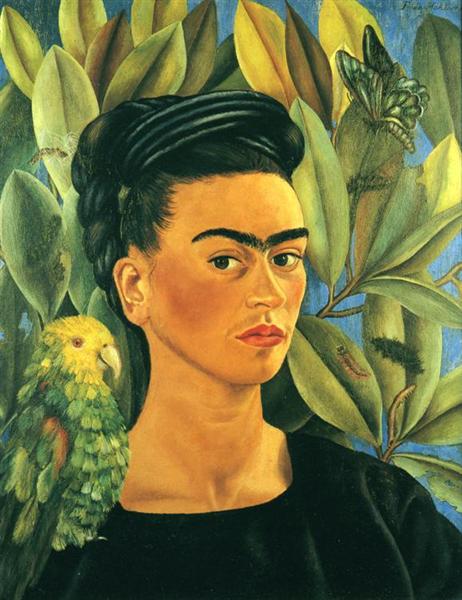
Below is a portrait by Frida Kahlo titled, "Frida Kahlo Self Portrait with Bonito, 1941." Carefully look at the detail within this piece. Frida's use of color, pattern, shape, line...
Look at the background and its contents as well as Frida's facial expression.
Once you have analyzed the piece, answer the questions below:
- When looking at this painting, how does it make you feel?
- What grabs your attention when you first look at the painting and why?
- What does this portrait tell you about Frida?
Part 5: The Life of Frida Kahlo
Who is Frida Kahlo?
Read this short biography of Frida Kahlo's life to learn about how her experiences shaped her artistic style and expression
https://kids.kiddle.co/Frida_Kahlo
Part 6: Make Your Own Self Portrait!
Now it's time for you to make your own self portrait!
For this art making activity, I want you to create a self portrait as an animal that you feel represents you. You can pick any animal you want that you feel is similar to you, or shares similar characteristics to you.
I want your self portrait to include variety! I want to see different colors, shapes, textures, lines and forms. You MUST include 4 or more of the elements of art in your piece.
Your self portrait should be an extension of you, I should be able to look at the self portrait and learn at least one thing about you. Are you strong and brave like a lion? Can you run really fat like a cheetah? Think about your own traits and the different animals that may have the same ones!
When making the background for your self portrait, think about what you can include that tells us more about yourself as well, (Ex. If you like going to the lake, draw yourself near a lake!).
Below is an example of what your portrait can look like:
{Insert Student example}
Part 7: Reflection
When you're done with your self portrait, take a piece of paper and write a short paragraph.
Tell me what animal you chose to draw yourself as for your self portrait, and explain why you chose this animal and how it represents you.
Also include how you were able to include variety in you portrait. What kinds of lines did you use? Did you use different colors?
Evaluation
Group Assessment
As a group, place your self portraits side by side on a flat surface. Take a minute or two to look at everyones works of art!
Notice the variety within everyone's pieces, how each one of your peers sees themselves as a different animal, each with different characteristics and interests!
Take turns talking about your piece to your groupmates. Use your pre-written paragraph to explain your choice in animal for your work, and how you used variety in your piece.
Self Assessment
Conclusion
Reflect
When you go out into the world, take a moment to notice all the different kinds of people around you all the time. The different languages they speak, the clothes they wear, the new innovative ideas they bring, everyone around us, including yourself, contributes to our worlds variety.
What can you do to inform others of the importance of having diversity in our world?
Teacher Page
Learning Standards Addressed
A. NJSLS-VPA
Anchor Standard 5: Developing and refining techniques and models or steps needed to create products.
Enduring Understanding: Media artists require a range of skills and abilities to creatively solve problems.
Essential Questions: How are creativity and innovation developed within and through media arts productions? How do media artists use various tools and techniques?
Practice: Integrate
Performance Expectations: 1.2.5.Pr5c: Examine how tools and design thinking techniques can be used in standard and experimental ways in constructing media artworks.
B. NCAS
Anchor Standard 1: Generating and conceptualizing ideas.
Enduring Understanding: Media arts use a variety of sources such as imagination and creative processes to inspire and transform concepts and ideas into artistic expression.
Essential Questions: How do media artists generate ideas and formulate artistic intent? How does collaboration expand and affect the creative process? How can creative risks be encouraged? Practice: Conceive
Performance Expectations: 1.2.5.Cr1a: Generate ideas for media artwork, using a variety of tools, methods and/or materials.
C. CEC
CEC July 2020 - Special Education Professional Ethical Principles - Code of Ethics
Maintaining challenging expectations for individuals with exceptionalities to develop the highest possible learning outcomes and quality of life potential in ways that respect their dignity, culture, language and background.