
Introduction
Welcome, Young Scientific Detectives! 🕵️🌟
Today, you're not just students — you're detectives on a very important mission! Your case? Follow the cues and solve the mystery of what happens to food after we eat it.
As food travels down our bodies, it goes on an amazing adventure — getting chewed, mixed, and transformed into the nutrients we need to grow, move, think, and play 💪🧠. This process is called digestion.

The digestive system is made up of different "stops" on this journey. In the mouth, the teeth and saliva together help break down food into smaller pieces, making it easier to swallow. After that, food goes through the esophagus, a tube-like structure that connects the mouth to the stomach. The stomach then churns and mixes the food with different juices, also known as enzymes. Enzymes are super important because they cut food into the smallest pieces for the body to actually use! Then, in the small intestine, nutrients are absorbed and sent into the blood to fuel the body. Next, the large intestine takes care of what’s left, soaking up water and getting rid of waste. Finally, what the body doesn’t need travels to the rectum and anus, where it leaves the body as poop 💩.

On this mission, you’ll discover how each part of the digestive system works, why digestion is so important, and how food transforms into the fuel that keeps you strong and healthy. Grab your magnifying glass 🔍, put on your detective hat 🎩, and get ready to track the secret journey of food. The case starts now!🚀
Task
Your job is to become an expert on the digestive system; know how food passes through each of its parts in order, and its purpose. Complete the following tasks to share what you have learned so far:
1. Illustrate the Parts of The Digestive System! 🍎🎨
After gaining a clear understanding of how the digestive system works and which organs of the body are implicated, create a colorful diagram of that system's components. Don't forget to label each part.
2. Track the Food Adventure and Make a Flow Chart! ➡️
Work in pairs. A clear understanding of the material will be demonstrated by creating a flow chart that sequentially includes each part of the digestive system.
3. Crack the Mystery Quiz!❓🔍
Test your detective skills by solving a few riddles and answering some questions about the digestive system.
Process
1. Illustrate the Parts of the Digestive System! 🍎🎨
Step 1: Gather Your Materials
Make sure you have everything you need before starting this task:
- Paper (any size) or a poster for drawing
-
Colored pencils, crayons, or markers
-
A ruler (optional, to help you draw straight lines and arrows)
Step 2: Learn About the Organs
The digestive system takes the meals you eat and transforms them into the nutrients and energy your body needs to grow, move, and think!
💡 Did You Know?
-
The mouth and teeth are involved in the first stage of digestion: they chew food into smaller pieces while saliva starts breaking it down.
-
The esophagus is a tube, like a slide, that pushes food down to the stomach using strong, squeezing movements.
-
The stomach is like a blender that churns food into a soup called chyme!
-
The small intestine is very long; if you stretched it out, it would be longer than you are tall! This is where nutrients get absorbed into the blood.
-
The large intestine’s main job is to recycle water before sending waste out of the body.
Make sure to watch this video I have attached for you below to be familiar with all the concepts and solidify your understanding:
You can also check these friendly websites. They have important and interesting information regarding this topic:
https://kids.britannica.com/kids/article/digestive-system/353054
https://www.bbc.co.uk/bitesize/articles/z8bntrd#z7b66g8
Step 3: Draw and Label the Digestive System! 🖍️
Your mission is to draw the main parts of the digestive system on a blank sheet of paper or poster board. Make sure you include: mouth, esophagus, stomach, small intestine, large intestine, rectum, and anus.
-
Label each organ clearly.
-
Add colors and details to make your drawing fun and easy to understand. Be creative.
-
draw speech bubbles indicating the role of each organ (for example, the mouth could be saying "I am going to chop and chew you?")
💡 Tips: You could draw the stomach as a bag, the intestines as long tubes, and use lines to connect them in the right order.
Step 4: Share Your Drawing 🤝📤
Once done, share your art with your classmates and compare each drawing. Review their work, and let them check yours.
You can have a small discussion about your drawings.
2. Track the Food Adventure with a Flow Chart! ➡️
Step 1: Collect Your Cues
-
Write down the main stops of the digestive system.
Step 2: Make Your Flow Chart
-
Use boxes for each organ.
-
Connect them with arrows ➡️ to show the sequence.
-
Keep sentences short and clear, but briefly explain the main role of each stop.
example:
3. Crack the Mystery Quiz!❓🔍
Step 1: Get Your Detective Kit Ready
-
Pencil and paper to write down answers.
-
Work with a partner to solve clues.
Step 2: Solve the Riddles
Your teacher will give you a worksheet with digestive system riddles and questions.
Examples:
-
“I am a long, coiled organ where nutrients are absorbed. Who am I?”
-
“Which organ soaks up water before waste leaves the body?”
❌ Photo unavailable
Take your time to think of your answers.
Step 3: Prove You’ve Cracked the Case
-
Write down your answers.
-
Share them with the class to show you’ve solved the digestive system mystery! 🤪
Evaluation
Illustrating the Digestive System (30 points)
| Criteria | Points | Description |
|---|---|---|
| Understanding the digestive system | 10 | Shows correct knowledge of the digestive system by including all main parts (mouth, esophagus, stomach, small intestine, large intestine, rectum, anus). |
| Clarity and use of connecting lines | 10 | The food pathway is easy to follow, with arrows or lines connecting the organs. |
| Creativity and colors | 5 | Uses bright colors, drawings, or fun ideas to make the project engaging and interesting. |
| Neatness | 5 | Work is tidy, organized, and easy to read with clear labels. |
| Total Score | /30 |
Making a Flow Chart (30 points)
| Criteria | Points | Description |
|---|---|---|
| Correct order of organs | 10 | Shows all the main parts of the digestive system in the right sequence (mouth ➡️ esophagus ➡️ stomach ➡️ small intestine ➡️ large intestine ➡️ rectum/anus). |
| Use of arrows and connections | 10 | Clearly shows the pathway with arrows connecting each organ step by step. |
| Clarity and neatness | 5 | Work is tidy, easy to read, and well-organized. |
| Creativity | 5 | The flow chart is colorful, engaging, and visually appealing. |
| Total Score | /30 |
Cracking the Mystery Quiz (40 points)
| Criteria | Points | Description |
|---|---|---|
| Accuracy of answers | 10 | Correctly solves riddles and answers all digestive system questions. |
| Understanding of concepts | 10 | Shows clear knowledge of the role of each digestive organ and its function. |
| Teamwork/effort | 10 | Works well with a partner or group to solve the quiz and share ideas. |
| Neatness and presentation | 10 | Answers are written clearly and neatly, easy for the teacher to check. |
| Total Score | /40 |
Total grade = /100
Conclusion
Great job, detectives! 🕵️♀️🕵️♂️✨
You've completed the mission and learned all about the digestive system and how it turns food into nutrients and energy. From chewing in the mouth, sliding down the esophagus, mixing in the stomach, absorbing nutrients in the intestines, and finally removing waste, you’ve solved the mystery of digestion.
Now you know that digestion is like a secret team working inside you every day, turning food into the fuel that keeps you strong and healthy. 🚀
Case closed, Detectives! ✅🔍
Credits
References:
BBC. (n.d.). Digestive system: How food is broken down and absorbed. BBC Bitesize. Retrieved from https://www.bbc.co.uk/bitesize/articles/z8bntrd#z7b66g8
Encyclopædia Britannica, Inc. (2025). Digestive system. Britannica Kids. Retrieved from https://kids.britannica.com/kids/article/digestive-system/353054
Images:
Creately Team. (n.d.). Digestive system flowchart [Image]. Creately. Retrieved from https://creately.com/diagram/example/r5uXTqHHz3P/digestive-system-flowchart
Dreamstime. (n.d.). Human digestion system, boy was delighted to show [Image]. Dreamstime. Retrieved from https://www.dreamstime.com/stock-illustration-human-digestion-system-boy-was-delighted-to-show-image42102739
Exam-Corner. (n.d.). Study the human digestive system [Image]. Exam-Corner. Retrieved from https://exam-corner.com/topic/study-the-human-digestive-system/
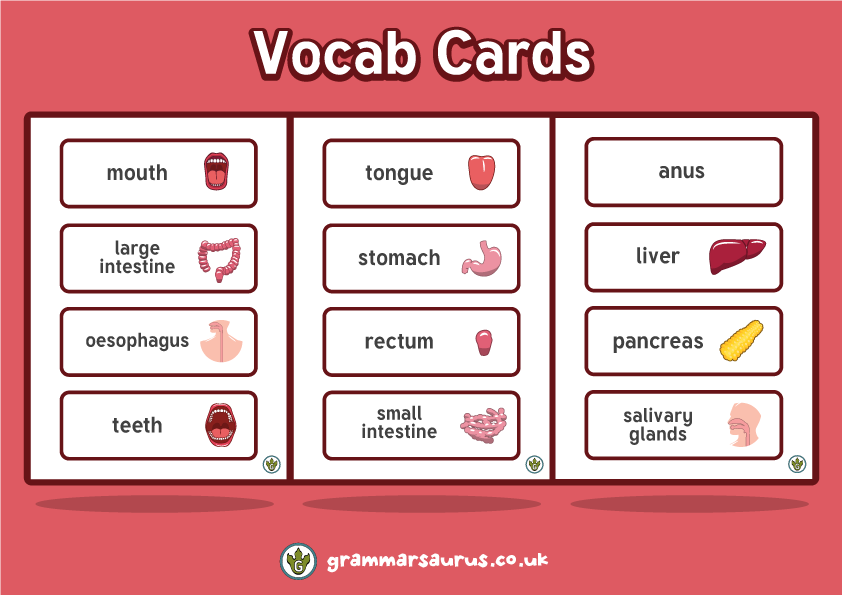
Grammarsaurus. (n.d.). The digestive system vocabulary cards [Image]. Grammarsaurus. Retrieved from https://grammarsaurus.co.uk/portal/2020/01/3835/
wikiHow. (n.d.). Draw a model of the digestive system [Image]. wikiHow. Retrieved from https://www.wikihow.com/Draw-a-Model-of-the-Digestive-System?ssp_iabi=1677228872644
Videos:
Periwinkle. (2017, October 19). Digestion process in human body explained through animation | Science grade 4 | Periwinkle [Video]. YouTube. https://www.youtube.com/watch?v=pE5l1r5Rwmg
WebQuest Website:
Create webquest: Create a WebQuest: Simple. quick. free. Create WebQuest | Create a WebQuest: Simple. Quick. Free. (n.d.)