
Introduction
Have you ever looked closely at a honeybee and wondered why they are so important? What jobs do they do? How do they affect me? During this webquest, you will find the answers to these questions and you might start asking your own. Before you begin, make sure you record your research on the Corkulous app on your iPad, padlet, or graphic organizer. How you record it is up to you! This will help you gather information for your presentation.
Task
With your partner (or independently if you choose), you will explore the importance of honey bees. On your exploration of honey bees, you will be gathering information for a presentation to share your knowledge with the class. Make notes of important facts and interesting details as you explore the webquest. You may use corkulous app, make a padlet, or use a paper graphic organizer. It is up to you! You will use the information you record to help complete your final project.
After you explore the webquest, you and your partner will create a presentation to showcase why honey bees are important. Your presentation can be a 3-D model, a drawing, canva presentation, or a short picture book. If you think of another way to model your knowledge, ask for permission before you begin working. You will present it to the class. In your presentation, you must use facts learned from this webquest. You are telling the class how important honey bees are! Use your thinking caps and be creative!
Process
Using your graphic organizer or platform to record facts, use the links below to find why honey bees are important to plants, people, and produce.
What's the buzz about bees?
Take a look at this website and take notes on your graphic organizer about honey bees.
Honey bees have more importance than some people realize. Honey bees are important in several different ways. Take a look at this video about honey bees and jot down important facts.
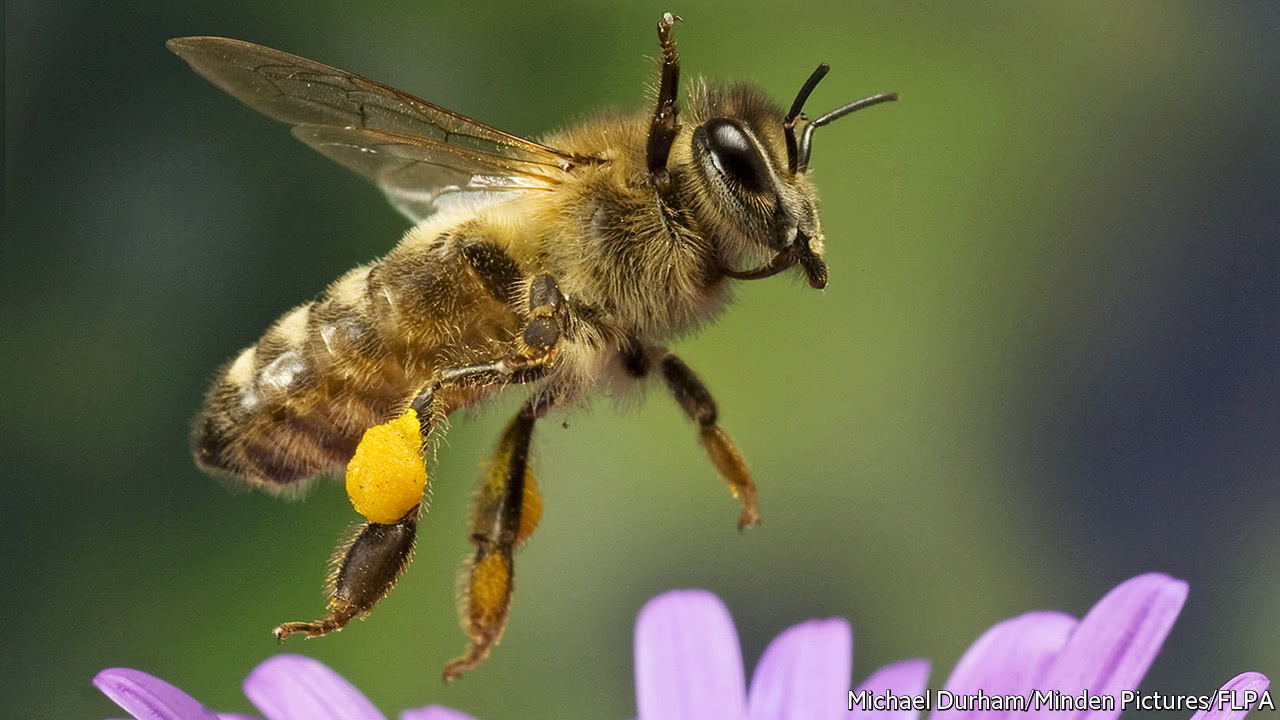
Honey bees account for nearly 80% of crop pollination in the United States of America, because of the ease of transporting colonies across the country (although increasingly, some solitary bee species and bumblebees are being reared for pollination). Honey bees are actively pollinating at least somewhere in North America during every month of the year!
Honey bees have been trained to act as bomb detectors! Scientists have trained honey bees to react to minute amounts of chemicals found in explosives. Trainers reward honey bees with sugar water when they correctly sense a particular explosive compound, such that the bees automatically stick out their tongues in expectation of a reward when they correctly sense the compound.
Honey Bee Pollination is Convenient
❌ Photo unavailable
The practice of beekeeping has meant that large numbers of honey bees are available to farmers, and can be transported from one field to another. Even the timing can be controlled. It has led to the development of a whole industry based around honey bee pollination. Some beekeepers specialise in this service.
Historically, a Lack of Knowledge About Other Pollinators
Honey bees are one of the most intensely studied creatures on the planet, with a whole group of people (beekeepers) interested in their welfare. In reality, this means there is limited understanding about specific insects and their efficiency, in pollinating different crops.
However, things are beginning to change, and other bees, such as bumblebees and leafcutter bees, are being used to help increase agricultural production. Bumblebees have been used to pollinate tomatoes for some years. Partly this is due to increasing recognition of the importance of other bee species, coupled with research in this area. Perhaps also, it is due to fears about overreliance on the honey bee.
There is also a growing movement to help farmers understand how they can encourage local native pollinators onto their land, by providing nest boxes for solitary bees.
Bumblebee colonies can also be purchased, but has sometimes led to negative consequences when a commercially reared species has been moved from one region to another (not natural to it), taking with them diseases that have impacted upon the local native species.
Evaluation
| Criteria | 4 | 3 | 2 | 1 |
| Research and Understanding | Shows a deep understanding of all 3 questions; includes interesting facts. | Shows clear understanding of the 3 questions. | Answers some questions, but missing details. | Hard to tell what was learned or not enough info. |
| Creativity and Presentation | Chose a creative and original way to present; very engaging. | Presentation is neat and creative. | Some effort shown. | Very basic; needs more creativity or effort. |
| Teamwork or Independence | Worked very well with partner or showed strong independent thinking. | Worked well or independently with some support. | Needed help staying focused or sharing ideas. | Had difficulty working with others or staying on task. |
| Communication and Clarity | Speaks clearly, confidently, and explains ideas in own words | Speaks clearly and mostly uses own words. | Hard to hear or understand some ideas | Mumbles, reads everything, or hard to follow. |
| Visuals/Materials | Visuals are neat, colorful, and support the information well. | Visuals are clear and helpful. | Visuals are basic or missing details. | Visuals are messy, confusing, or not included. |
| Completion | Completed all parts with care and extra effort | Completed most parts with good effort. | Some parts are missing or rushed. | Project is incomplete or not ready to share. |
Conclusion
Honey Bee's are important pollinators. Do you think there are any other animals that can do what bees do? Watch this video to find out more about unusual pollinators.
Credits
-National Geographic Kids. (n.d.). Honeybee. National Geographic. https://kids.nationalgeographic.com/animals/invertebrates/facts/honeybee
-Learn Freeschool. (2022, approximately 2 years ago). All About Bees for Kids: Bee Facts and Information for Children [Video]. YouTube. https://www.youtube.com/watch?v=v6tUWk7vC6g
-National Pest Management Association. n.d. “Bumblebee & Honey Bee Facts.” PestWorld for Kids. Accessed July 16, 2025. https://www.pestworldforkids.org/pest-guide/bees/.
-Fancy Scientist. (2025, June). Animal Pollinators Beyond Bees | Wildlife Biology for Kids Club Animals [Video]. YouTube. https://youtu.be/gR3E2tGx2vc
Teacher Page
GSE Standards
S1L1 Obtain, evaluate, and communicate information about the basic needs of plants and animals.
1.T.RA.1.b Work collaboratively or individually to conduct research on a shared or personal topic of interest by gathering and organizing information from provided sources (including print, digital, and personal communication) using graphic organizers or other support aids. (I)
1.T.RA.1.c Share relevant and accurate information through a variety of different modes. (C)