
Introduction
Imagine a world where every medical treatment is specifically tailored to you, your genetic makeup, lifestyle, environment. Your whole genotype. This is not some sham; this is the premise of precision medicine also known as personalized medicine. Personalized medicine aims to tailor medical treatments to each patient's individual characteristics, including their genetic variations. Thus, by taking into account these genetic variations, personalized medicine makes it possible to respond specifically to the needs of each patient, making it a more specialized than the original approach.
In this WebQuest, you'll discover the ideas of precision remedy, its effect on illnesses like most cancers and cystic fibrosis, the role of AI and genetics, and the moral issues surrounding it. By the end of this journey, you'll expand a knowledgeable perspective on how precision medicine is shaping the future of healthcare.

Task
Your goal is to investigate precision medicine from multiple angles and present your findings in a creative format of your choice:
Option 1: Write a research paper explaining how precision medicine is changing treatment approaches.
Option 2: Create an infographic illustrating the benefits and challenges of precision medicine.
Option 3: Develop a short presentation (Google Slides, PowerPoint) outlining key technologies and case studies.
Option 4: Record a short video (2-3 minutes) explaining precision medicine in simple terms.
No matter which format you choose, your final product must address the following questions:
- What is precision medicine?
- How does it differ from traditional medicine?
- How does genetics play a role in personalized treatments?
- What are some real-world examples of precision medicine (e.g. cancer, rare diseases)?
- What are the ethical concerns regarding genetic testing and AI in medicine?
Process
Follow these steps to complete your WebQuest:
Step 1: Understand the Basics
🔍 Watch: This introductory TedTalk will introduce you to the topic
📖 Read: "Fishing for Answers in Precision Cancer Medicine"
Step 2: Explore the Role of AI and Genetics
🤖 Watch: The 4 ways that AI can help medicine in general. This video will give you a general idea on how AI improves the healthcare system.
❌ Photo unavailable
Step 3: Investigate Ethical Issues
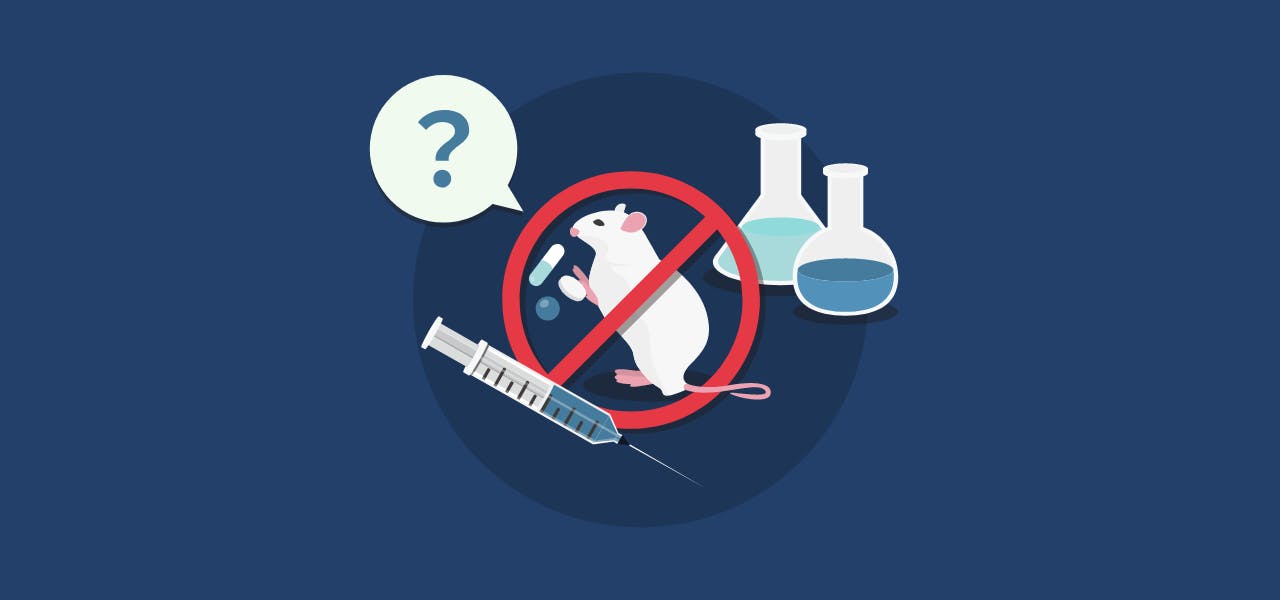
🦥 Watch: "The Ethics of Animal Use in Research"
📝 Reflect: Should AI and genetic testing replace traditional medicine?
Step 4: Develop Your Project
Use your research to create a compelling final product. Ensure you answer the key questions from the Task section.
Step 5: Share and Reflect
Present your project to the class, discuss what you learned, and reflect on the future implications of precision medicine.
Evaluation
Your work will be graded based on the following rubric:
| Category | Excellent (5 points) | Very Good (4 points) | Good (3 points) | Needs Improvement (2 points) | Incomplete (1 point) | Not Attempted (0 points) |
| Content Accuracy |
All facts are accurate, insightful, and well-researched. |
Mostly accurate and well-researched with minor errors. |
Generally accurate, but some minor inaccuracies. |
Some inaccuracies or missing key details. |
Major inaccuracies or lack of research. |
No relevant content provided. |
| Creativity & Presentation |
Highly engaging, original, and visually appealing. |
Engaging and well-structured with some originality. |
Organized but lacks originality or engagement. |
Somewhat disorganized or basic. |
Unclear or incomplete. |
No attempt at creativity or presentation. |
| Depth of research |
Uses multiple credible sources with in-depth analysis. |
Uses multiple credible sources effectively. |
Uses some credible sources but lacks depth. |
Limited research and few sources. |
Minimal research or unreliable sources. |
No research conducted. |
| Critical thinking |
Thoughtful, deep analysis with strong insights |
Good analysis with some insightful connections. |
Basic analysis with limited depth. |
Minimal analysis, lacking depth. |
Little to no analysis, missing key points. |
No critical thinking evident. |
| Clarity & organization |
Exceptionally clear and well-structured, with a logical flow. |
Mostly clear and well-structured with few issues. |
Somewhat clear but has organizational flaws. |
Lacks logical flow and is difficult to follow. |
Disorganized, making comprehension difficult. |
No clear organization or structure. |
Total Score: /25
Conclusion
🎉 CONGRATULATIONS 🎉
You have now explored how precision medicine is revolutionizing healthcare through genetic research, AI, and new treatment methods. The subject continues to be evolve, however its impact on cancer, rare diseases, and drug development is undeniable.
What do you think? Should precision medicine be the future standard of healthcare? What moral concerns should society address as genetic treatments grow to be more widespread?
❌ Photo unavailable
NOW TEST YOUR KNOWLEDGE ON PRECISION MEDICINE BY DOING THE FOLLOWING QUIZ !
❌ Photo unavailable
Credits
📝 REFERENCES 📝
- Articles
Fazio, M., & Zon, L. I. (2017, September 26). Fishing for answers in precision cancer medicine. Proceedings of the National Academy of Sciences of the United States of America, 114(39), 10306–10308. https://www.jstor.org/stable/26488019
Lin, H.-C., Tu, Y.-F., Hwang, G.-J., & Huang, H. (2021). From Precision Education to Precision Medicine: Factors Affecting Medical Staff s Intention to Learn to Use AI Applications in Hospitals. Educational Technology & Society, 24(1), 123–137. https://www.jstor.org/stable/26977862
- Images
Anatomise Biostase. (2022, September 7). Photo of a scientist holding a tube with chemical formulas [Photograph]. https://anatomisebiostats.com/wp-content/uploads/2022/12/precision-medicine-in-clinical-trials.png

Gabriel, V. (n.d). Representation of artificial intelligence in medicine as a person [Photograph]. Freepick. https://img.freepik.com/premium-photo/representation-artificial-intelligence-medicine-as-person_1000526-412.jpg

Getty Images. (n.d). Black and white retro photo with "end" written on it [Photograph]. https://media.gettyimages.com/id/473392869/video/the-end-with-sound-v3.jpg?s=640x640&k=20&c=kAnH6BsMkV4jZAAplfkV7bUX-hssihKbZFJm0_AzMwI=

Impactio (2021, February 8). Collage of a mouse with a NO signal above it and medical utensils around it [Photograph]. https://images.prismic.io/impactio-blog/93d68396-465e-4f51-a2e5-c4b2bd574f92_Discussing+Ethical+Considerations+of+Animal+Testing+Before+Human+Trials.png?auto=compress,format
iStock (n.d). Quiz time written on a chalkboard with a light bulb next to it [Photograph]. https://media.istockphoto.com/id/1411084277/photo/quiz-time-concept.jpg?s=612x612&w=0&k=20&c=c8qeMkhHWa6B2wF64WSCcBAHtjp9fXVxaOMFYvAUroQ=

- Videos
Med School Insiders. (2023, June 24). 4 Ways Artificial Intelligence is Transforming Healthcare --> YouTube. https://www.youtube.com/watch?v=TfkHrvct1hg
TED-Ed. (2020, December 15). The ethics of animal use in research - Courtney Bannerman -->. YouTube. https://youtu.be/hTD7tQbRpmA
TED-Ed. (2020, February 5). Personalized medicine: How your genome can improve health care - Marilena Melas -->. YouTube. https://youtu.be/fOKO_537YAU
Teacher Page
Name of the professor: Rayen Tannoukhi
For any questions, kindly contact me through raa205@mail.aub.edu